Begleiten Sie uns auf eine literarische Weltreise!
Buch zum Bücherregal hinzufügen
Grey
Einen neuen Kommentar schreiben Default profile 50px
Grey
Jetzt das ganze Buch im Abo oder die ersten Seiten gratis lesen!
All characters reduced
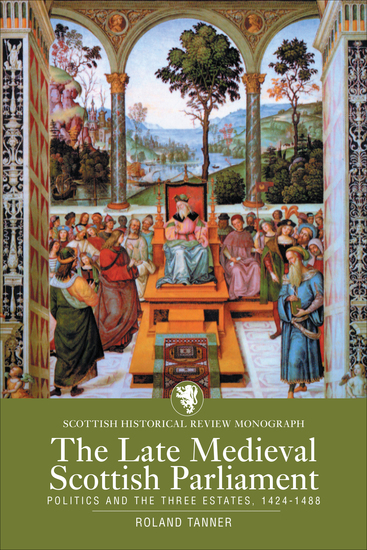
The Late Medieval Scottish Parliament - Politics and the three Estates 1424–1488 - cover

The Late Medieval Scottish Parliament - Politics and the three Estates 1424–1488

Roland Tanner

Verlag: John Donald

  • 0
  • 0
  • 0

Beschreibung

In this ground-breaking study of the medieval parliament, Roland Tanner gives the Scottish Parliament a human face by examining the actions and motives of those who attended. In the past, the Scottish Parliament was seen as a weak and ineffective institution – damned because of its failure to be more like its English counterpart. But Roland Tanner shows that the old picture of weakness is far from accurate. In its very different way, the Scottish Parliament was every bit as powerful as the English institution. The ‘Three Estates’ (the clergy, nobility and burgh representatives who attended Parliament) were able to wield a surprising degree of control over the Crown during the fifteenth century. For instance, they threatened to lock James I’s taxation in a box to which he, the king, would have no access, made James II swear not to alter acts of Parliament, and prevented him from using his own lands and wealth as patronage for his supporters, and forbade James III to leave the country.  Roland Tanner has avoided a dry constitutional approach. Instead he has sought to bring Parliament to life through the people who attended, the reasons why they attended, and the complex interactions which occurred when all the most wealthy, powerful and ambitious people in the kingdom gathered in one place.
Verfügbar seit: 07.06.2022.
Drucklänge: 300 Seiten.

Weitere Bücher, die Sie mögen werden

  • Stones Still Speak - How Biblical Archaeology Illuminates the Stories You Thought You Knew - cover

    Stones Still Speak - How...

    Amanda Hope Haley

    • 0
    • 0
    • 0
    Untangling the Sunday School Stories You Learned from the Biblical History You Haven't   
     
    · Biblical archaeologist unearths the riches of the historical and cultural contexts of the Bible 
    · Unveils God's Word as one glorious, world-changing story 
     
    When we first encounter the Bible, we are taught its stories--Adam and Eve, Moses and the Red Sea, David and Goliath, Jonah and the whale, and more. When a story lacks the details we crave, we fill in the blanks--with what we've seen in movies, read in books, and been told by our Sunday school teachers. But there's a better way to encounter the whole story of Scripture: uncovering and understanding the ancient world and the people who experienced biblical events. 
     
    In Stones Still Speak, Harvard-trained archaeologist and theologian Amanda Hope Haley scrapes back 2,000 years of misguided cultural interpretations to reveal God's Word in its historical, archaeological, and literary contexts. Far from a dry academic exercise, this process explains how our misunderstandings developed and revitalizes the Scripture you thought you knew, with the greater purpose of encouraging a more intentional, rigorous study of the Bible in your daily life.
    Zum Buch
  • Lily of the Valley - cover

    Lily of the Valley

    by Vilma Di Nardo

    • 0
    • 0
    • 0
    Lily of the Valley is a suspenseful and addictive #1 Amazon Bestseller 
    Step into a world of sex, violence, murder and deception... 
    In 1941 Germany, seventeen- year-old Anna Goldberg finds herself confined to her home as the Nazi regime tightens its grip on her homeland. 
    When her father, Josef, learns of his impending arrest by the Gestapo, he fakes Anna's death and entrusts her to a mysterious friend who conceals her in the unlikeliest of places- right under the Nazis' noses. 
    As Anna navigates this perilous game of hide and seek, she must summon unparalleled courage to confront her enemies, armed only with the delicate yet potent Lily of the Valley. 
    ⭐⭐⭐⭐⭐ 
    Vilma Di Nardo's 'Lily of the Valley' is a gripping historical fiction novel that delves into themes of resilience, identity, and the extraordinary lengths one will go to survive. 
    (Goodreads) 
    ⭐⭐⭐⭐⭐ 
    A hauntingly powerful tale of resilience and vengeance. 
    (Amazon)
    Zum Buch
  • The History of Islam's Holiest Sites - cover

    The History of Islam's Holiest...

    Editors Charles River

    • 0
    • 0
    • 0
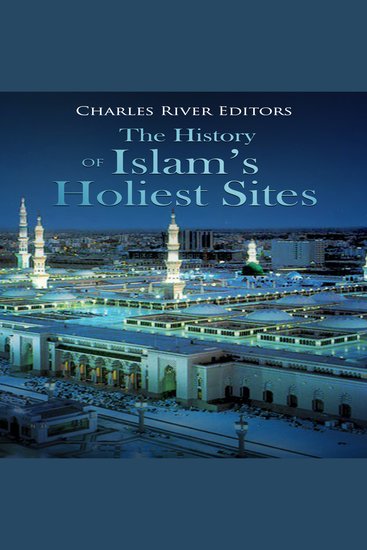
    Mecca is now best known for being Islam’s holiest city, revered as the birthplace of Muhammad and the site where Allah first revealed the Qu’ran to him. Within Mecca is the Ka’aba, a building housed within the Al-Masjid al-Haram (Great Mosque) that is considered the holiest site, and wherever they are in the world, Muslims face in the direction of the Ka’aba while praying. A pilgrimage to Mecca is considered a necessity for devout Muslims at some point in their lives, and the city itself is off limits to non-Muslims. Indeed, Mecca is so integral to Islam that the name of the city has entered the English lexicon and is a commonplace reference to any area closely associated with something (such as Paris often being called the mecca of fashion). 
    Even centuries before the birth of the Prophet Muhammad, Jews settled in the area that became Medina to escape persecution at the hands of the Babylonians and Romans, meaning the area and its arid environment brought inhabitants precisely because it wasn’t an attractive or resource rich area. In fact, the city fated to become the second holiest city in Islam earned that spot simply by straddling trade routes to the religious city of Mecca, which brought traders and pilgrims in large enough numbers to make it a trade center. 
    Jerusalem’s particular importance to the religion of Islam is without question one of the major sticking points in the Israeli-Palestinian conflict. Prior to Israeli control, Jerusalem had been predominantly controlled by Muslim rulers since the 7th century and had been used as a type of political currency, legitimizing the ruling dynasty’s claim over the city. For the world’s Muslim population, Jerusalem is a holy site because Muslims believe the Prophet Muhammad visited Jerusalem where he ascended to heaven during the famous “Night Journey.” There was also a period of time during the Prophet’s life when Muslims prayed in the direction of Jerusalem, as opposed to Mecca.
    Zum Buch
  • Muwatta of Imam Malik English Audio - cover

    Muwatta of Imam Malik English Audio

    Malik Imam, Translator - Aisha...

    • 0
    • 0
    • 0
    The Muwaṭṭaʾ (Arabic: الموطأ, "well-trodden path") or Muwatta Imam Malik (Arabic: موطأ الإمام مالك) of Imam Malik (711–795) written in the 8th-century, is one of the earliest collections of hadith texts comprising the subjects of Islamic law, compiled by the Imam, Malik ibn Anas. Malik's best-known work, Al-Muwatta was the first legal work to incorporate and combine hadith and fiqh (except possibly for Zayd ibn Ali's Musnad). It is considered to be from the earliest extant collections of hadith that form the basis of Islamic jurisprudence alongside the Qur'an. It includes reliable hadith from the people of the Hijaz, as well as sayings of the companions, the followers and also those who came after them. The book covers rituals, rites, customs, traditions, norms and laws of the time of the Islamic prophet Muhammad.
    Zum Buch
  • Speak Still - Articulating the Silence of Bilingualism - cover

    Speak Still - Articulating the...

    Wing Lam Tong

    • 0
    • 0
    • 0
    Speak Still confronts colonial silencing by asking out loud: why do non-native speakers of English feel estranged from the English language, despite having known it since childhood? Is it possible for us to own this silence? If so, how can we find our eloquence from our experience of speechlessness? How can we bring the foreign language home?
    Blending personal narrative and cultural criticism, Speak Still takes Tong's bilingual experience in Hong Kong and the UK as a point of departure and reflects on the meaning of language, selfhood, and belonging. Through poignant observations of everyday life as it is experienced between languages, Tong conceptualises a possibility to communicate and connect beyond words: by reclaiming silence as an interlocutor that interrupts cultural homogeneity and creates space for the unheard.
    Speak Still shows that this silence, indeed, speaks volumes.
    Zum Buch
  • Blind Obedience and Denial - The Nuremberg Defendants - cover

    Blind Obedience and Denial - The...

    Andrew Sangster

    • 0
    • 0
    • 0
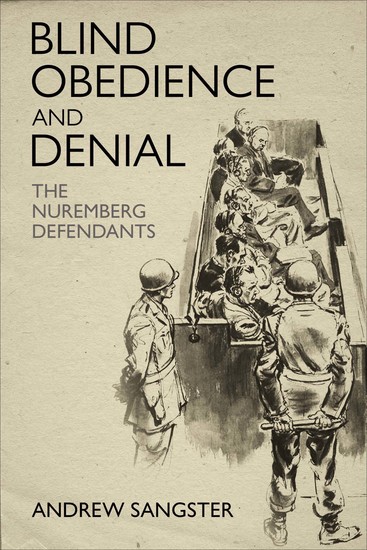
    "...offers a unique and valuable insight into the psychology of human beings who violate the laws of war. Anyone interested in war crimes generally and the IMT in particular should read this interesting book." — Journal of Military HistoryA revealing yet accessible examination of the Nuremberg trial, and most crucially all 23 men who stood accused, not just the most infamous—Speer, Hess, and Göring. This account sets the scene by explaining the procedures, the legal context, and the moments of hypocrisy in the Allies’ prosecution—ignoring the fact that the Katyn massacre was a Soviet crime and overlooking carpet bombing.  Author Andrew Sangster discusses how the word “Holocaust” was not used until long after the trial, probably due to Russian objection as they had lost many more people, and because the Allies generally were not innocent of anti-Semitism themselves, especially Russia and Vichy France. However, the defendants to a person immediately recognized that this was the singular issue which placed them on the steps of the gallows, and their various defenses on this charge are therefore crucial to understanding the trial. Sangster also explores how the prisoners related to one another in their approach to defending themselves on the charge of genocide and extermination camps, especially in facing the bully-boy Göring.  This new study utilizes not only the trial manuscripts, but the pre-trial interrogations, the views of the psychiatrists and psychologists, and the often-overheard conversations between prisoners—who did not know their guards spoke German—to give the fullest exploration of the defendants, their state of mind, and their attitudes towards the Third Reich, Hitler and each other as they faced judgement by the victors of the war.
    Zum Buch