Rejoignez-nous pour un voyage dans le monde des livres!
Ajouter ce livre à l'électronique
Grey
Ecrivez un nouveau commentaire Default profile 50px
Grey
Abonnez-vous pour lire le livre complet ou lisez les premières pages gratuitement!
All characters reduced
Ancient Myths - cover

Ancient Myths

Rohan Singh

Traducteur A AI

Maison d'édition: Publifye

  • 0
  • 0
  • 0

Synopsis

"Ancient Myths" explores the captivating narratives of gods, heroes, and monsters from ancient Egypt, Greece, and Rome, revealing their profound impact on the cultures and beliefs of these foundational societies. The book illuminates how these myths served as more than mere entertainment; they were vital tools for explaining the cosmos, legitimizing social hierarchies, and shaping cultural values. Discover how myths provided a framework for understanding human existence, challenging modern dismissals of them as primitive tales.

 
The book begins by introducing the study of mythology and various interpretive approaches, such as structuralism and comparative mythology. It then dedicates sections to Egyptian, Greek, and Roman myths, examining creation stories, deities, heroes, and the connection between myths and rituals. Readers will gain insights into how these myths influenced art, literature, and philosophy throughout history, tracing their enduring legacy across subsequent historical periods.

 
Through careful analysis of primary source texts like the Homeric epics and archaeological evidence, "Ancient Myths" offers a comprehensive and accessible overview of ancient mythology, appealing to both scholars and general readers interested in history and religion. The book distinguishes itself through its comparative approach, setting ancient myths within their specific historical and cultural contexts while also identifying common themes and patterns across different civilizations.
Disponible depuis: 06/03/2025.
Longueur d'impression: 69 pages.

D'autres livres qui pourraient vous intéresser

  • Unleashing The Mind - cover

    Unleashing The Mind

    Sadhguru

    • 0
    • 0
    • 0
    Sadhguru dvelves on a variety of subjects, ranging from the concepts of time, quantum mechanics, different parts of the mind, religion, and meditation. This book is laced with humor and incisive logic, and moves towards an interesting climax where it is acknowledged that science and mysticism meet at a certain point. Exploring the possibilities and the pitfalls of the mind, Sadhguru lays bare the deceptive drama of the mind that, as he says, “can take you to great heights” as well as “render you to the depths of hell within yourself.” Demolishing overused clichés about one’s ability to “control the mind” and have “pure thoughts,” he explains how meditation is a device to harness the immense capabilities of the mind that remain untapped in most human beings.
    Voir livre
  • Ships and Ways of Other Days - Seafaring Before Steam - cover

    Ships and Ways of Other Days -...

    E. Keble Chatterton

    • 0
    • 0
    • 0
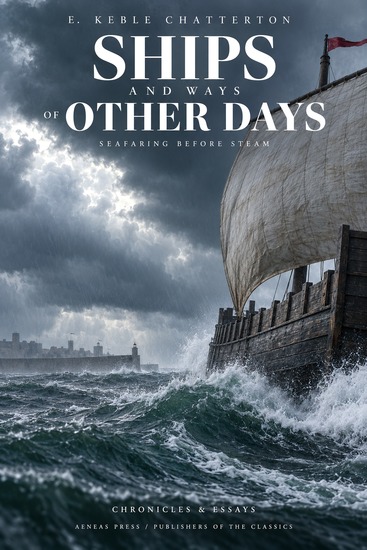
    Sailing ships from the galley to the clipper - rigs, tonnage, cargoes and the men who sailed them, with the plates. Chatterton wrote three dozen books on sail and this is the general introduction to all of them. Its 101 original illustrations have been carefully restored and coloured for this edition.
    Voir livre
  • Formation of the Federal Reserve The: The Early History of America’s Central Banking System - cover

    Formation of the Federal Reserve...

    Editors Charles River

    • 0
    • 0
    • 0
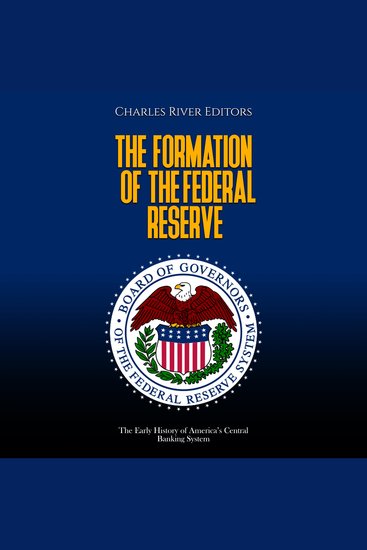
    Debates over paper money and banking are older than the United States of America itself. 18th and 19th century Americans were deeply ambivalent about paper money and central banks, and political fights over these issues were among the bitterest in American history. In fact, controversies over the country’s central bank birthed both the first (1792-1824) and second (1828-1852) party systems; frequently, policymakers crafted responses to the crisis at hand, and as a result they implemented policies that were inadequate to the challenges the country faced in the future.  
    Indeed, the early administrations' ambivalence toward central banking and paper money, combined with the ad hoc nature of policymakers’ responses, caused severe problems. These issues came to a head during the Panic of 1907, which provoked a major reassessment of America’s banking system. Progressive Era reformers like President Woodrow Wilson walked a tightrope, balancing fears of centralized wealth with the undeniable need for a rational mechanism to help govern the country’s economy. The system they created represented half a loaf, its many compromises and weaknesses corrected by the response to two other crises: the Great Depression and the Cold War. The Federal Reserve System that has existed since the Accord of 1951 has cooled the passionate conflict over central banking and rendered obsolete many of the monetary questions that so animated Americans in previous centuries. 
    Voir livre
  • Dangers of the Trail in 1865: A Narrative of Actual Events - cover

    Dangers of the Trail in 1865: A...

    Charles E. Young

    • 0
    • 0
    • 0
    "Embark on a harrowing journey across the untamed American West with Charles E. Young in 'Dangers of the Trail in 1865'. This gripping audiobook brings to life Young's autobiographical account of his perilous trek from New York to Denver. Set against the backdrop of a nation reeling from civil war, Young’s narrative is filled with encounters with Native Americans, outlaws, and the relentless forces of nature. Each chapter unfolds with vivid descriptions and heart-pounding moments, offering listeners a firsthand glimpse into the challenges and adventures of frontier life. Join Young as he navigates through this treacherous yet transformative era in American history."
    Voir livre
  • Why Did She Jump? - My Daughter’s Battle with Mental Illness - cover

    Why Did She Jump? - My...

    Joan E. Childs

    • 0
    • 0
    • 0
    There is one day in Joan Childs' life that she wishes she could do over: the day her daughter, Pam, a brilliant psychotherapist, plunged from a 15-story building to her death. In this vivid memoir, Childs, a psychotherapist, explains how her daughter's life was taken by the most unforgiving of executioners: bipolar disorder. It was the delusions, not her daughter, who made the final decision to end her life. 
    Why Did She Jump? provides an intimate, uncompromising look into one mother's search for peace, understanding, and clarity amid the chaos surrounding her daughter's tragic death. It is a masterful recounting of the events leading up to her suicide and lifts the veil of shame and secrecy as it forges a path toward understanding mental illness. 
    Even though Pam and Joan were skilled therapists, Pam could not be saved. Joan recounts vivid memories of Pam's life, the highs and lows, the red flags; how her daughter healed unreachable patients while she unraveled; and how she fooled everyone into thinking she was stable. 
    With searing honesty and great insight, Childs offers a rallying cry of support for anyone going through a similar struggle.
    Voir livre
  • The Unheard Generation - From Tribal Hostels to Higher Education Campuses - cover

    The Unheard Generation - From...

    Vishwas Chavan

    • 0
    • 0
    • 0
    THE UNHEARD GENERATION 
    From Tribal Hostels to Higher Education Campuses 
     
    Six students go without food for seventeen days over a hostel rule no one answered. Twenty-two lakh students watch an exam meant to judge them fairly and fail them instead. A campus mourns a death, then marches. 
    We call these events protests. Vishwas Chavan calls them something more precise: diagnoses—signals of what an educational system stopped listening to long before anyone raised their voice. Drawing on decades as a scientist, teacher, institutional leader, and father, he moves past counselling and crisis response to ask what it costs an institution to listen only after the crisis, never before. It is not an argument against standards or discipline, but rather an argument for what those things quietly cost when nobody is listening. 
    "They are not protesting. They are diagnosing." 
     
    Vishwas Chavan is a scientist, teacher, and institutional leader with decades of experience across research, higher education, and sustainability. His work with students, institutions, and his daughter shaped the questions at the heart of this book.
    Voir livre