




ÉCOUTER EXTRAIT

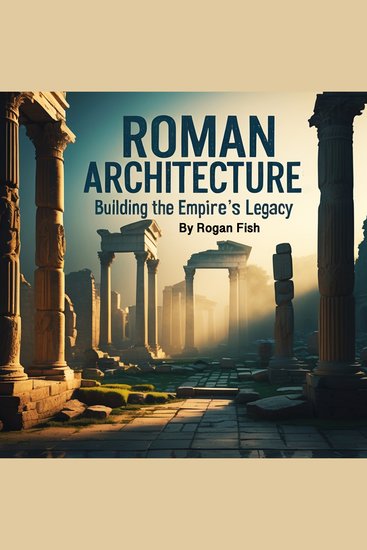
Roman Architecture - Building the Empire's Legacy
Rogan Fish
Narrateur Patricia Henders
Maison d'édition: Freegulls Publishing House LLC
Synopsis
Roman architecture emerged as a distinctive style that blended elements from earlier civilizations, primarily Greek and Etruscan influences. As Rome expanded from a small settlement into a powerful empire, its architectural identity evolved, incorporating new techniques and materials that allowed for grander and more functional structures. The early foundations of Roman architecture set the stage for innovations that would shape the empire’s urban landscape for centuries.
One of the most significant influences on Roman architecture came from the Etruscans, a civilization that dominated central Italy before Rome’s rise. The Etruscans were skilled builders who introduced techniques such as the use of the arch and vault, both of which would later become hallmarks of Roman engineering. Etruscan temples, with their high podiums and deep porches, also served as models for early Roman religious structures. Another major influence was Greek architecture, which Romans admired and adapted to suit their needs. The Greeks provided inspiration in the use of columns, decorative friezes, and symmetrical design, elements that were later integrated into Roman temples, public buildings, and monuments.
Roman architectural development was also shaped by advancements in building materials and construction techniques. The early Romans initially built using wood and mudbrick, but as they refined their skills, they transitioned to more durable materials like stone and concrete. The introduction of concrete was a groundbreaking innovation, allowing for stronger and more flexible structures. Unlike the Greeks, who relied heavily on marble, the Romans preferred concrete for its affordability and adaptability, enabling them to construct larger and more complex buildings, such as amphitheaters, aqueducts, and domes.
Durée: environ 2 heures (01:49:27)
Date de publication: 30/03/2025; Unabridged; Copyright Year: — Copyright Statment: —




