Rejoignez-nous pour un voyage dans le monde des livres!
Ajouter ce livre à l'électronique
Grey
Ecrivez un nouveau commentaire Default profile 50px
Grey
Abonnez-vous pour lire le livre complet ou lisez les premières pages gratuitement!
All characters reduced
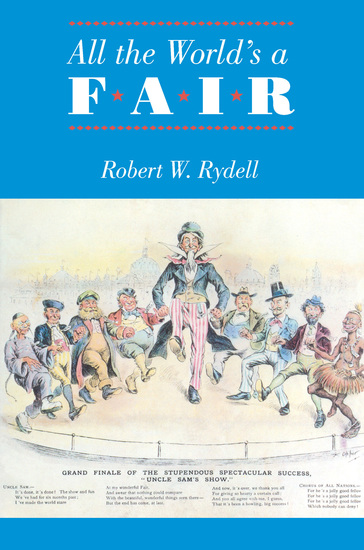
All the World's a Fair - cover

All the World's a Fair

Robert W. Rydell

Maison d'édition: The University of Chicago Press

  • 0
  • 0
  • 0

Synopsis

Robert W. Rydell contends that America's early world's fairs actually served to legitimate racial exploitation at home and the creation of an empire abroad. He looks in particular to the "ethnological" displays of nonwhites—set up by showmen but endorsed by prominent anthropologists—which lent scientific credibility to popular racial attitudes and helped build public support for domestic and foreign policies. Rydell's lively and thought-provoking study draws on archival records, newspaper and magazine articles, guidebooks, popular novels, and oral histories.
Disponible depuis: 16/08/2013.
Longueur d'impression: 340 pages.

D'autres livres qui pourraient vous intéresser

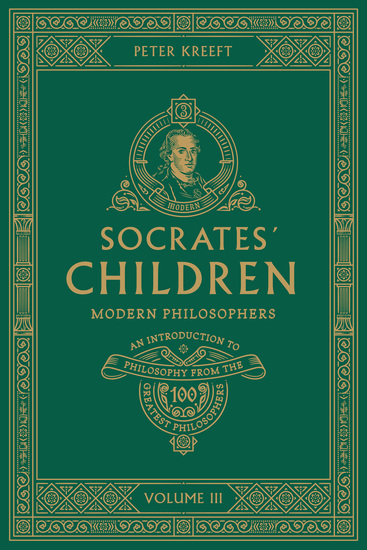
  • Socrates’ Children - An Introduction to Philosophy from the 100 Greatest Philosophers: Volume III: Modern Philosophers - cover

    Socrates’ Children - An...

    Peter Kreeft

    • 0
    • 0
    • 0
    Peter Kreeft, esteemed philosophy professor and author of over eighty books, has taught college philosophy for sixty years. Throughout those decades, he yearned for a beginner's philosophy text that was clear, accessible, enjoyable, and exciting (perhaps even funny). Finding none that met those criteria, he eventually decided to write it himself.  In this four-volume series, Kreeft delivers, with his characteristic wit and clarity, an introduction to philosophy via the hundred greatest philosophers of all time. Socrates’ Children examines the big ideas of four major eras―ancient, medieval, modern, and contemporary―and immerses the reader in the “great conversation,” the ongoing dialogue among the great thinkers of history, including the most influential philosopher of all: Socrates, the father of Western philosophy.  Volume III: Modern Philosophers explores a philosophical world caught up in the spirit of the Enlightenment―a time of both scientific discovery and social upheaval―and examines the philosophers who sought above all to answer the great questions of epistemology and politics: What is knowledge? How can we be certain? What is society? What is its greatest good? 
    Voir livre
  • Enquiries Concerning the Human Understanding and the Principles of Morals: Book Summary & Analysis - cover

    Enquiries Concerning the Human...

    Briefly Summaries

    • 0
    • 0
    • 0
    This is a concise summary and analysis of Enquiries Concerning the Human Understanding and the Principles of Morals, by David Hume.
     
    It is not the original book and is not affiliated with or endorsed by David Hume.
    Ideal those seeking a quick and insightful overview.
     
    Dive into a timeless exploration of human nature, morality, and knowledge with this foundational work in philosophy. In this thought-provoking text, the author challenges traditional assumptions about reason, experience, and ethics, presenting a compelling argument for empiricism and the role of human understanding in shaping our beliefs and actions. Through clear and incisive prose, the author examines the limitations of human cognition and offers profound insights into the principles of morals, questioning the basis of virtue and vice. Perfect for readers seeking to deepen their grasp of philosophy, this work remains a cornerstone of Enlightenment thought and a must-read for anyone interested in the origins of modern intellectual inquiry.
    Voir livre
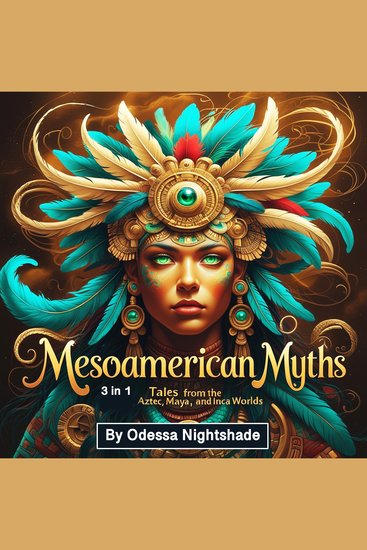
  • Mesoamerican Myths - Tales from the Aztec Maya and Inca Worlds (3 in 1) - cover

    Mesoamerican Myths - Tales from...

    Odessa Nightshade

    • 0
    • 0
    • 0
    Dive into the powerful and mysterious world of ancient Mesoamerica with this 3-in-1 collection of legendary tales. Mesoamerican Myths brings together the awe-inspiring stories, gods, and cosmic battles of three of the most influential civilizations of the ancient Americas—the Aztecs, the Maya, and the Inca. 
    Explore Aztec Myths and Legends, filled with gods of war, sun, and sacrifice, where epic struggles between light and darkness shaped their understanding of the cosmos. Then uncover the complex pantheon and sacred calendar in Mayan Myths and Legends, where creation myths, underworld journeys, and divine twins reveal deep cosmic order. Finally, ascend the mountains of South America in The Mythology of the Incas, discovering sun gods, divine rulers, and the origin of the Andes. 
    This volume offers readers a fascinating blend of historical insight and mythical wonder—perfect for mythology lovers, history enthusiasts, and anyone curious about the spiritual worlds of the Americas.
    Voir livre
  • Never Forget Our People Were Always Free - A Parable of American Healing - cover

    Never Forget Our People Were...

    Benjamin Todd Jealous

    • 0
    • 0
    • 0
    “One of the nation’s most prominent civil rights leaders” (Washington Post), a New York Times bestselling author, community organizer, investigative journalist, Ivy League professor, and former head of the NAACP, Ben Jealous draws from a life lived on America’s racial fault line to deliver a series of gripping and lively parables that call on each of us to reconcile, heal, and work fearlessly to make America one nation. 
    Never Forget Our People Were Always Free illuminates for each of us how the path to healing America’s broken heart starts with each of us having the courage to heal our own.The son of parents who had to leave Maryland because their cross-racial marriage was illegal, Ben Jealous’ lively, courageous and empathetic storytelling calls on every American to look past deeply-cut divisions and recognize we are all in the same boat now. Along the way Jealous grapples with hidden American mysteries, including:Why do white men die from suicide more often than black men die from murder?How did racial profiling kill an American president?What happens when a Ku Klux Klansman wrestles with what Jesus actually said? How did Dave Chappelle know the DC Snipers were Black? Why shouldn't the civil rights movement give up on rednecks?When is what we have collectively forgotten about race more important than what we actually know?What do the most indecipherable things our elders say tell us about ourselves? 
     Told as a series of parables, Never Forget Our People Were Always Free features intimate glimpses of political, and faith leaders as different as Jack Kemp, Stacey Abrams, and the late Archbishop Desmond Tutu and heroes as unlikely as a retired constable, a female pirate from Madagascar, a long lost Irishman, a death row inmate, and a man with a confederate flag over his heart. 
    More than anything, Never Forget Our People Were Always Free offers readers hope America’s oldest wounds can heal and her oldest divisions be overcome. 
    Supplemental enhancement PDF accompanies the audiobook.
    Voir livre
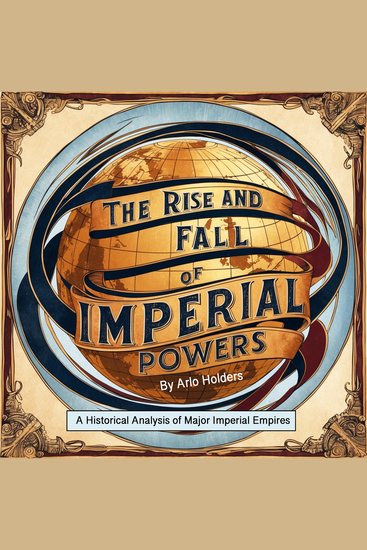
  • The Rise and Fall of Imperial Powers - A Historical Analysis of Major Imperial Empires - cover

    The Rise and Fall of Imperial...

    Arlo Holders

    • 0
    • 0
    • 0
    Imperialism has shaped the course of world history, influencing politics, economics, culture, and warfare across centuries. At its core, imperialism refers to the policy or ideology by which a state extends its rule over other territories, often through military conquest, economic dominance, or political influence. Empires have risen and fallen throughout history, leaving behind legacies that continue to shape modern societies. This chapter explores the fundamental characteristics of imperialism, its driving forces, and its historical significance. 
    An empire typically consists of a dominant power that exerts control over vast regions, governing diverse populations with varying degrees of autonomy. While military conquest has historically been a primary means of expansion, economic incentives and ideological justifications have also played crucial roles in the formation of empires. The pursuit of wealth, resources, and trade routes has often motivated imperial ambitions, as seen in the European colonial empires that sought to control lucrative markets across the world. Political and strategic concerns, such as securing borders or maintaining dominance over rivals, have further fueled imperial expansion. 
    Cultural and ideological factors have also been significant in the spread of empires. Many imperial powers have justified their expansion by claiming to bring civilization, religion, or superior governance to the territories they conquered. The Roman Empire, for example, promoted the spread of Roman law and culture as a means of integrating conquered peoples. Similarly, European colonial empires often framed their dominance as a "civilizing mission," using religion and education as tools to reshape local societies. However, such justifications often masked exploitative economic and political systems that benefited the ruling powers at the expense of the subjugated populations.
    Voir livre

  • Kaya Mijikenda - The Nine Tribes - cover

    Kaya Mijikenda - The Nine Tribes

    Ibrahim Mwafrika

    • 0
    • 0
    • 0
    Based on a true culture, way of life in the year 1500 AD. The Kaya Mijikenda Community of the Bantu Origin namely Kambe, Ribe, Jibana, Kauma, Rabai, Chonyi, Giriama, Duruma and Digo, lived a life worth remembering. Here is their Story.
    Voir livre