Rejoignez-nous pour un voyage dans le monde des livres!
Ajouter ce livre à l'électronique
Grey
Ecrivez un nouveau commentaire Default profile 50px
Grey
Abonnez-vous pour lire le livre complet ou lisez les premières pages gratuitement!
All characters reduced
Concerto - cover

Concerto

Robert S. Field

Maison d'édition: The Conrad Press

  • 0
  • 0
  • 0

Synopsis

On Charlie Tyndale’s family tree Are branches bearing, he discovers, Ancestors of the landed gentryIncluding incestuous lovers;An intrepid adventurer too,With an eye for a collectible,And there’s a murdered musician whoIn life was all too corruptible.Was his killer a spurned lover, orA rival claimant to the estate, Or treasure-seekers settling a score,Or all, in a brutal syndicate?    And through all a Concerto’s movements endure;   To Charlie’s ancestral tale, the overture.
Disponible depuis: 10/06/2023.

D'autres livres qui pourraient vous intéresser

  • Tao Te Ching - A New English Version - cover

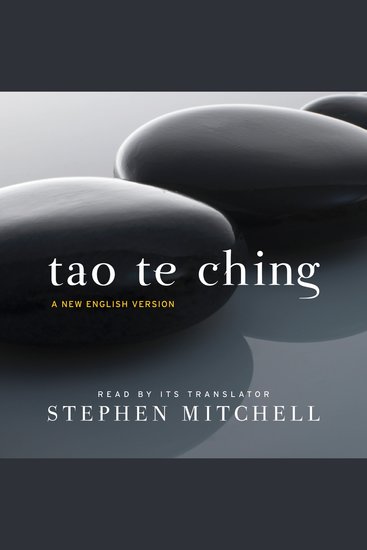
    Tao Te Ching - A New English...

    Lao Tzu

    • 0
    • 0
    • 0
    In 81 brief chapters, Lao-Tzu's Tao Te Ching, or Book of the Way, provides advice that imparts balance and perspective, a serene and generous spirit, and teaches us how to work for the good with the effortless skill that comes from being in accord with the Tao—the basic principle of the universe.  
    Stephen Mitchell's bestselling version has been widely acclaimed as a gift to contemporary culture.
    Voir livre
  • I Remember - I Am Eternally Divine - cover

    I Remember - I Am Eternally Divine

    Travis Huntley

    • 0
    • 0
    • 0
    I Remember is a book of poetry inspired while traveling, spending time in nature and from my life's experiences. As a multiracial man in America, I feel I was given the opportunity to experience discrimination and prejudice from people of all walks of life. To learn I needed to love to accept myself first so I can witness firsthand society's most crucial issues of division and polarity. From the systemic illusion of separation from nature and humankind as a whole, due to the fact that most of us have yet to remember who we really are. Although the media is persistently promoting fear and division. The intention of this book is to share a sense of awareness of who we are beyond the body while inspiring the reader to love and have compassion for themselves and others at a greater capacity. Regardless of what one may have learned from their parents, culture, media, movies etc. I Remember is resurfacing to remind the masses we are all equal expressions of the Divine and now have a role to play in co-creating “The More Beautiful World our Hearts Know is Possible.”
    Voir livre
  • Birds and all Nature Vol IV No 3 September 1898 - cover

    Birds and all Nature Vol IV No 3...

    Various Various

    • 0
    • 0
    • 0
    Birds and All Nature was a monthly publication of the Nature Study Publishing Company of Chicago. It includes short poems and brief descriptions of birds, animals and other natural subjects with accompanying color plates. The magazine was published from 1897-1907 under the various titles, "Birds," "Birds and all Nature," "Nature and Art" and "Birds and Nature."   - Summary by J. M. Smallheer
    Voir livre
  • Rubáiyát of Omar Khayyám The (Fitzgerald 5th edition) - cover

    Rubáiyát of Omar Khayyám The...

    Omar Khayyám

    • 0
    • 0
    • 0
    The Rubáiyát of Omar Khayyám is so-named from the Persian word rubáiyát - a Persian word denoting a specific type of two-line stanza. Omar's Rubaiyat is a beautiful anthology of Islamic wisdom literature: originally penned in medieval Persian during the late 11th century AD.  
    The best known English translations are those by Edward Fitzgerald: his fifth (and last) translation includes a mere 101 quatrains - a fraction of Omar's original work. Fitzgerald's selection loosely groups quatrains by theme; rendering quatrains into English as four-line, rhymed stanzas.  
    Omar's writings are pervaded by the consciousness of the transient quality of life. In his Rubáiyát, the author ponders the limits of human knowledge and morality: and confronts his readers point-blank with the difficult questions that challenge every generation:  
    - what is the ultimate benefit derived from human knowledge?  
    - given human mortality; is is best to guide our lives by the dictates of reason, or sensuality?  
    - what happens to my soul when I die?  
    - why did God - the Creator - give me existence?  
     
    (Introduction by Godsend)
    Voir livre
  • The Boy at the Back of the Class - cover

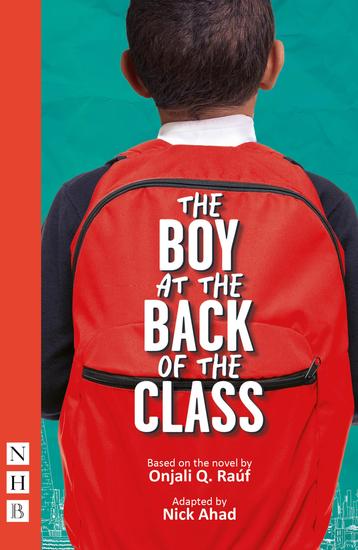
    The Boy at the Back of the Class

    Onjali Q. Raúf

    • 0
    • 0
    • 0
    'Nobody would get in this boat unless they had to. Me and my family, we had to.'
    When they learn that Ahmet came to the UK after fleeing his own war‑torn country, his classmates have 'The Greatest Idea in the World' – a magnificent plan to reunite Ahmet with his family. What follows is an unexpected and often hilarious adventure, all topped off with a terrific twist.
    Based on the best-selling and award-winning novel by Onjali Q. Raúf, this stage adaptation of The Boy at the Back of the Class is a joyful and heartfelt testament to the power of friendship, and a reminder that everyone needs a place to call home.
    Nick Ahad's adaptation was first performed in a co-production between the Rose Theatre, Kingston, and Children's Theatre Partnership in 2024, directed by Monique Touko, and was revived on a tour of the UK in 2026.
    Voir livre
  • The Tragedy of Timon of Athens - cover

    The Tragedy of Timon of Athens

    William Shakespeare

    • 0
    • 0
    • 0
    The Tragedy of Timon of Athens (The Life of Tymon of Athens) is a play by William Shakespeare, probably written in collaboration with Thomas Middleton in about 1605–1606, which was published in the First Folio in 1623. It is about the fortunes of an Athenian named Timon. The central character is a beloved citizen of Athens who through tremendous generosity spends his entire fortune on corrupt hangers-on only interested in getting the next payout.
    The earliest-known production of the play was in 1674, when Thomas Shadwell wrote an adaptation under the title The History of Timon of Athens, The Man-hater. Multiple other adaptations followed over the next century, by writers such as Thomas Hull, James Love and Richard Cumberland. The straight Shakespearean text was performed at Smock Alley in Dublin in 1761, but adaptations continued to dominate the stage until well into the 20th century.
    ... Flavius arrives. He wants the money as well, but he also wants Timon to come back into society. Timon acknowledges that he has had one true friend in Flavius, a shining example of an otherwise diseased and impure race, but laments that this man is a mere servant. He invites the last envoys from Athens, who hoped Timon might placate Alcibiades, to go hang themselves, and then dies in the wilderness. Alcibiades, marching on Athens, then throws down his glove, and ends the play reading the bitter epitaph Timon wrote for himself, part of which was composed by Callimachus:
    "Here lies a wretched corpse of wretched soul bereft:
    Seek not my name: a plague consume you wicked caitiffs left!"
    Here lie I, Timon, who alive, all living men did hate,
    Pass by, and curse thy fill, but pass and stay not here thy gait...
    Among the most significant works William Shakespeare: Hamlet, Othello, King Lear, Macbeth, Orpheus, Romeo and Juliet, Julius Caesar, Troilus and Cressida, The Tempest, Venus and Adonis, Antony and Cleopatra, Measure for Measure, The Winter's Tale and many more.
    Voir livre