¡Acompáñanos a viajar por el mundo de los libros!
Añadir este libro a la estantería
Grey
Escribe un nuevo comentario Default profile 50px
Grey
Suscríbete para leer el libro completo o lee las primeras páginas gratis.
All characters reduced
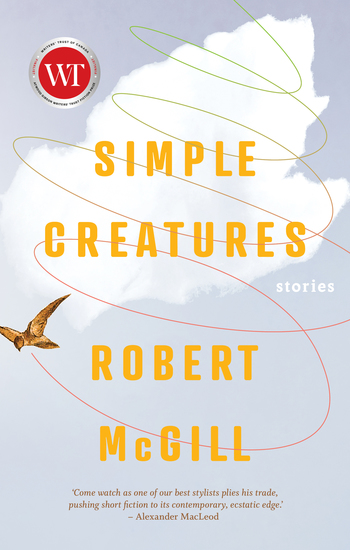
Simple Creatures - cover

Simple Creatures

Robert McGill

Editorial: Coach House Books

  • 0
  • 0
  • 0

Sinopsis

FINALIST FOR THE 2025 ATWOOD GIBSON WRITERS' TRUST FICTION PRIZE 
With an intimate, comic, and compassionate eye, the twelve stories in Simple Creatures consider what it means to live with less in the twenty-first century. 
In this debut collection, Robert McGill explores the heartaches and joys of people who are desperate to uncomplicate their complicated world. Through stories taking the form of YouTube monologues, pet-care instructions, school reports, or the unspoken thoughts of a young scholar obsessed with a famous Canadian writer, Simple Creatures also shows us the sometimes hilarious, often poignant ways in which our use of language shapes our relationships with others and ourselves.We meet a teenager who wants to live among a community of Bigfoot that he claims to have discovered in the woods; the widow of a famous endocrinologist after she gains custody of a chimpanzee from his lab; a boy whose fledgling hockey career is troubled by the fact that his name is Leo Gretzky; and a divorcee seeking out the mysterious author of a viral environmental pledge. Through their lives, Simple Creatures offers an acute, sympathetic portrait of our time. 
“Here are people struggling with simple needs and small dramas that nevertheless got entirely under my skin – sublime awe, tender longing, painful anxiety, too. Robert McGill’s masterful Simple Creatures reminded me of how potent an elixir the short story form can be – the magic of words alchemically transforming within me into raw feeling. The stories in Simple Creatures truly live and breathe.” – Kathryn Kuitenbrouwer, author of Wait Softly Brother 
"Robert McGill writes hilarious, smart, heart-breaking stories. A master of voice and dialogue, character and perspective, he knows everyone’s loneliness. We’re all in here, the whole arc of life: children in the beginning, elderly athletes battling to the end, and middle aged lovers trying to love in the middle of the internet and a climate disaster. Come watch as one of our best stylists plies his trade, pushing short fiction to its contemporary, ecstatic edge." – Alexander MacLeod, author of Light Lifting and Animal Person
Disponible desde: 08/10/2024.
Longitud de impresión: 176 páginas.
Otros libros que te pueden interesar

  • The Undying One - From their pens to your ears genius in every story - cover

    The Undying One - From their...

    Lafcadio Hearn

    • 0
    • 0
    • 0
    Lafcadio Hearn was born on the 27th June 1850 on the Ionian isle of Levkás in Greece to a British Army officer and a Greek Mother. 
    His father, fearing for his career prospects at being married to a Greek Orthodox wife, sent them to Dublin whilst he continued to advance his career with further postings.  Life there was difficult for mother and son.  His father returned, wounded and traumatised, when Lafcadio was three.  He annulled the marriage and she remarried but had to give up care of Lafcadio to her sister-in law.   
    After brief periods for Catholic education in England and France he emigrated to Ohio in the United States when he was 19, taking on a series of casual jobs before embarking on a career as a journalist, publishing poems and essays in Cincinnati.  It was whilst here that he began a side-line in translating, starting with Gautier and Flaubert.  He married in 1874 to a 20 year old African-American woman in violation of Ohio's anti-miscegenation law.  The marriage soon failed. 
    In 1877 he relocated to New Orleans to write on a variety of themes before picking up a two year assignment from Harper’s to write in the West Indies, where he also wrote his first novel. 
    In 1890 Harper’s sent him to Japan.  Here he left journalism and took the remarkable decision to become a schoolteacher in the north of Japan.   Enraptured by the culture he was driven to explain it in various Western publications to those who had little, if any, knowledge of its culture.  Within the year he had fallen in love with, and married, a high-born Japanese lady, together they would have four children.   
    In 1895 he became a Japanese national and took the name Koizumi Yakumo, Koizumi being his wife’s family name. 
    The following few years, whilst a professor of Literature at the Imperial University of Japan, were his most creative and admired period.   
    Lafcadio Hearn died of heart failure on the 26th of September 1904, in Tokyo, Japan shortly before leaving to deliver a series of lectures at Cornell University in New York State.  He was 54.
    Ver libro
  • These Islands Here - Short Stories of the South Pacific - cover

    These Islands Here - Short...

    Bronwyn Elsmore

    • 0
    • 0
    • 0
    A novel is a marriage. A short story a love affair. 
    Prominent authors have described short stories as the most disciplined and difficult form of prose writing. 
    Bronwyn Elsmore’s collection These Islands Here – Short Stories of the South Pacific, includes 32 fictional tales that present the varied facets of living in this part of the world. Most have been published previously, several have won short story competitions. 
    Reviewers say: "the author has mastered the art of the short story"; "they all have one common factor – they are each beautifully crafted". “The 32 stories in this book are divided into decades, each time period with its own helpful introduction. You'll laugh, you'll cry, and you'll learn more about the recent histories of Aotearoa/New Zealand.”
    Ver libro
  • Mutiny - A womans quest for social advancement meets a reporter investigating the truth aboard a ship - cover

    Mutiny - A womans quest for...

    Dorothy Edwards

    • 0
    • 0
    • 0
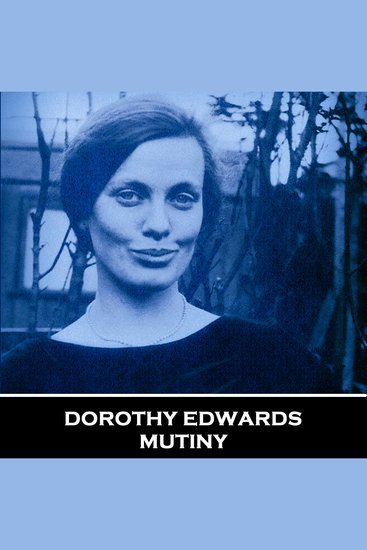
    Dorothy Edwards, an only child, was born on the 18th August 1902 at Ogmore Vale in Glamorgan. 
     
    Her father was a headmaster and an early activist in the Independent Labour Party.  At age 9 Dorothy, dressed in red, welcomed Keir Hardy on to the stage at Tonypandy during the national coal strike of 1912. She was taught that revolution was at hand, that class barriers would be a thing of the past. 
      
    Dorothy won a scholarship and boarded at Howell's School for Girls in Llandaff before moving to University College of South Wales and Monmouthshire where she read Greek and philosophy. 
     
    Her early hopes to be an opera singer were set to one side after graduating and the death of her father. Instead she took on part-time work to supplement her mother’s pension with whom she now lived. 
     
    Dorothy managed to write a number of short stories which appeared in the literary journals of the day.  She spent several months with her mother in Vienna, all the time revising or writing before embarking on ‘Winter Sonata’, a short novel published in 1928. 
     
    Introductions to several members of the Bloomsbury Group meant a move to London and a division of her time between child-care for the family of Bloomsbury author David Garnett and the promise of an advance payment for her work on a new volume of stories. 
     
    However, Dorothy’s life was starting to spiral out of control; she was attracted to the Welsh nationalist movement but felt that her Welsh provincialism made her, in London at least, feel socially inferior. Leaving her mother dependent on a hired companion consumed her with guilt as did the end of an affair with a married musician. 
     
    On the 5th January 1934, having spent the morning burning her papers, Dorothy Edwards threw herself in front of a train near Caerphilly railway station.  
     
    Her suicide note read: "I am killing myself because I have never sincerely loved any human being all my life. I have accepted kindness and friendship and even love without gratitude, and given nothing in return."
    Ver libro
  • Indoor Kind of Girl An - cover

    Indoor Kind of Girl An

    Frankie Barnet

    • 0
    • 0
    • 0
    Someone at a party describes you as an “indoor kind of girl.” What does that even mean? You don’t know, but you spend the following week obsessing about it. You watch three seasons of ‘Keeping Up with the Kardashians’ in two days. You get a pet turtle. You absent-mindedly paint what ends up looking like your high school’s football coach, but naked. You go backpacking in Australia for a few months. You try speaking with a New York accent in public, just to see if people like that version of you better. The comment still haunts you. An “indoor kind of girl.” You feel like you’re that person, but you’re not that person.
    Ver libro
  • Dancing Blades - Seventeen Series Short Story 2 - cover

    Dancing Blades - Seventeen...

    A.D. Starrling

    • 0
    • 0
    • 0
    Join Lucas Soul on his quest to become a warrior.  
       Edo period. Japan.   
       
    When hunted half-breed immortal Lucas Soul hears tales of legendary samurai Musashi Miyamoto during his travels in the Far East, he sails to Japan to meet the great man and convince him to take him on as an apprentice.  
       
    Musashi refuses to agree to his request, leaving Soul with no option but to shadow the samurai and repeatedly challenge him to duel, in the hope of proving his worth. But things takes a sinister turn when Soul stumbles upon a plot that threatens the life of Musashi’s son.  
       
    Can the immortal rescue the young man in time and change the master’s mind?  
       
    Join Soul as he embarks on an exciting adventure that sees him grow as a warrior and gain the respect of the greatest samurai who has ever lived.Dancing Blades is a short story set in AD Starrling's bestselling supernatural thriller series Seventeen. If you like high-octane adventures that combine science and fantasy, then you'll love the world of Seventeen.  
       
    Visit Shop AD Starrling to get digitally signed books and discounted bundles!
    Ver libro
  • Tobermory - From their pens to your ears genius in every story - cover

    Tobermory - From their pens to...

    Saki Saki

    • 0
    • 0
    • 0
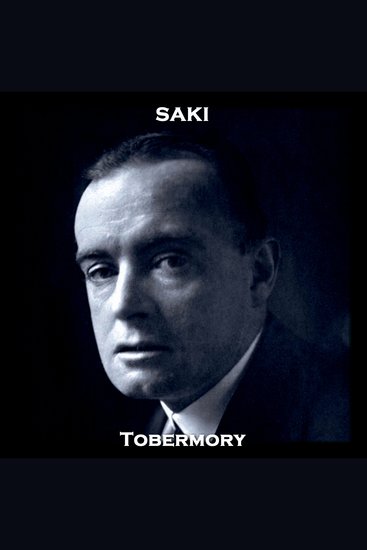
    Hector Hugh Munro, more familiarly known by his pen-name ‘Saki’ was born in what was then Akyab in British Burma on 18th December 1870. His father was an Inspector General for the Indian Imperial Police, and his mother the daughter of a Rear Admiral. 
    When he was 2 his mother died and he and his siblings were sent back to England to be raised by their grandmother and paternal maiden aunts in a strict, puritanical household near Barnstaple, Devon. Educated by governesses Saki used many of these women as character models for his later writing. 
    At 17 his father retried and returned to England and then embarked on a series of European travels with Saki and his siblings. 
    After a short stint working in Burma with the Indian Imperial Police Saki decided to move to London to make a living as a writer. Initially he wrote as a journalist for a number of newspapers and magazines before attempting an historical study, ‘The Rise of the Russian Empire’, whose real value lay in directing him to writing short stories instead, the first of which, ‘Dogged’, he published in 1899. 
    From here it was a short stab of the pen to writing political satire before in 1902 he became the foreign correspondent for The Morning Post, first in the Balkans, then Russia, Paris and back to London in 1908, where 'the agreeable life of a man of letters with a brilliant reputation awaited him.'  
    Collections of his short stories full of witty, mischievous and often macabre stories that satirized Edwardian society and two novels now appeared in the years up to the Great War.  At its’ outbreak he was 43 but managed to join as an ordinary trooper. More than once he returned to the battlefield when officially too sick or injured.  
    On 14th November 1916 Hector Hugh Munro was sheltering in crater during the Battle of the Ancre, when he was shot and killed by a German sniper. According to several sources, his last words were "Put that bloody cigarette out!"
    Ver libro