Join us on a literary world trip!
Add this book to bookshelf
Grey
Write a new comment Default profile 50px
Grey
Subscribe to read the full book or read the first pages for free!
All characters reduced
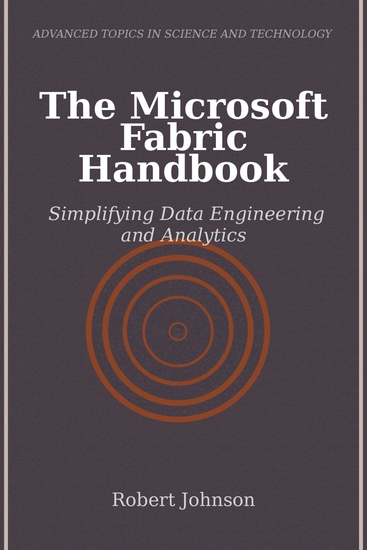
The Microsoft Fabric Handbook - Simplifying Data Engineering and Analytics - cover

The Microsoft Fabric Handbook - Simplifying Data Engineering and Analytics

Robert Johnson

Publisher: HiTeX Press

  • 0
  • 0
  • 0

Summary

"The Microsoft Fabric Handbook: Simplifying Data Engineering and Analytics" is an essential guide designed for professionals and beginners seeking to navigate the dynamic world of data management and analysis with Microsoft Fabric. This comprehensive resource offers clear, structured insights into each component of the platform, from setting up a robust environment to integrating complex data sources and transforming raw data into valuable insights. With a focus on practical application, readers learn how to effectively harness Microsoft Fabric's capabilities to address real-world challenges in data engineering.The book not only delves into the technical aspects of Microsoft Fabric but also explores its strategic advantages within the broader Microsoft ecosystem. Through detailed case studies and illustrative examples, readers gain a deeper understanding of how to deploy data solutions that drive innovation and efficiency across various industries. Emphasizing best practices in security, compliance, and troubleshooting, this handbook serves as a critical resource for those aiming to optimize data pipelines and achieve excellence in data-driven decision-making. Whether you're embarking on your first project or enhancing existing skills, this book provides the knowledge foundation needed to excel in today's data-centric landscape.
Available since: 01/06/2025.
Print length: 261 pages.

Other books that might interest you

  • Zoology - The Animal Kingdom - cover

    Zoology - The Animal Kingdom

    Mike Crawford

    • 0
    • 0
    • 0
    Zoology, the scientific study of animals, is a broad and dynamic field that encompasses a wide range of topics, from the anatomy and physiology of organisms to their behaviors, evolutionary history, and interactions with their environments. It is a fundamental branch of biology, crucial for understanding life on Earth. The word "zoology" comes from the Greek words "zoo," meaning animal, and "logos," meaning study, thus literally translating to the "study of animals." This field not only explores the diversity of animal life but also offers insights into the nature of life itself and the interrelationships among all living organisms. 
    The scope of zoology is vast, as it covers every aspect of animal life, from the microscopic world of single-celled organisms to the complex behaviors of large mammals. The study of zoology can be broken down into several subfields, such as physiology, behavior, evolution, ecology, and taxonomy, each of which provides valuable information about the functioning of animals in the natural world. For example, physiologists examine how animals’ bodily systems—like the nervous, respiratory, and circulatory systems—function to maintain life, while evolutionary biologists trace the development of animal species over time. Ecologists focus on how animals interact with their environments, while taxonomists classify and name the vast array of species found on Earth.
    Show book
  • Get Smart with Social Media - Unlock Proven Tips for Building a Powerful Online Presence - cover

    Get Smart with Social Media -...

    Lexi Primuth

    • 0
    • 0
    • 0
    Get Smart with Social Media: Unlock Proven Tips for Building a Powerful Online PresenceIn today's digital world, mastering social media is essential for building a powerful online presence. Get Smart with Social Media: Unlock Proven Tips for Building a Powerful Online Presence provides you with the insights and strategies needed to stand out, grow your brand, and engage your audience across various platforms. From optimizing your profiles and creating compelling content to leveraging analytics and boosting engagement, this guide offers practical tips and expert advice for maximizing your impact on social media.Whether you're a business owner, influencer, or just starting your social media journey, this resource will equip you with the tools to succeed in the competitive online landscape. Elevate your digital game and start building a presence that gets noticed!
    Show book
  • The Effluent Society - cover

    The Effluent Society

    Norman Thelwell

    • 0
    • 0
    • 0
    Artist Norman Thelwell is best known for his cartoons depicting plump, petulant ponies and their young riders, but The Effluent Society shows another aspect of his work and character. Thelwell was passionate about the countryside and nature. During his life he became increasingly concerned about the impact of development, pollution and society's treatment of the environment. When The Effluent Society was first published in 1971, his concerns were way ahead of their time. Today, environmental and conservation issues are in the mainstream and have become a global priority.
    
    Although the cartoons focus on a serious topic there is no mistaking Thelwell's inimitable style. He used his talent and humour to convey a powerful message: the need to protect the environment. He also takes a wry look at modern life and so-called progress. Thelwell admitted that out of all his books, The Effluent Society was the one that gave him the greatest 'personal satisfaction' and, as such, the re-issue of this title is a fitting tribute to the artist.
    Show book
  • Technology and the Environment - Sustainable Solutions - cover

    Technology and the Environment -...

    Craig Dames

    • 0
    • 0
    • 0
    The relationship between technology and the environment is increasingly becoming a focal point in discussions about sustainability and the future of our planet. As the world faces growing environmental challenges, technological innovation plays a crucial role in providing solutions. From renewable energy technologies to smart agricultural practices, technology is being leveraged to address some of the most pressing issues, including climate change, resource depletion, and pollution. However, while technology offers vast potential to mitigate environmental harm, it also raises questions about its impact on natural ecosystems and whether technological advancements always lead to positive outcomes for the environment. 
    In recent decades, the global focus on environmental sustainability has been paired with rapid technological development. The relationship between the two is dynamic—where technology can either exacerbate environmental issues or serve as the key to solving them. For example, the industrial revolution, powered by fossil fuels and machinery, contributed significantly to environmental degradation, yet the same technological advancements have now paved the way for cleaner, more sustainable solutions. This dual nature of technology’s impact on the environment makes it essential to examine how technology can be harnessed in ways that benefit rather than harm our ecosystems. 
    One of the key ways technology is addressing environmental challenges is through the development of renewable energy sources. Solar panels, wind turbines, and other green technologies offer cleaner alternatives to the traditional methods of power generation, reducing reliance on coal, oil, and natural gas. These renewable energy solutions have the potential to dramatically reduce carbon emissions, a leading cause of climate change.
    Show book
  • Remediation of the Land Air and Water - cover

    Remediation of the Land Air and...

    Dr. Christina Rahm

    • 0
    • 0
    • 0
    Industrial civilization has contributed significant pollution in the land, air, and water, all of which impact human survival. As a scientist in this field, Dr. Christina Rahm dedicated her career to researching and implementing strategies to protect our planet’s precious resources while promoting human health and wellbeing. She hopes to raise awareness about the disastrous impact of harmful pollution on the environment and minimizing its impact on our lives. 
    Dr. Rahm discusses: pollution prevention and remediation, regulatory compliance requirements, novel approaches for reducing water contamination, and decreasing soil corruption. This book shines a light on challenges facing our environment caused by advancements in technology or industrialization. A passionate advocate of heavy metal detoxification, Dr. Rahm targets those seeking a better understanding of the impact of heavy metals in our environment, how to make a difference in the environment, and what the government can do to help. 
    Whether an avid environmentalist or simply concerned about preserving a healthy body for yourself and future generations, this book is sure to inspire with new ideas and a better 
    understanding for building a greener and healthier future.
    Show book
  • The First History of Man - cover

    The First History of Man

    MD John Bershof

    • 0
    • 0
    • 0
    In the spirit of medieval writer Chaucer, all human activity lies within the artist’s scope, the History of Man Series uses medicine as a jumping off point to explore precisely that, all history, all science, all human activity since the beginning of time. The jumping off style of writing takes the reader, the listener into worlds unknown, always returning to base, only to jump off again. History of Man are stories and tales of nearly everything. 
    The First History of Man uses infection in general—bacteria, viruses, fungus, parasites, epidemics & pandemics, COVID-19—to lay the foundation for the next five books, narratives and stories that delve deeper into human infectious diseases. This first volume jumps off into accounts of the Big Bang Theory—the real one, but also the sitcom—the origin of the Universe, from atoms to DNA to us and how exactly it happened. In our journey we’ll explore Einstein and Newton who were probably aliens (he said jokingly), the Roman Empire, British history and all those wives of King Henry VIII, the why and how of the Protestant Reformation, why Pluto lost its planet status in our solar system, what exactly is the sweet spot of a solar system, all the while digging up some archeology, and even paying a visit with Dr. Livingstone, I presume. We’ll trudge from the top of Everest, the highest point on Earth, to the bottom of the Mariana Trench, the lowest point on Earth, and LUA in between, the Last Universal Ancestor that gave rise to all life on Earth.
    Show book