Join us on a literary world trip!
Add this book to bookshelf
Grey
Write a new comment Default profile 50px
Grey
Subscribe to read the full book or read the first pages for free!
All characters reduced
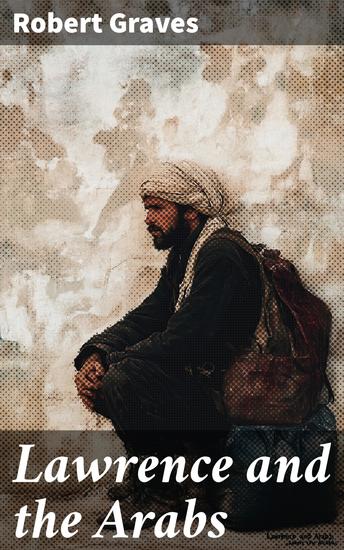
Lawrence and the Arabs - cover

Lawrence and the Arabs

Robert Graves

Publisher: Good Press

  • 0
  • 0
  • 0

Summary

In "Lawrence and the Arabs," Robert Graves intricately examines the life and endeavors of T.E. Lawrence, blending biographical narrative with a critical exploration of the political dynamics of the Arab Revolt during World War I. Graves employs a lyrical style, layering rich, vivid prose with insightful commentary that reflects the complexities of nationalism, imperialism, and cultural identity within the Middle East. The book stands as a significant literary exploration set against the backdrop of a tumultuous era, contributing to the understanding of the interplay between personal ambition and broader historical forces, while indicating Graves' own skepticism towards romanticized warfare narratives. Robert Graves, an accomplished poet and novelist, is renowned for his deep engagement with themes of mythology and war. His experiences as a soldier in World War I and his fascination with Eastern cultures shaped his perspective on Lawrence's influence in the region. Through his meticulous research and personal reflections, Graves not only honors Lawrence's legacy but also interrogates the implications of his involvement in Arab affairs, revealing the underlying tensions that framed his actions. This book is highly recommended for readers interested in historical narratives, military history, and the political intricacies of the early 20th century. Graves' work offers a thought-provoking examination of one of history's most enigmatic figures, appealing to both scholars and general readers who seek a deeper understanding of T.E. Lawrence's impact on the Arab world.
Available since: 03/02/2025.
Print length: 200 pages.

Other books that might interest you

  • Is There in the Brain Anything Untouched By Culture? - Brockwood Park and Gstaad 1975 - Dialogue 9 - cover

    Is There in the Brain Anything...

    Jiddu Krishnamurti

    • 0
    • 0
    • 0
    Is there in the brain anything untouched by culture?" - 6 August 1975Can there be a total perception which completely heals the brain?What benefit has culture?Does speech come before thought?Is it possible to say something without the operation of thought?Is there in the brain anything untouched by culture?Is attention a conscious process?Is love the factor of profound change?You explain all this, and you say that whatever the damaged brain – which is the result of thought and tradition and all the rest of it – whatever it does will produce further damage. So, because you point it out, I realise that. That is the first necessity – I realise it. Then, after I’ve realised it, you talk to me at a depth which thought has not touched. You planted a seed.
    Show book
  • Secrets to Writing Success: Simple Strategies for Captivating Stories - "Elevate your storytelling! Dive into engaging audio lessons for mastering compelling narratives effortlessly" - cover

    Secrets to Writing Success:...

    Harlan Blakemore

    • 0
    • 0
    • 0
    Secrets to Writing Success: Simple Strategies for Captivating Stories 
    Are you eager to advance your writing career and enhance your storytelling skills? 
    Searching for a comprehensive guide that encompasses all the essential strategies for crafting captivating stories? 
    Your quest ends here! 
    This audiobook is your ultimate companion for deepening your writing knowledge, refining your techniques, and engaging in practical exercises. With this resource, you’re set for success. 
    Updated for the latest storytelling trends and techniques. 
    Key features of this insightful guide: 
    - In-depth understanding of storytelling principles 
    - Clear explanations of essential writing concepts 
    - Effective strategies for storytelling enhancement and engagement 
    Our guide stands out through its thorough coverage, which is crucial for your writing success. Concepts aren't simply touched upon; they are explored with clarity and precision. 
    Please note that this guide is an independent resource and not affiliated with any official writing organizations. 
    Crafted with a structured format and straightforward language, our guide ensures smooth transitions between topics. Say goodbye to convoluted jargon and embrace clear, concise, and technically accurate content. 
    So, why wait? Click the BUY NOW button, obtain your guide, and embark on your journey to mastering the art of storytelling! 
    Get ready to transform your storytelling with actionable insights and simple strategies for captivating stories!
    Show book
  • South - the story of shackleton’s last expedition 1914–1917 - cover

    South - the story of...

    Ernest Shackleton

    • 0
    • 0
    • 0
    Embark on a journey of unparalleled resilience and human spirit with Ernest Shackleton's Endurance expedition. In the icy grip of the Antarctic, Shackleton and his crew set out in 1914 on a quest to traverse the frozen continent. Yet, fate had other plans. As the Endurance became ensnared in the crushing embrace of pack ice, the expedition transformed into a breathtaking saga of survival against insurmountable odds. 
    Amidst the desolate white expanse, Shackleton's leadership emerged as a beacon of hope. With unwavering determination, he navigated his crew through treacherous conditions, fostering an unbreakable bond of camaraderie in the face of despair. Battling frostbite, starvation, and the constant threat of the elements, each member of the expedition found within themselves an extraordinary reserve of courage. 
    Against a backdrop of relentless adversity, Shackleton's Endurance expedition transcends mere exploration, becoming a testament to the indomitable human spirit. It's a tale that captivates the imagination, evoking the triumph of the human will against nature's most formidable forces. Prepare to be enthralled by a narrative of resilience, fortitude, and the enduring power of the human spirit in the face of the unknown.
    Show book
  • Creative Imagination - cover

    Creative Imagination

    Warren Hilton

    • 0
    • 0
    • 0
    "Creative Imagination" by Warren Hilton explores the power of the human mind in generating innovative ideas and solutions. Hilton delves into the process of harnessing one's imagination to enhance problem-solving skills and boost personal and professional creativity. Through practical insights and exercises, the book aims to inspire readers to unlock their creative potential and apply it to various aspects of life. Read in English, unabridged.
    Show book
  • Working with the Developmental Trauma of Childhood Neglect - Using Psychotherapy and Attachment Theory Techniques in Clinical Practice - cover

    Working with the Developmental...

    Ruth Cohn

    • 0
    • 0
    • 0
    This book provides psychotherapists with a multidimensional view of childhood neglect and a practical roadmap for facilitating survivors' healing. 


    Working from a strong base in attachment theory, esteemed clinician Ruth Cohn explores ways therapists can recognize the signs of childhood neglect, provides recommendations for understanding lasting effects that can persist into adulthood, and lays out strategies for helping clients maximize therapeutic outcomes. Along with extensive clinical material, chapters introduce skills that therapists can develop and hone, such as the ability to recognize and discern nonverbal attempts at communication. They also provide an array of resources and evidence-based treatment modalities that therapists can use in session. 


    Working with the Developmental Trauma of Childhood Neglect is an essential book for any mental health professional working with survivors of childhood trauma.
    Show book
  • On the Popular Judgment: That may be Right in Theory but does not Hold Good in the Praxis - cover

    On the Popular Judgment: That...

    Immanuel Kant

    • 0
    • 0
    • 0
    This tripartite essay – published variously as “On the Popular Judgment” (J. Richardson trans.), “On the Old Saw” (E.B. Ashton trans.), or “On the Common Saying” (both M.J. Gregor and H.B. Nisbet) – Kant takes up the issue of the relation of theory to practice in three distinct ways. In the first, he replies to Christian Garve’s criticism of his moral theory, in the second, he distances himself from Thomas Hobbes, and in the third, Moses Mendelssohn. The three taken together are representative of the breadth of Kant’s moral and political thought; the first section being concerned with the individual, the second with the state, and the third with the species. Although this is, on the whole, a difficult piece to approach, the second and third sections are often read as a way into Kant’s political thought, and serve this purpose well, especially when read alongside his Perpetual Peace. (Summary by D.E. Wittkower.)
    Show book