Rejoignez-nous pour un voyage dans le monde des livres!
Ajouter ce livre à l'électronique
Grey
Ecrivez un nouveau commentaire Default profile 50px
Grey
Abonnez-vous pour lire le livre complet ou lisez les premières pages gratuitement!
All characters reduced
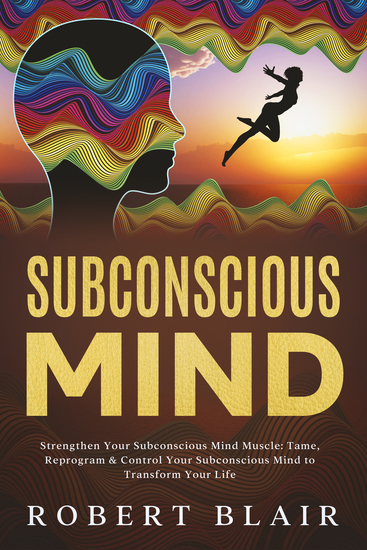
Subconscious Mind Strengthen Your Subconscious Mind Muscle - Subconscious Mind Strengthen Your Subconscious Mind Muscle Tame Reprogram & Control Your Subconscious Mind to Transform Your Life - cover

Subconscious Mind Strengthen Your Subconscious Mind Muscle - Subconscious Mind Strengthen Your Subconscious Mind Muscle Tame Reprogram & Control Your Subconscious Mind to Transform Your Life

Robert Blair

Maison d'édition: Fanton Publishers

  • 0
  • 0
  • 0

Synopsis

Strengthen your subconscious mind muscle, tame it, reprogram it and take conscious control over it such that it does everything you consciously want to do.
 
Did you know that over 80% of the decisions we make stem from our subconscious mind, at an emotional level? While we make decisions consciously, the truth is that the subconscious mind runs the show for most of us.
 
In fact, it is as if we just run on autopilot and our conscious part of the brain just ‘rubber stamps’ the decisions or preferences from our subconscious mind. In simple terms, while we may seem to be consciously in control of our thoughts and actions, the truth is that our conscious mind is hardly even aware of what’s happening, as the subconscious mind runs the show! We (our conscious self) are like puppets that our subconscious mind controls whether we are awake or asleep!
 
Here an interesting fact; when you let your subconscious mind operate with no semblance of conscious control of what it concentrates on and makes habitual, the probability of your life being desirable (to you and others) is slim. When your subconscious mind rules you, you operate on impulse, which translates to lack of self-discipline, chronic procrastination, low productivity, you having bad habits, you not having high emotional intelligence and much more.
 
If all this sounds familiar and you want to change all that, here is good news for you; you can turn the tables to your favor such that you make you lord over your subconscious mind instead of the letting it rule.
 
How then can you turn the tables to your favor? This book will show you how.
 
More precisely, with this this book, you will:
 
Build a comprehensive understanding of your subconscious mind so that you know just how powerful it is and how much control it has over you
 
Understand why being the one in control over your subconscious mind will work in your favor
 
Find specific steps you can take to gain conscious control over your subconscious mind
 
Understand the place of awareness in becoming lord over your subconscious mind
 
How to use awareness to your advantage taking reins over your subconscious mind
 
Know the rules of the game that you MUST adhere to if you are to increase your chances of success
 
Understand how to grow your subconscious mind’s ‘muscle’ to your benefit
 
Discover other strategies you can use to make reprogramming your subconscious mind a lot easier and more effective
 
Learn much, much more!
 
By reading this book and taking action, you will be among the few that don’t act out of impulse (which is your subconscious mind controlling your conscious mind). You will be more purposeful and directional in your actions so that you ultimately move closer to the version of yourself that you wish to become i.e. someone with good habits, who doesn’t procrastinate often, someone who is productive, someone who is disciplined and such.


Disponible depuis: 13/05/2025.
Longueur d'impression: 37 pages.

D'autres livres qui pourraient vous intéresser

  • The Journey's End - An Investigation of Death and Dying in Modern America - cover

    The Journey's End - An...

    Michael Doring Connelly

    • 0
    • 0
    • 0
    In the tradition of Atul Gawande’s Being Mortal, this compassionate work helps individuals develop a more accepting view of dying while teaching them what to expect and how to navigate the healthcare system at the end of life. 
      
    In elderhood, the health care system has a narrow view of how to provide care. It focuses on extending a patient's life at all costs, with an over-reliance on machines and procedures, instead of caring holistically for the person. Accordingly, many of us will likely spend our final weeks in long-term care facilities or an ICU. 
      
    Dying at home, peacefully, and surrounded by family is almost impossible in our world—and our fear of death is a major contributor to this impossibility. Fittingly, the central idea of this book is that in old age, or when facing a terminal diagnosis, it is more important to understand your life rather than to extend it. While this may seem simple, its implications are profound. 
      
    A natural death means accepting that, at some point, we are old enough or sick enough to die. In our cynical and overly clinical age, it is difficult to reflect on the meaning of one's life, but that kind of honest introspection is exactly what we need. Accordingly, The Journey’s End seeks to help people manage their healthcare, their expectations, and their decisions in the final phase of life.
    Voir livre
  • How is One to Be Entirely Free of Fear? - Malibu 1970 - Small Group Discussion 8 - cover

    How is One to Be Entirely Free...

    Jiddu Krishnamurti

    • 0
    • 0
    • 0
    What do we mean by fear? Fear of what? There are various types of fear and we need not analyse every type. But we can see that fear comes into being when our comprehension of relationship is not complete. Relationship is not only between people but between ourselves and nature, between ourselves and property, between ourselves and ideas; as long as that relationship is not fully understood, there must be fear. Life is relationship. To be is to be related and without relationship there is no life. Nothing can exist in isolation; so long as the mind is seeking isolation, there must be fear. Fear is not an abstraction; it exists only in relation to something.
    Voir livre
  • Summary of Sam Quinones’s The Least of Us - cover

    Summary of Sam Quinones’s The...

    Falcon Press

    • 0
    • 0
    • 0
    Buy now to get the main key ideas from Sam Quinones’s The Least of Us 
      
    Sam Quinones’s The Least of Us (2021) is an in-depth analysis of drug use and addiction in America, and how it has been exacerbated by Mexican smugglers, drug traffickers, and pharmaceutical companies. Quinones chronicles the American opioid epidemic and explores the far-reaching damage generated by the meth and fentanyl crises. This follow-up to his bestseller Dreamland is a powerful combination of scientific research and new insights into the reality of drug use.  
    From real-life experiences of drug victims and addicts, Quinones tells stories of pain, weakness, and wreckage. He also reveals how food chains and international corporations indirectly use the language of drugs to target consumers and satisfy their cravings. 
     
    Voir livre
  • Trust Signals - cover

    Trust Signals

    Scott Baradell

    • 0
    • 0
    • 0
    What is a trust signal?Let’s say you’re interested in a book you aren’t familiar with—this book, for example. Before you buy it, you wonder, “Can I trust this author?” Can you trust that their book will be worth your money and your time?The author, in turn, tries to prove their trustworthiness in a number of ways:An accomplished and relevant biographyGlowing praise from well-known people on the coverFive-star reviews on AmazonAcclaim on social media by people you followCoverage in news media outlets you know and respectThese are examples of trust signals, the points of evidence that individuals, companies, and brands use to win one another’s trust.Mastering these signals is the single best way to build, grow, and protect your brand in today’s post-truth world—where trust is the most precious commodity of all.
    Voir livre
  • Indiana Jones and Philosophy - Why Did it Have to be Socrates - cover

    Indiana Jones and Philosophy -...

    Dean A. Kowalski

    • 0
    • 0
    • 0
    If adventure has a name, it must be Indiana Jones! He's both a mild-mannered archaeology professor and an intrepid adventurer traversing the globe in search of lost artifacts. Whether seeking the Ark of the Covenant in Egypt, the Sankara Stones in India, the Holy Grail in Turkey, or a mysterious crystal skull in Peru, Indy's adventures never fail to delight audiences. 


    Indiana Jones and Philosophy takes you on a whirlwind journey to investigate some of the most enduring questions about the human condition. You'll learn about how Indy has wronged Marion Ravenwood, how a virtuous person would make amends, the strides Indy makes to repair his relationship with his father, why Indy distinguishes fact from truth when he pursues archaeological treasures, and much more. With trusty guides such as Aristotle, Camus, Kant, and Nietzsche at your side, you'll consider possible answers to these questions and see Indiana Jones in a whole new light! 


    Comprehensive, immersive, and engaging, Indiana Jones and Philosophy offers you an accessible and lively opportunity to dive deeper into the world of Indiana Jones and appreciate the character's greatness anew!
    Voir livre
  • Exploring the Poles: The History of the Initial Expeditions that Attempted to Reach the North Pole and South Pole - cover

    Exploring the Poles: The History...

    Editors Charles River

    • 0
    • 0
    • 0
    Exploration of Earth’s wilderness areas became an international obsession in the late 19th and early 20th centuries, as economically advantaged nations, in particular European powers and the United States were well equipped to mount exhaustive expeditions. From previously inaccessible forests and jungle country to the world’s great mountain ranges, adventurers sought out the greatest extremes of climate and terrain in a race to plant the first flag where humanity struggled to survive. 
    	An earlier wave of explorers led to the opening of the New World, and early polar expeditions saw ancient ships of various nations sail along the coastlines of Greenland and within reach of the Arctic and Antarctic continents. Many 19th century figures approached the polar region with an eye to traversing it. Most notable among them was British explorer Sir James Clark Ross, who took the Erebus and the HMS Terror to the southernmost coastlines of the planet. Ross is probably the first explorer to realize that Antarctica was a continent and not just a large chain of islands, and he discovered the section of the shelf that was to become the Victoria Barrier. Asian nations also took part in Antarctic exploration when Nobu Shirase of Japan mounted his 1911 expedition, while Sir Edgeworth David, a Welsh-Australian, was the first person to successfully reach the summit of Mt. Erebus. Richard Evelyn Byrd is believed to be the first pilot to cross the Antarctic continent, and even well past the era of great polar expeditions, British figures such as Edmund Hillary, conqueror of Mount Everest, made several expeditions to the South Pole. 
    	Nevertheless, the golden age of polar exploration of the furthermost continents did not reach its zenith until the turn of the 20th century, and national rivalries abounded between the major seafaring nations of the world.
    Voir livre