Rejoignez-nous pour un voyage dans le monde des livres!
Ajouter ce livre à l'électronique
Grey
Ecrivez un nouveau commentaire Default profile 50px
Grey
Abonnez-vous pour lire le livre complet ou lisez les premières pages gratuitement!
All characters reduced
Fichte - cover

Fichte

Robert Adamson

Maison d'édition: DigiCat

  • 0
  • 0
  • 0

Synopsis

In "Fichte," Robert Adamson presents a comprehensive and insightful exploration of the philosophy of Johann Gottlieb Fichte, one of the pivotal figures in German Idealism. Adamson employs a rigorous analytical style, interweaving Fichte's theoretical constructs with historical context, analyzing both his contributions to idealism and the broader implications of his work. The text navigates through Fichte's transcendental idealism, ethical theory, and his perspective on self-consciousness, revealing how these ideas challenge and expand upon those of Kant and Hegel, while also situating Fichte within the intellectual milieu of post-Enlightenment Europe. Robert Adamson, an esteemed scholar in philosophy, draws upon his extensive background in European thought to dissect Fichte's complex legacy. His academic journey, underscored by a profound interest in the intersections of ethics, metaphysics, and political philosophy, has equipped him with a nuanced perspective, making him well-suited to illuminate the intricacies of Fichte's work. Adamson's expertise not only enhances the text but also contextualizes Fichte's relevance within contemporary philosophical debates. This book is highly recommended for students and scholars alike who wish to deepen their understanding of German Idealism. Adamson's meticulous analysis and compelling prose make "Fichte" an essential addition to any philosophical library, offering readers a rich tapestry of ideas that invite reflection and critical engagement.
Disponible depuis: 29/05/2022.
Longueur d'impression: 168 pages.

D'autres livres qui pourraient vous intéresser

  • How To Write Your Story in 30 Minutes a Day - Easy prompts for personal history and memories - cover

    How To Write Your Story in 30...

    Deb Graham

    • 0
    • 0
    • 0
    Why Write Your Own Story?It’s a scary thought--What if you die before you tell your life’s story, and your busybody sister-in-law decides to write it for you? Yes, she’s diligent, but she never really liked you, and she surely doesn’t know you as well as you know yourself. No one can tell your personal stories as clearly or as accurately as you can! Now’s the time, before it’s too late. No dry memoir here! In only thirty short minutes a day, you can begin to tell your own history, drawn from your own memories. Thousands of people have written their personal autobiography and found it compelling, even addictive. Share with your children and generations to come. How To Tell Your Story in 30 minutes or less by Deb Graham makes self-exploration easy, with dozens of questions and memory prompts, carefully designed to get you thinking, to jog memories loose in a fun and interactive way. In just a few minutes a day, you can leave a legacy that will last for generations, more important that your Last Will and Testament. It’s as easy as any essay test you’ve ever taken. Easier, because you know the subject matter intimately---it’s about YOU.
    Voir livre
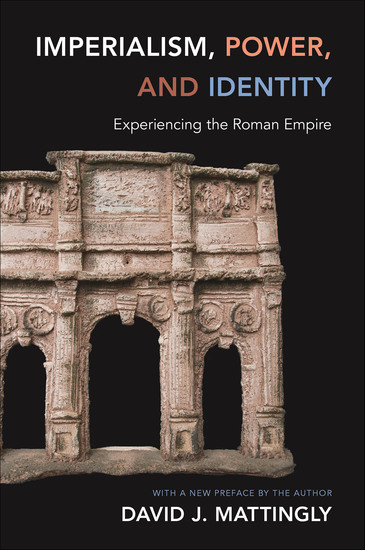
  • Imperialism Power and Identity - Experiencing the Roman Empire - cover

    Imperialism Power and Identity -...

    David J. Mattingly

    • 0
    • 0
    • 0
    Despite what history has taught us about imperialism's destructive effects on colonial societies, many classicists continue to emphasize disproportionately the civilizing and assimilative nature of the Roman Empire and to hold a generally favorable view of Rome's impact on its subject peoples. Imperialism, Power, and Identity boldly challenges this view using insights from postcolonial studies of modern empires to offer a more nuanced understanding of Roman imperialism. Rejecting outdated notions about Romanization, David Mattingly focuses instead on the concept of identity to reveal a Roman society made up of far-flung populations whose experience of empire varied enormously. He examines the nature of power in Rome and the means by which the Roman state exploited the natural, mercantile, and human resources within its frontiers. Mattingly draws on his own archaeological work in Britain, Jordan, and North Africa and covers a broad range of topics, including sexual relations and violence; census-taking and taxation; mining and pollution; land and labor; and art and iconography. He shows how the lives of those under Rome's dominion were challenged, enhanced, or destroyed by the empire's power, and in doing so he redefines the meaning and significance of Rome in today's debates about globalization, power, and empire.Imperialism, Power, and Identity advances a new agenda for classical studies, one that views Roman rule from the perspective of the ruled and not just the rulers. In a new preface, Mattingly reflects on some of the reactions prompted by the initial publication of the book.
    Voir livre
  • Writing an Identity Not Your Own - A Guide for Creative Writers - cover

    Writing an Identity Not Your Own...

    Alex Temblador

    • 0
    • 0
    • 0
    A practical guide to help authors authentically write and edit a character whose identity is different than their own. Do you have the tools to authentically write and edit a character whose identity is different than your own? It’s not a subject that’s generally taught in creative writing programs, and there are so few craft books and online resources on the subject. Even if you can take a seminar, class, or workshop, there’s nothing like having an easy-to-understand book on hand to provide guidance and insight every time you craft characters with historically marginalized identities. In Writing an Identity Not Your Own, award-winning author Alex Temblador discusses one of the most contentious topics in creative writing: crafting a character whose identity is historically marginalized. What is “identity,” and how do unconscious biases and bias blocks impact and influence what we write? What is intersectionality? You’ll learn about identity terms, stereotypes, and tropes, and receive genre-specific advice related to various identities to consider when writing different races and ethnicities, sexual and romantic orientations, gender identities, disabilities, nationalities, and more. Through writing strategies, exercises, and literary excerpts, writers will gain a clearer understanding on how misrepresentations and harmful portrayals can appear in storylines, dialogue, and characterization. Alex will guide writers from the brainstorming phase through the editing process so they can gain a full understanding of the complexities of writing other identities and why it’s important to get them right.
    Voir livre
  • The Matryoshka Memoirs - A Story of Ukrainian Forced Labour the Leica Camera Factory and Nazi Resistance - cover

    The Matryoshka Memoirs - A Story...

    Sasha Colby

    • 0
    • 0
    • 0
    “[Colby] breathes new life into well-trodden WWII tropes, building a vivid, novelistic narrative focused on memory and family.” — Publishers Weekly
    		 
    “The writing is vivid and lyrical, the narratives are arresting, and the women are unforgettable.” — Craig Howes, Director, Center for Biographical Research, University of Hawaiʻi at Mānoa
    		 
    A remarkable story of strength and resilience in the crucible of Nazi Germany
    		 
    Irina Nikifortchuk was 19 years old and a Ukrainian schoolteacher when she was abducted to be a forced laborer in the Leica camera factory in Nazi Germany. Eventually pulled from the camp hospital to work as a domestic in the Leica owners’ household, Irina survived the war and eventually found her way to Canada.
    		 
    Decades later Sasha Colby, Irina’s granddaughter, seeks out her grandmother’s story over a series of summer visits and gradually begins to interweave the as-told-to story with historical research. As she delves deeper into the history of the Leica factory and World War II forced labor, she discovers the parallel story of Elsie Kühn-Leitz, Irina’s rescuer and the factory heiress, later imprisoned and interrogated by the Gestapo on charges of “excessive humanity.”
    		 
    This is creative nonfiction at its best as the mystery of Irina’s life unspools skillfully and arrestingly. Despite the horrors that the story must tell, it is full of life, humor, food, and the joy of ordinary safety in Canada. The Matryoshka Memoirs takes us into a forgotten corner of history, weaving a rich and satisfying tapestry of survival and family ties and asking what we owe those who aid us.
    Voir livre
  • Woodland Folk Tales of Britain and Ireland - narrated by the author - cover

    Woodland Folk Tales of Britain...

    Lisa Schneidau

    • 0
    • 0
    • 0
    Once upon a time, most of Britain and Ireland was covered in woodland. Many of the trees have been cleared, but our connection with the wildwood remains. It is a place of danger, adventure and transformation, where anything could happen. Here is a collection of traditional folk tales of oak, ash and thorn, of hunting forests and rebellion, timber and triumph in battle, wild ghosts and woodwoses. Lisa Schneidau retells some of the old stories and relates them to the trees and forests in the landscape of our islands today.
    Voir livre
  • Hell Above Earth - The Incredible True Story of an American WWII Bomber Commander and the Copilot Ordered to Kill Him - cover

    Hell Above Earth - The...

    Stephen Frater

    • 0
    • 0
    • 0
    "After the twists and turns in Goering's many missions, Frater finishes with a stunning revelation . . . the author delivers an exciting read full of little-known facts about the war. A WWII thrill ride." - Kirkus Reviews The U.S. air battle over Nazi Germany in WWII was hell above earth. For bomber crews, every day they flew was like D-Day, exacting a terrible physical and emotional toll. Twenty-year-old U.S. Captain Werner Goering, accepted this, even thrived on and welcomed the adrenaline rush. He was an exceptional pilot—and the nephew of Hermann Göring, leading member of the Nazi party and commander-in-chief of the Luftwaffe. The FBI and the American military would not prevent Werner from serving his American homeland, but neither would they risk the propaganda coup that his desertion or capture would represent for Nazi Germany. J. Edgar Hoover issued a top-secret order that if Captain Goering's plane was downed for any reason over Nazi-occupied Europe, someone would be there in the cockpit to shoot Goering dead. FBI agents found a man capable of accomplishing the task in Jack Rencher, a tough, insular B-17 instructor who also happened to be one of the Army's best pistol shots. That Jack and Werner became unlikely friends is just one more twist in one of the most incredible untold tales of WWII.
    Voir livre