Rejoignez-nous pour un voyage dans le monde des livres!
Ajouter ce livre à l'électronique
Grey
Ecrivez un nouveau commentaire Default profile 50px
Grey
Abonnez-vous pour lire le livre complet ou lisez les premières pages gratuitement!
All characters reduced
Bright Eyed - Insomnia and Its Cultures - cover

Bright Eyed - Insomnia and Its Cultures

RM Vaughan

Maison d'édition: Coach House Books

  • 0
  • 0
  • 0

Synopsis

For forty years, RM Vaughan has been fighting, and failing, to get his forty winks each night. He's not alone, not by any stretch. 
More and more studies highlight the health risks of undersleeping, yet we have never been asked to do more, and for longer. And we can't stop thinking that a lack of sleep is heroic: snoozing is a kind of laziness, after all. But why, when we know more about the value of sleep, are we obsessed with twenty­-four-­hour workdays and deliberate sleep deprivation? 
Working outward from his own experience, Vaughan explores this insomnia culture we've created, predicting a cultural collision -- will we soon have to legislate rest, as France has done? -- and wondering about the cause-and-effect model of our shorter attention spans. Does the fact that we are almost universally underslept change how our world works? We know it's an issue with, say, pilots and truck drivers, but what about artists-- does an insomnia culture change creativity? And what are the longterm cultural consequences of this increasing sacrifice for the ever elusive goal of 'total productivity'? 
‘With his usual caustic wit and gut-churning insight, Vaughan guides us through pills, sleep clinics (where even the therapists don’t sleep) and the nightly nightmare of Restless Leg Syndrome. Interviewing long-term insomniacs, neuroscientists and Douglas Coupland, Vaughan battles an always-on culture – taking us right to the core of a dreamless empire.’ – Redfern Jon Barrett, author of The Giddy Death of the Gays & the Strange Demise of Straights 
‘RM Vaughan has taken his lifelong affliction with insomnia and (dare I say it) made it funny and sexy.’ – Dr. Brian Goldman, host of CBC Radio’s White Coat, Black Art and author of The Secret Language of Doctors
Disponible depuis: 01/06/2015.
Longueur d'impression: 136 pages.

D'autres livres qui pourraient vous intéresser

  • Proposed Roads to Freedom - cover

    Proposed Roads to Freedom

    Bertrand Russell

    • 0
    • 0
    • 0
    In this work, Russell presents his views on the problems of modern society and offers his proposals for a better future. He critiques both capitalism and socialism as inadequate solutions, and instead advocates for a system based on guild socialism, where workers control the means of production and are organized into functional groups. Russell argues that the ultimate goal of society should be the development of the individual, and proposes a society that is organized around individual freedom and fulfillment rather than material wealth. He advocates for the abolition of the wage system and the establishment of a system of economic cooperation and communal ownership. He also discusses the role of education in a free society, arguing that it should be aimed at cultivating creativity, critical thinking, and individuality. Read in English, unabridged.
    Voir livre
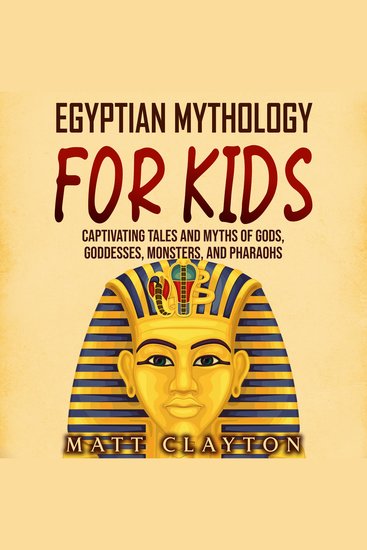
  • Egyptian Mythology for Kids: Captivating Tales and Myths of Gods Goddesses Monsters and Pharaohs - cover

    Egyptian Mythology for Kids:...

    Matt Clayton

    • 0
    • 0
    • 0
    Have you ever wondered why the ancient Egyptians made mummies, why they built the gigantic pyramids, or what they believed in?  
    All these questions and more will be answered in this incredible audiobook on Egyptian mythology. Become an ancient Egyptian myth buster and find out which legends about ancient Egypt are pure fiction! 
    Learning doesn’t have to be a chore. This audiobook makes it easy and exciting with interesting facts, helpful pronunciation tips for those tricky new words, and meanings for some of the words you may not have heard before. On top of this, at the end of each chapter, there are exciting and creative activities to make learning fun. Plus, there’s even a final chapter full of fun facts about ancient Egypt! 
    You’ll be amazed to hear the weird, wonderful, and downright crazy myths surrounding this ancient civilization. Here are just a few of them and some of the other amazing things you’ll learn in this audiobook:The mummy’s curse—is it real?The ancient Egyptians had more than one creation story!Nobody knows who exactly built the pyramids. Was it slaves?Were there aliens in ancient Egypt?Which pharaoh was eaten by a hippopotamus?Egyptians took the meaning of “cat lover” to a whole new level.There were so many gods that even the Egyptians got them mixed up!Who was His Majesty “herself”?Learn the tale of the god who was chopped to bits and lived to tell the tale!How do you make a mummy?The gods were part animals!Is the Nile River the center of the universe? Pharaohs were living gods.Your heart had to be lighter than a feather to become immortal!Where would you face five-headed reptiles, snakes with knives, and fire-breathing dragons?The Book of the Dead wasn’t as scary as it sounds. The ancient Egyptians loved junk food and playing games too!
    Voir livre
  • Murder in a Mill Town - Sex Faith and the Crime That Captivated a Nation - cover

    Murder in a Mill Town - Sex...

    Bruce Dorsey

    • 0
    • 0
    • 0
    In December 1832 a farmer found the body of a young, pregnant woman hanging near a haystack outside a New England mill town. When news spread that Methodist preacher Ephraim Avery was accused of murdering Sarah Maria Cornell, a factory worker, the case gave the public everything they found irresistible: sexually charged violence, adultery, the hypocrisy of a church leader, secrecy and mystery, and suspicions of insanity. Murder in a Mill Town tells the story of how a local crime quickly turned into a national scandal that became America's first "trial of the century." 


    After her death, Cornell's choices about work, survival, and personal freedom became enmeshed in stories that Americans told themselves about their new world of industry and women's labor and the power of religion in the early republic. Ordinary people gave testimony that revealed rapidly changing times. As the controversy of Cornell's murder spread beyond the courtroom, the public eagerly devoured narratives of moral deviance, abortion, suicide, mobs, "fake news," and conspiracy politics. Long after the jury's verdict, the nation refused to let the scandal go. 


    A meticulously reconstructed historical whodunit, Murder in a Mill Town exposes the troublesome workings of criminal justice in the young democracy and the rise of a sensational popular culture.
    Voir livre
  • Utter Incompetents - Ego and Ideology in the Age of Bush - cover

    Utter Incompetents - Ego and...

    Thomas Oliphant

    • 0
    • 0
    • 0
    The problem wasn't just Iraq.It didn't even start with Iraq.It was bigger than Iraq.In fact, it was everything George W. Bush touched, from the very early flop on energy policy to the walking fiasco named Alberto Gonzales. Even adding the tragicomedy of Hurricane Katrina doesn't come close to describing the governmental catastrophe of the Bush administration. The collapse of the Bush presidency is a broadly acknowledged fact. Everyone who's anyone, from politicians to comedians, has taken shots at this ever-growing target. By any fair assessment, much of the past seven years has been disastrous. The challenge is to understand why.Few analysts have stepped aside, abandoning easy hits and quick gibes, and analyzed the totality of the Bush Administration.  Now, bestselling author Thomas Oliphant does just that.  With his keen, experienced eye, he asks the simplest of questions: "How could some of the smartest, most experienced and politically savvy people in Washington screw up so badly?"After all, this was the team led by a man with an MBA.  They came to Washington with the mission to run the government in an orderly, businesslike manner.  Instead, chaos has ensued.  How did this happen?From domestic policy to international goofs, from soaring energy prices to the health care crisis---Thomas Oliphant tackles it all, closely inspecting the initial projections and promises of Bush and his key senior officials, and the ways in which they lost control of these well-publicized and overconfident plans.  By comparing their rhetoric to their dismal record, Oliphant provides a historic analysis of the Bush administration---showing how a system so seemingly competent and mechanized could fail so miserably, and with such frequency.In the wake of the Republican loss of Congress  and unmet promises for future change, and as the presidential campaign to choose Bush's successor heats up, Oliphant provides a rigorous examination of what went wrong and what this means for the next administration. Utter Incompetents is at its heart a searching look at the George W. Bush administration, its policies, and the legacy that it will leave behind on January 20, 2009. It is also the substantive backdrop for the next president.
    Voir livre
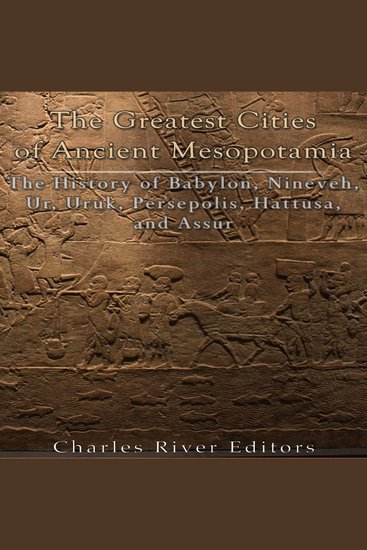
  • The Greatest Cities of Ancient Mesopotamia - cover

    The Greatest Cities of Ancient...

    Editors Charles River

    • 0
    • 0
    • 0
    Long before Alexandria was a city and even before Memphis and Babylon had attained greatness, the ancient Mesopotamian city of Ur stood foremost among ancient Near Eastern cities. Today, the greatness and cultural influence of Ur has been largely forgotten by most people, partially because its monuments have not stood the test of time the way other ancient culture’s monuments have. For instance, the monuments of Egypt were made of stone while those of Ur and most other Mesopotamian cities were made of mud brick and as will be discussed in this report, mud-brick may be an easier material to work with than stone but it also decays much quicker. The same is true to a certain extent for the written documents that were produced at Ur. Likewise, no site better represents the importance of the Sumerians than the city of Uruk. Between the fourth and the third millennium BCE, Uruk was one of several city-states in the land of Sumer, located in the southern end of the Fertile Crescent, between the two great rivers of the Tigris and the Euphrates. 
    As Hittite power grew during the Old Kingdom, the royal city of Hattusa became more important and even wealthier. From his citadel overlooking Hattusa, Hattusili I launched the first major Hittite attacks into the Near East, first conquering the cities between Hattusa and the Mediterranean (Macqueen 2003, 36). Although the Biblical accounts of the Assyrians are among the most interesting and are often corroborated with other historical sources, the Assyrians were much more than just the enemies of the Israelites and brutal thugs. Among all the cities that thrived in the ancient Near East, few can match the opulence and ostentatiousness of Nineveh, the capital of the Assyrian Empire for much of the seventh century BCE. 
    Voir livre
  • It's Not You It's Everything - What Our Pain Reveals about the Anxious Pursuit of the Good Life - cover

    It's Not You It's Everything -...

    Eric Minton

    • 0
    • 0
    • 0
    If we can agree on anything, it's that we are not okay. Our culture is reeling from the ravages of a global pandemic, a precipitous rise in depression and anxiety, suffocating debt, white supremacy, hypercapitalism, and a virulent political animus—to name a few. But what if it's not us? What if it's . . . well, everything? What if trying to conform to a sick culture is actually making us sick? 


    In It's Not You, It's Everything psychotherapist and former pastor Eric Minton claims that the pernicious melding of capitalism and Christianity means a world of competition, perfection, and scarcity disguised as self-help and self-care. Rather than shaming, silencing, or medicating away our disappointment at not having obtained the happiness we were promised, however, Minton posits a radical alternative. In an impertinent, droll, yet pastoral voice, Minton suggests that our "not-okayness" will require rethinking everything we thought we knew about God, depression, the economy, culture, education, technology, and happiness. 


    By naming all the ways we're not okay, we move away from fear and shame and toward love, and trust, and trustworthiness. We'll need nothing less than hip-hop, Mr. Rogers, liberation theology, and Jesus to get us there. But on the other side of our pain is a radical "okayness" that might just set us free.
    Voir livre