Join us on a literary world trip!
Add this book to bookshelf
Grey
Write a new comment Default profile 50px
Grey
Subscribe to read the full book or read the first pages for free!
All characters reduced
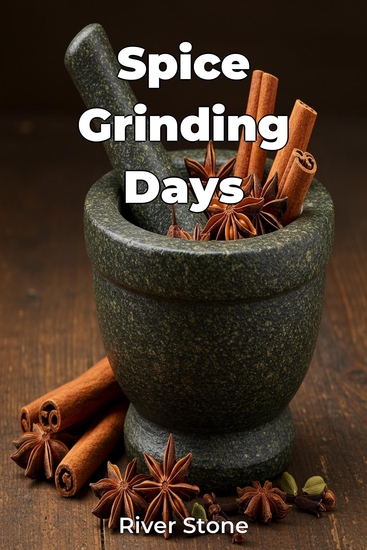
Spice Grinding Days - cover

Spice Grinding Days

River Stone

Translator A AI

Publisher: Publifye

  • 0
  • 0
  • 0

Summary

"Spice Grinding Days" explores the rich history and cultural significance of hand-ground spices, tracing their journey from cultivation to culinary use. It argues that the transition to commercially processed spices represents a loss of both cultural heritage and sensory experience. Did you know that hand grinding was once a deeply embedded social ritual? Or that many believe it unlocks essential oils and aromas more effectively than industrial methods? The book investigates the evolution of spice preparation techniques, the unique tools used, and the cultural impact on traditional meals.

 
The book uniquely blends historical analysis with culinary exploration, presenting a multi-faceted understanding of spice preparation. Examining regions such as India, Morocco, and the Caribbean, the book details iconic spice blends like garam masala, ras el hanout, and jerk seasoning.

 
Beginning with spice cultivation and trade routes, the book progresses to specific regional spice blends, concluding with practical guidance on sourcing quality spices and incorporating hand-grinding techniques into modern cooking. Exploring the sensory differences between hand-ground and commercially processed spices, "Spice Grinding Days" provides a valuable resource for food enthusiasts, culinary students, and anyone interested in the history of food. Drawing from historical cookbooks, trade documents, and interviews, it aims to foster a deeper appreciation for traditional spice preparation methods and their role in shaping our culinary landscape.
Available since: 02/27/2025.
Print length: 86 pages.

Other books that might interest you

  • How to Cook Fish - cover

    How to Cook Fish

    Myrtle Reed

    • 0
    • 0
    • 0
    Olive Green is the pseudonym for the prolific late 19th Century/early 20th Century author, Myrtle Reed. She wrote over thirty-three books and hundreds of magazine articles and pamphlets during her short lifetime. Ms. Reed was best known for writing romance novels that often included themes of everlasting and unrequited love, ironic revenge, mystery, and the occult. Her best known book is Lavender and Old Lace, which later became the basis for Arsenic and Old Lace. 
    Ms. Reed used the name Olive Green to write books and articles about domestic homemaking and cooking. Her cookbooks include How to Cook Fish, What to Have for Breakfast, and One Thousand Simple Soups. Myrtle Reed committed suicide in 1911 just after the publishing of her last novel, A Weaver of Dreams.(Summary by Mary)
    Show book
  • Address to the Court - cover

    Address to the Court

    Eugene Debs

    • 0
    • 0
    • 0
    After criticizing US involvement in WWI, Eugene Debs found himself testifying in court for violation of the Sedition Act of 1918. Debs, an outspoken socialist and advocate, stated that he saw this law “as a despotic enactment in flagrant conflict with democratic principles and with the spirit of free institutions.” In his address to the court, he defends his socialism by discussing his working-class childhood and the plight of the American poor. Despite facing years in prison, Debs’ ended his address with hope, saying, “I can see the dawn of the betterday for humanity.” 
    Show book
  • The Art of Starting Over - A Therapist's Faith-Rooted Guide to Post-Traumatic Growth - cover

    The Art of Starting Over - A...

    Kobe Campbell

    • 0
    • 0
    • 0
    If you're stuck in the painful middle of healing--aware of your trauma but unsure how to move forward--you'll find here a clear, compassionate blueprint for using your story as building material for a beautiful future. 
    Trying to heal from trauma can feel like sorting through the ruins of a once-familiar life. Award-winning licensed trauma therapist and mental health educator Kobe Campbell wants to show you how the ashes you stand on can become fertile ground. 
    Bringing the same clinically informed, real-world wisdom that made Kobe's first book so popular, The Art of Starting Over introduces principles of Post-Traumatic Growth to help you navigate the journey from revelation to reconstruction. As you follow Kobe's transformative guidance, you'll discover how to:Move from feeling helpless to becoming empowered as the architect of a new life aheadImplement five key "schema shifts" that help you see your painful past as the foundation for a resilient new identityEngage in practical, evidence-based activities that foster holistic healingDeepen your faith as you let go of myths you've held about God, prayer, and controlTrade a posture of fear-based performance and avoidance for a posture defined by love, acceptance, and hope 
      
    You are not broken--and it's not too late to start over. Join Kobe on this journey of reconstruction and discover that the future you long for is not beyond reach. It's just waiting to be built as you rediscover what's possible when truth, compassion, and faith work together.
    Show book
  • The action of Intelligence - Brockwood Park 1972 - Public Discussion 2 - cover

    The action of Intelligence -...

    Jiddu Krishnamurti

    • 0
    • 0
    • 0
    The action of intelligence - 14 September 1972 
    • Q: Why don’t we see the division between the observer and the observed? 
    • How does the division come about which causes conflict and misery? 
    • Are we aware that we are fragmented? Why does contradiction exist? 
    • Can we have a mind that is not fragmented and contradictory? 
    • Can the mind live without comparison? 
    • The brain sees that nationalities and religious divisions are disastrous for 
    human relationship. What is the capacity that makes the brain see this? Is this 
    awareness? Is this intelligence? 
    • What is the relationship of intelligence to all that is taking place? 
    • Intelligence operating has its own action. When there is that intelligence, there 
    is sanity. 
    • Is intelligence operating in you?
    Show book
  • Ecce Homo - cover

    Ecce Homo

    Friedrich Nietzsche

    • 0
    • 0
    • 0
    “Without music, life would be a mistake.”“It is not a lack of love, but a lack of friendship that makes unhappy marriages.” ...“That which does not kill us makes us stronger.”“I'm not upset that you lied to me, I'm upset that from now on I can't believe you.” 
    Nietzsche 
     
    The philosopher Friedrich Nietzsche's autobiography, Ecce Homo, was the last prose work that he wrote before his illness in 1889. Coming at the end of an extraordinarily productive year in which he had produced The Twilight of the Idols and The Antichrist, Nietzsche shuns any pretense at modesty with chapter titles include “Why I am so Wise”, “Why I am so Clever” and “Why I Write Such Excellent Books”. His translator Anthony M. Ludovici states, Ecce Homo “is not only a coping-stone worthy of the wonderful creations of that year, but also a fitting conclusion to his whole life, in the form of a grand summing up of his character as a man, his purpose as a reformer, and his achievement as a thinker. 
     
    Friedrich Wilhelm Nietzsche was a German philosopher, cultural critic and philologist whose work has exerted a profound influence on modern intellectual history. He began his career as a classical philologist before turning to philosophy.
    Show book
  • The 16 Human Desires That Make People Buy - cover

    The 16 Human Desires That Make...

    Reece Wideman

    • 0
    • 0
    • 0
    Why is acceptance so powerful—and so misunderstood? 
    Acceptance isn’t weakness. It’s not giving up. It’s the moment resistance ends and clarity begins. 
    In Acceptance, Audiobook Three of The 16 Human Desires That Make People Buy, Reece Wideman explores one of the most transformative human desires: the need to be seen, understood, and at peace with reality as it is. 
    Through real-world insight and psychological depth, this audiobook breaks down what acceptance truly means, how it shapes our decisions, and why mastering it can unlock emotional freedom, personal growth, and stronger relationships. 
    Listeners will discover how acceptance reduces internal conflict, sharpens awareness, and creates the foundation for confidence, resilience, and forward momentum. 
    Designed for creators, entrepreneurs, and anyone seeking clarity in a noisy world, Acceptance offers practical wisdom for letting go of resistance—and stepping fully into your power.
    Show book