Junte-se a nós em uma viagem ao mundo dos livros!
Adicionar este livro à prateleira
Grey
Deixe um novo comentário Default profile 50px
Grey
Assine para ler o livro completo ou leia as primeiras páginas de graça!
All characters reduced
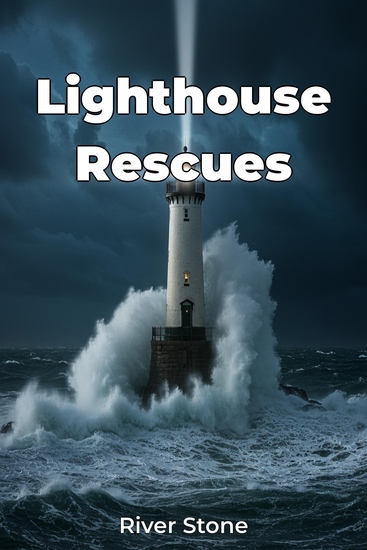
Lighthouse Rescues - cover
LER

Lighthouse Rescues

River Stone

Tradutor A AI

Editora: Publifye

  • 0
  • 0
  • 0

Sinopse

Lighthouse Rescues explores the world of lighthouse keepers, highlighting their vital role in maritime history and the heroic acts that defined their isolated lives. The book delves into the evolution of lighthouse technology and how it drastically improved maritime safety, reducing maritime disasters. It also examines the often-overlooked social history of lighthouse keepers and their families, revealing the challenges they faced in remote and often harsh environments. 

 
The book presents detailed accounts of remarkable rescues, drawn from logbooks and personal testimonies, illustrating the bravery and resourcefulness of these unsung heroes. For instance, the development of more powerful lenses transformed lighthouses from simple beacons to complex engineering marvels, significantly extending the range at which ships could spot land. 

 
The book is structured in three parts, beginning with the history of lighthouses, then presenting detailed rescue accounts, and finally exploring the legacy of lighthouses in the modern era. This narrative provides a unique blend of technological and human stories, offering an accessible account of lighthouse keeping and maritime rescue. 

 
By focusing on specific examples of heroic acts and technological innovations, the book challenges the traditional view of lighthouse keepers as merely custodians, emphasizing their proactive role in maritime safety and global seafaring trade.
Disponível desde: 20/02/2025.
Comprimento de impressão: 55 páginas.

Outros livros que poderiam interessá-lo

  • The Legend of Sleepy Hollow - cover

    The Legend of Sleepy Hollow

    Ambrose Bierce

    • 0
    • 0
    • 0
    "The Legend of Sleepy Hollow" is an 1820 short story by American author Washington Irving, contained in his collection of 34 essays and short stories titled The Sketch Book of Geoffrey Crayon, Gent. Irving wrote the story while living in Birmingham, England. "The Legend of Sleepy Hollow" is among the earliest examples of American fiction with enduring popularity, especially during Halloween because of a character known as the Headless Horseman believed to be a Hessian soldier who was decapitated by a cannonball in battle. The story is set in 1790 in the countryside around the Dutch settlement of Tarry Town (historical Tarrytown, New York), in a secluded glen known as Sleepy Hollow. Sleepy Hollow is renowned for its ghosts and the haunting atmosphere that pervades the imaginations of its inhabitants and visitors. Some residents say this town was bewitched during the early days of the Dutch settlement, while others claim that the mysterious atmosphere was caused by an old Native American chief, the "wizard of his tribe ... before the country was discovered by Master Hendrik Hudson." Residents of the town are seemingly subjected to various supernatural and mysterious occurrences. They are subjected to trance-like visions and frequented by strange sights, music, and voices "in the air." The inhabitants of Sleepy Hollow are fascinated by the "local tales, haunted spots, and twilight superstitions" on account of the mysterious occurrences and haunting atmosphere.
    Ver livro
  • Adolf Galland - The Authorised Biography - cover

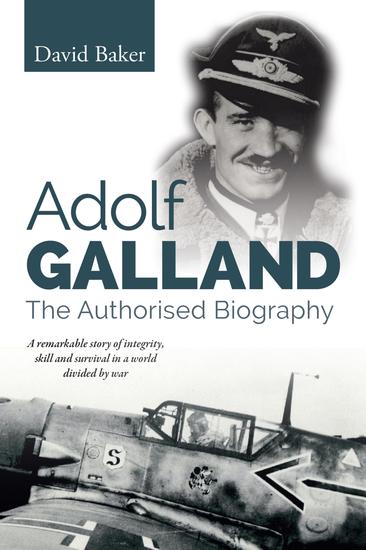
    Adolf Galland - The Authorised...

    David Baker

    • 1
    • 0
    • 0
    A remarkable story of integrity, skill and survival in a world divided by war The most famous German fighter pilot of World War II, Adolf Galland was respected by both comrades and former enemies alike. A highly decorated 'ace' with over 100 air-to-air victories in the West, he was a recipient of the Knight's Cross with Oak Leaves, Swords, and Diamonds, which was awarded to only 27 men among the millions who served. After the war, he built friendships with the very Allied pilots he once fought and was admired as much for his integrity as for his prowess as a pilot and commander. In his final years, he worked closely with historian David Baker to produce this authorised biography, largely illustrated with photographs from his private albums. Offering a rare glimpse into both the air battles of World War II and the inner workings of the Luftwaffe, and now featuring new appendices that include the latest research into Galland's aerial kills, this book stands as an essential record of one of history's most remarkable fighter pilots.
    Ver livro
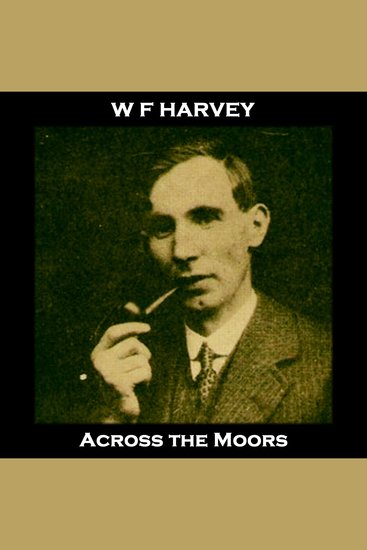
  • Across the Moors - From their pens to your ears genius in every story - cover

    Across the Moors - From their...

    W F Harvey

    • 0
    • 0
    • 0
    William Fryer Harvey AM was born on 14th April 1885 into a wealthy Quaker family in Leeds, West Yorkshire. 
    He was educated at the Quaker Bootham School in Yorkshire and Leighton Park School in Reading before university at Balliol College, Oxford.  
    His health was fragile and he poured his energies into writing short stories and in 1910 published his first collection ‘Midnight House’. 
    In the Great War he was with the Friends' Ambulance Unit and then served as a surgeon-lieutenant in the Royal Navy.  There he received the Albert Medal for Lifesaving but lung damage received at that time troubled him for the rest of his life. 
    He continued to write short stories, and even a memoir, but by 1925 ill health had forced his retirement to any outside work.  Three years later he published his second collection which contained his macabre classic ‘The Beast with Five fingers’, only one more collection would come from his pen in his lifetime. 
    For many years of his life he now lived in Switzerland with his wife but a yearning to be home saw them come back to England in 1935. 
    W F Harvey died in Letchworth on the 4th June 1937. He was 52.
    Ver livro
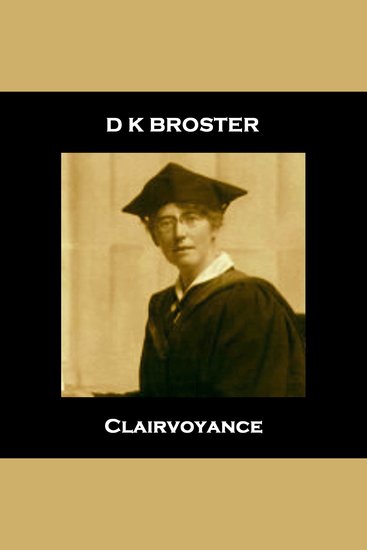
  • Clairvoyance - From their pens to your ears genius in every story - cover

    Clairvoyance - From their pens...

    D K Broster

    • 0
    • 0
    • 0
    Dorothy Kathleen Broster was born on 2nd September 1877 at Devon Lodge in Grassendale Park, Garston, Liverpool. 
    At 16, the family moved to Cheltenham, where she attended Cheltenham Ladies' College and then on to St Hilda’s College, Oxford to read history, where she was one of the first female students, although at this time women were not awarded degrees. 
    Broster served as secretary to Charles Harding Firth, a Professor of History for several years, and collaborated on several of his works. Her first two novels were co-written with a college friend, Gertrude Winifred Taylor. 
    With the Great War interrupting her literary ambitions she served as a Red Cross nurse at a Franco-American hospital, but returned to England with a knee infection in 1916.  
    After the war, she moved near to Battle in East Sussex and took up writing full-time.  
    In 1920 she at last received her Bachelor of Arts and Master of Arts from Oxford. 
    Her novels, mainly historical fiction, peaked in popularity with ‘The Flight of the Heron’, in 1925, a best-seller followed up by two sequels. 
    As well as poetry and various articles she also wrote several short stories, the best known of which is a classic of weird fiction ‘The Couching at the Door’ in which an artist appears to be haunted by a mysterious entity. 
    An intensely private individual many readers deduced from her name that she was both a man and Scottish. 
    D K Broster died in Bexhill Hospital on 7th February 1950.  She was 73.
    Ver livro
  • Witness - cover

    Witness

    Louise Milligan

    • 0
    • 0
    • 0
    From the best-selling author of Cardinal comes a searing examination of the power imbalance in our legal system - where exposing the truth is never guaranteed and, for victims, justice is often elusive. 
     
    A masterful and deeply troubling expose, Witness is the culmination of five years' research for award-winning investigative journalist Louise Milligan. 
    Throughout her career charting the experiences of people who have the courage to come forward to police and then look to find justice in court, Milligan has watched how witnesses are treated (or, too frequently, mistreated) in the courtroom. They have described to her how they relive the associated trauma, often years later. Then, she saw this first-hand when she became a witness and was cross-examined herself in the trial of the decade, R v George Pell. 
    Never-before-published court transcripts expose widespread systemic flaws. And through a combination of extraordinarily candid interviews with defence counsel, prosecutors and even judges, and the heartbreaking stories of witnesses in a number of high-profile cases, the brutal reality of the system is laid bare. 
    Revealing the devastating effects of an adversarial legal system that can be sexist, callous and too often weighted towards the rich and powerful, Milligan also highlights its failure to protect the wellbeing of the most vulnerable. In detailing these flaws and the ongoing human cost, Witness is a compelling call for change. 
     
    'Witness is an impressive, gut-wrenching interrogation of the justice system.' THE SATURDAY PAPER 
     
    'Witness is a triumph of intellect and empathy.' THE CONVERSATION
    Ver livro
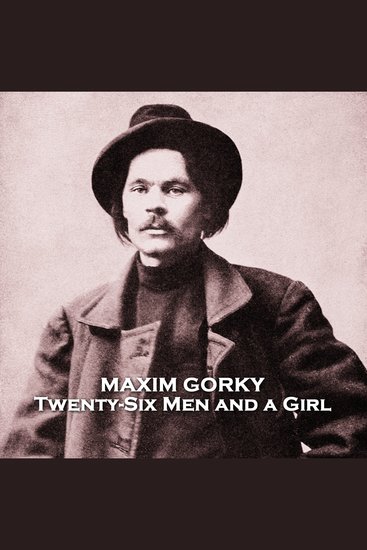
  • Twenty-Six Men and a Girl - From their pens to your ears genius in every story - cover

    Twenty-Six Men and a Girl - From...

    Maxim Gorky

    • 0
    • 0
    • 0
    Alexei Maximovich Peshkov was born on 28th March 1868, in Nizhny Novgorod, Russia. 
    Better known as Maxim Gorky he was orphaned at 11 and ran away from home at 12.  At 19 he had already attempted suicide and thereafter travelled, by foot, across the Russian Empire for 5 years. 
    His first book ‘Essays & Stories’ in 1898 was a sensation and so began a long career as an author of short stories, novels and plays.  Gorky saw writing as a moral and political act that would help to change the unjust world around him.  He was an ardent early advocate of the emerging Marxist movement and publicly opposed the Tsarist regime leading several times to his arrest.  
    In 1904 he began his own theatre but the censor banned every play and Gorky was forced to abandon the project. 
    But Gorky was a financially successful author, editor, and playwright and gave monies to political parties as well as for civil rights and social reform.  The brutal shooting of workers, which set in motion the Revolution of 1905, pushed Gorky more decisively toward radical solutions.  
    In 1906 he went to the United States to raise funds for the Bolsheviks. Those experiences including a scandal over travelling with his lover and not his wife deepened his contempt for the ‘bourgeois soul.’ 
    Gorky now moved to Capri in Italy, both for health reasons and to escape the increasingly repressive times in Russia.  
    An amnesty for the 300th anniversary of the Romanov dynasty saw him return to Russia in 1914. His politics remained close to the Bolshevik cause.  But soon, after the 1918 revolution, his essays referred to Lenin as a tyrant for his senseless arrests and repression.  He was soon appealing to the outside world for food aid after the catastrophic crop failure. 
    In October 1921 Gorky returned to Italy, now in Fascist hands, and settled in Sorrento until 1932.  His health worsened with the onset of tuberculosis. 
    He wrote several successful books there but now decided to find an understanding with the communist regime. Stalin invited him home and his return was hailed as a major propaganda victory.  He was decorated with the Order of Lenin, and a province, a park, and various streets re-named in his honour. 
    But he had his faults too.  In 1933, Gorky co-edited a book on the White Sea-Baltic Canal and denied even a single prisoner died during its construction, but thousands had. As well, knowing that some Nazis were homosexual, a phrase was attributed to him that said ‘exterminate all homosexuals and fascism will vanish’.  Although he was himself was quoting another he was decidedly homophobic. 
    With the increase of Stalinist repression in 1935 Gorky was placed under unannounced house arrest. 
    Maxim Gorky died on the 18th June 1936 from pneumonia.  He was 68. 
    Stalin and Molotov were among those who carried Gorky's urn of ashes at his funeral.
    Ver livro