Rejoignez-nous pour un voyage dans le monde des livres!
Ajouter ce livre à l'électronique
Grey
Ecrivez un nouveau commentaire Default profile 50px
Grey
Abonnez-vous pour lire le livre complet ou lisez les premières pages gratuitement!
All characters reduced
Abandoned Skyscrapers - cover

Abandoned Skyscrapers

River Stone

Traducteur A AI

Maison d'édition: Publifye

  • 0
  • 0
  • 0

Synopsis

Abandoned Skyscrapers explores the intriguing stories behind unfinished or repurposed high-rises, examining why these architectural marvels sometimes fail to meet their intended purpose. These structures, initially symbols of progress, often become testaments to economic downturns, technological limitations, and shifting social landscapes.

 
From the infamous Ryugyong Hotel in North Korea to the Torre David in Venezuela, the book delves into the complex reasons behind their abandonment or adaptation, providing insight into the volatile nature of urban development.

 
The book uniquely approaches the topic by viewing these skyscrapers not as failures, but as indicators of the dynamic forces shaping our cities. It investigates economic factors like bursting speculative bubbles, technological challenges such as outdated designs, and social factors including changing urban priorities.

 
By combining historical analysis with architectural theory, Abandoned Skyscrapers offers a comprehensive look at how and why these ambitious projects falter.

 
The book progresses by first introducing the "failed skyscraper" concept with a historical overview, then moves into specific case studies, and concludes by synthesizing findings to identify trends and potential strategies for preventing future failures and repurposing existing structures.

 
Through archival research, architectural plans, and on-site investigations, it highlights the importance of sustainable development and responsible urban planning in the context of these architectural mishaps.
Disponible depuis: 19/02/2025.
Longueur d'impression: 72 pages.
D'autres livres qui pourraient vous intéresser

  • Roman Gladiators and the Colosseum The: The History and Legacy of Ancient Rome’s Most Famous Arena and Fighters - cover

    Roman Gladiators and the...

    Editors Charles River

    • 0
    • 0
    • 0
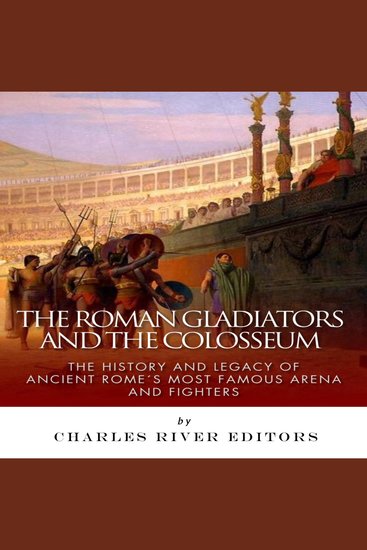
    When the Colosseum was built in the late 1st century A.D., the Romans, a people known for their architectural acumen, managed to amaze themselves. Martial, a Roman poet writing during the inauguration of the Colosseum, clearly believed the Colosseum was so grand a monument that it was even greater than the other Wonders of the Ancient World, which had been written about and visited endlessly by the Romans and Greeks in antiquity. Indeed, although the Wonders were wondrous to behold, the Colosseum was a spectacular achievement in architecture, something new and innovative, and therefore an amazing “Wonder” in its own way. 
    Of course, the main events in the Colosseum were gladiator fights. Gladiators are somewhat synonymous with ancient Rome, and even thousands of years after they performed on the sands, when people are asked about Roman culture, many think about and refer to the bloody spectacles of men fighting to the death in the arena. Gladiatorial combat is often regarded as barbaric, and most find it very difficult to comprehend how people could have enjoyed watching something so violent, but nevertheless, the spectacle still intrigues and fascinates people today, whether in movies like Gladiator or television shows about Spartacus. 
    Each match usually pitted one type of gladiator against a different type of gladiator, with each having their own kind of armor, weaponry and fighting style. For example, the retiarius was a gladiator that used a net, dagger and trident as his offensive weapons, while only wearing a protective guard over his left arm for protection. The retiarius would typically fight against the secutor, a gladiator armed with a sword, large shield, helmet and protective covering on his right arm and left leg. Therefore, a retiarius sacrificed armor for quickness in battle, while the secutor did the opposite.
    Voir livre
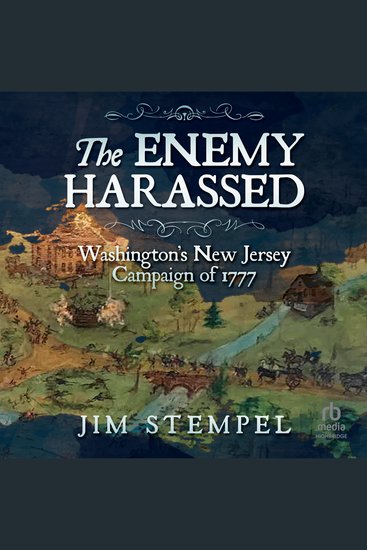
  • The Enemy Harassed - Washington's New Jersey Campaign of 1777 - cover

    The Enemy Harassed -...

    Jim Stempel

    • 0
    • 0
    • 0
    In late December 1776, the American War of Independence appeared to be on its last legs. General George Washington's continental forces had been reduced to a shadow of their former strength, and the British Army had chased them across the Delaware River into Pennsylvania. Desperate times call for desperate measures, however, and George Washington responded to this crisis with astonishing audacity. On Christmas night 1776, he recrossed the Delaware as a nor'easter churned up the coast, burying his small detachment under howling sheets of snow and ice. Undaunted, they attacked a Hessian brigade at Trenton, New Jersey, taking the German auxiliaries by complete surprise. Then, only three days later, Washington struck again, crossing the Delaware, slipping away from the British at Trenton, and attacking the Redcoats at Princeton. 


    The British, now back on their heels, retreated toward New Brunswick as Washington's reinvigorated force followed them north into Jersey. Over the next eight months, Washington's continentals and the state militias of New Jersey would go head-to-head with the British in a multitude of battles, eventually forcing the British to flee New Jersey by sea. In this captivating narrative of the American War of Independence, Jim Stempel brings to life one of the most violent, courageous, yet virtually forgotten periods of the Revolutionary War.
    Voir livre
  • Emerson's Essays Volume 1 - cover

    Emerson's Essays Volume 1

    Ralph Waldo Emerson

    • 0
    • 0
    • 0
    "Emerson's Essays" is a collection that showcases Ralph Waldo Emerson's profound influence on American thought and literature. With eloquence and a unique philosophical perspective, these essays delve into themes of self-reliance, individualism, and the beauty of nature. Emerson champions the inherent greatness of the individual and the importance of intuition in understanding the spiritual world. Through topics ranging from friendship to politics, he explores the interconnectedness of humanity and nature, urging readers to transcend the mundane and seek the extraordinary within. This seminal work is an enduring testament to Emerson's belief in the power of the individual spirit.
    Voir livre
  • Ancient Egyptians’ Diet The: The History of Eating and Drinking in Egypt - cover

    Ancient Egyptians’ Diet The: The...

    Editors Charles River

    • 0
    • 0
    • 0
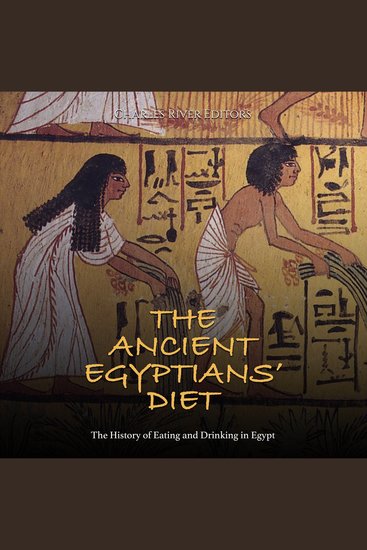
    Perhaps the most intriguing aspect of ancient Egyptian civilization was its inception from the ground up, as the Egyptians themselves had no prior civilization which they could use as a template. In fact, Egypt itself became a template for the civilizations that followed. The Greeks and the Romans were so impressed with Egyptian culture that they often attributed many aspects of their own culture to the Egyptians. With that said, some minor elements of ancient Egyptian culture were, indeed, passed on to later civilizations. Egyptian statuary appears to have had an initial influence on the Greek version, and the ancient Egyptian language continued long after the pharaonic period in the form of the Coptic language.  
    	Despite the strides made in understanding Egyptian history, there are obvious difficulties in assessing what ancient societies ate and drank, even as advances in technology continue to open up new methods of analysis for food deposits in human remains and archaeological sites. In general, the majority of what ancient individuals ate did not last long, and in the case of ancient Egypt, there is an even greater additional time factor. Ancient Egyptian civilization lasted over 3,000 years, a time period that if applied to Europe encompasses the time before Rome was even founded right up to the present day. Within such a lengthy period a great deal happens in any society, and in Egypt, numerous dynasties came and went, with constant invasions both by Egyptians into nearby regions and back into Egypt by neighboring civilizations. All of these different groups presumably had their own preferences for food and drink. Population migrations, especially the ones led by the Sea Peoples into the region around 1250 BCE, combined with other factors such as climate to impact the food and drink consumed by Egyptians.  
    Voir livre
  • Under the Sign of Saturn - Essays - cover

    Under the Sign of Saturn - Essays

    Susan Sontag

    • 0
    • 0
    • 0
    Sontag’s most important critical writings from 1972 to 1980 are collected in Under the Sign of Saturn. One of America’s leading essayists, Sontag’s writings are commentaries on the relation between moral and aesthetic ideas, discussing the works of Antonin Artaud, Leni Riefenstahl, Elias Canetti, Walter Benjamin, and others.  
    The collection includes a variety of her well-known essays. In “Fascinating Fascism,” Sontag eviscerates Leni Riefenstahl’s attempts to rehabilitate her image after working for Adolf Hitler on propaganda films during World War II. “Approaching Artaud” reflects on the work and influence of french actor, director, and writer Antonin Artaud. The title essay is a study of the life and temperament of Walter Benjamin, who Sontag describes as a sad and lonesome man. The book also includes the essays “On Paul Goodman,” “Syberberg’s Hitler,” “Remembering Barthes,” and “Mind as Passion”. 
    Susan Sontag’s writings are famously full of intellectual range and depth, and are at turns exhilarating, ominous, disturbing, and beautiful. Under the Sign of Saturn manages to touch on all of these notes and more.
    Voir livre
  • Stone Axe Of Burkamukk - cover

    Stone Axe Of Burkamukk

    Mary Grant Bruce

    • 0
    • 0
    • 0
    Mary Grant Bruce was an Australian children's writer who spent one year collecting Aboriginal stories in Gippsland - a part of Victoria which it is thought had a dense population of the early Australians. Sadly, now there are no tribal people living, though their descendants are still around. This book contains 13 stories of the Gunaikurnai people, as told by their elders to the author. From the preface:Year by year the old black tribes are dying out, and many of their legends and beliefs are dying with them. These legends deal with the world as the blacks knew it; with the Bush animals and birds; the powers of storm, flood, fire, thunder, and magic, and the beings who they thought controlled these powers; with the sun, moon and stars; and with the life and death of men and women.   The folktales of a people are the story of its soul, and it would be a pity if the native races of our country were to vanish altogether before we had collected enough of their legends to let their successors know what manner of people lived in Australia for thousands of years before the white man came. (From the Preface by Mary Grant Bruce with a little help from annise)
    Voir livre