Begleiten Sie uns auf eine literarische Weltreise!
Buch zum Bücherregal hinzufügen
Grey
Einen neuen Kommentar schreiben Default profile 50px
Grey
Jetzt das ganze Buch im Abo oder die ersten Seiten gratis lesen!
All characters reduced
Anxiety Relief - cover

Anxiety Relief

River Mindfulness

Übersetzer A AI

Verlag: Publifye

  • 0
  • 0
  • 0

Beschreibung

Anxiety Relief offers a practical, non-pharmaceutical approach to reclaiming control over your mental well-being, emphasizing stress management through evidence-based techniques. Millions grapple with anxiety's grip, impacting daily life and relationships; this book uniquely addresses this by focusing on actionable strategies rooted in mindfulness, targeted breathing exercises, and meaningful lifestyle adjustments. Readers will discover insights into the neurobiology of anxiety and how it manifests in the brain, allowing them to regulate responses through mindfulness and relaxation techniques. The book provides a structured plan to foster resilience and improve the capacity to navigate stressful situations.

 
Beginning with demystifying anxiety and exploring triggers, it transitions into practical applications of mindfulness and breathing exercises, such as diaphragmatic breathing. The latter part focuses on lifestyle factors like sleep, nutrition, and social connection, culminating in a personalized plan tailored to individual anxiety profiles.

 
Integrating research from cognitive behavioral therapy (CBT), neuroscience, and positive psychology, Anxiety Relief distinguishes itself with a personalized approach, encouraging readers to identify specific anxiety triggers. Its aim is to educate and provide hope, offering a holistic perspective that goes beyond surface-level solutions by empowering individuals to break free from the cycle of anxiety.
Verfügbar seit: 14.03.2025.
Drucklänge: 100 Seiten.

Weitere Bücher, die Sie mögen werden

  • The Race Ahead - Overcoming Racial Bias By Rewiring The American Mind - cover

    The Race Ahead - Overcoming...

    Dr. J. Bruce Stewart

    • 0
    • 0
    • 0
    In Dr. J. Bruce Stewart's transformative work, "The Race Ahead," readers are taken on a compelling journey into the depths of racial bias ingrained in American society and the mind itself. This groundbreaking book not only diagnoses the presence and origins of racial biases but also prescribes a sophisticated blueprint for eradicating them, aimed at rewiring how we perceive and interact across racial lines. 
    Dr. Stewart begins by exploring the psychological foundations of bias, focusing particularly on the amygdala's role in triggering automatic and subconscious responses associated with fear and othering. He explains how these psychological processes, though once essential to human survival, now perpetuate division and misunderstanding in a diverse society. Using relatable anecdotes and rigorous research, Stewart shows how deep-seated fears and stereotypes shape our interactions, often in ways we are not consciously aware of. 
    Central to the book is the "Last Mile" problem, a concept Stewart uses to describe the final and most challenging steps in the journey toward racial equity. These steps involve not only acknowledging and understanding biases but actively implementing strategies to dismantle them within ourselves and our institutions. Stewart argues that this last mile is fraught with complexities and challenges, as it requires changing longstanding societal structures and confronting uncomfortable truths. 
    Part historical review, part psychological exploration, and part sociological study, "The Race Ahead" delves into the origins and perpetuations of racial myths and stereotypes. From the misrepresentations in media and literature that shape public perception to the policies and practices in education and law enforcement that reinforce racial disparities, Stewart leaves no stone unturned. 
    "The Race Ahead" is an urgent call to action, demanding a radical shift in both mindset and behavior from all sectors of society. It challenges readers to confront their biases
    Zum Buch
  • A Complete Stillness - Six Small Group Discussion - Gstaad Switzerland 1965 - cover

    A Complete Stillness - Six Small...

    Jiddu Krishnamurti

    • 0
    • 0
    • 0
    A complete stillness - 25 August 1965 
    • Is there a single movement that will completely transform my whole way of life? 
    • The passion is there but the perfume doesn’t take place. What am I to do? • Am I in a position of a man who for the first time is walking on a road by 
    himself and discovering? 
    • Does one know what a complete stillness means? 
    • It is only from a very still mind that a mutation takes place. 
    • Is there an ending to thought, therefore an ending to time? 
    • If I have no thought and therefore no time, and so no wasting of energy, there 
    is no movement, therefore there is complete stillness.
    Zum Buch
  • The Great Miscalculation - The Race to Save New York City's Citicorp Tower - cover

    The Great Miscalculation - The...

    Michael M. Greenburg

    • 0
    • 0
    • 0
    The Citicorp Center, a fifty-nine-story skyscraper built in 1977, immediately became one of the most recognizable features on the New York City skyline with its distinctive inclined roof and oddly placed support columns. Designed by one of the top structural engineers in the field, William LeMessurier, the tower would become the crown jewel of his professional career; In essence, he created a skyscraper on stilts. The building was a modern marvel—until it was revealed that it had a one in sixteen chance of collapse. 


    The Great Miscalculation tells the riveting story of LeMessurier's discovery of a fatal flaw in his building's design and his decision to blow the whistle on himself, putting his reputation on the line in a race to save this iconic skyscraper. With hurricane season rapidly approaching, the structural design flaws of the Citicorp Tower posed a menacing danger. Meanwhile, the economic hardships and political turmoil of 1970s New York only compounded the obstacles to a massively expensive, never-before-seen structural redesign in the heart of downtown Manhattan. 


    A fascinating piece of overlooked New York City history, The Great Miscalculation tells the gripping narrative of a catastrophe averted in the nick of time.
    Zum Buch
  • The Child Follows the Womb - Gender Reproduction and Roman Slavery - cover

    The Child Follows the Womb -...

    Katharine P. D. Huemoeller

    • 0
    • 0
    • 0
    A new and incisive exploration of female slavery and reproduction in ancient Rome 
     
    One of ancient Rome's most significant legacies is a legal framework for hereditary slavery. Under the Roman principle that would come to be known as partus sequitur ventrem (the offspring follows the womb), enslaved women bore enslaved children regardless of the identity of the child's father. For centuries, across the globe, this legal doctrine was invoked to justify control over enslaved women's reproductive labor. 
     
    This is the first book to examine the development and practice of the partus principle in its original Roman context, tracing the lives of five women subject to different forms of corporal control, from coerced reproduction to concubinage to forced marriage. These women's stories―recovered from fragments of papyrus, stone monuments, wooden tablets, and more―reveal the diverse ways that slaveholders used the partus principle to their advantage. Offering an intimate, nuanced account of the sexual and reproductive dimensions of slavery across the vast Roman Empire, Katharine P. D. Huemoeller reveals the particularities of female enslavement in the Roman world and the long history of reproductive injustice.
    Zum Buch
  • Balkans The: A Captivating Guide to the History of the Balkan Peninsula Starting from Classical Antiquity through the Middle Ages to the Modern Period - cover

    Balkans The: A Captivating Guide...

    Captivating History

    • 0
    • 0
    • 0
    Did you know that the Balkans is home to some of the oldest cities in the world? 
    Many have heard the term “Balkans” tossed about but likely don’t know a whole lot about the region. The saga of the Balkans is profound yet incredibly complicated. Bordered by both the Balkan Mountains of southeastern Europe and the Mediterranean Sea, this region holds a strong place in the history of Western civilization and is also a major crossroads of Eastern civilization as well. 
    The Balkans have been the stomping grounds of both Byzantine emperors and Ottoman sultans. And both Christianity and Islam call this place home. Sadly, it was this clash of culture and religion that would lead to much of the struggles in the history of the Balkans. 
    Similar fault lines of conflict occurred in more recent years, especially when the Balkans erupted in bloodshed in the 1990s. The Balkans had just thrown off the fetters of decades of communism to embrace an uncertain future, only to be haunted by terrible demons from its past. 
    This audiobook takes a look at both the ancient past of this important part of the world, as well as more recent events. 
    In this audiobook, you will learn about:The people who first called the Balkans home;The role and impact Alexander the Great had on the region;What life was like for the people of the Balkans during the Roman and Byzantine Empires;What changes did the Ottoman administration bring to the Balkans;The interesting roles the Balkans played during the two world wars;How communism penetrated into the Balkans and its influence today;What the Balkan states have been up to in more recent years;And much more! 
    Scroll up and click the “add to cart” button to learn more about the Balkans!
    Zum Buch
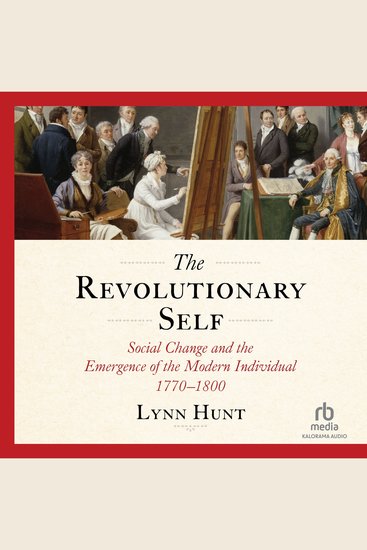
  • The Revolutionary Self - Social Change and the Emergence of the Modern Individual 1770-1800 - cover

    The Revolutionary Self - Social...

    Lynn Hunt

    • 0
    • 0
    • 0
    An illuminating exploration of the tensions between self and society in the age of revolutions. 


    The eighteenth century was a time of cultural friction: individuals began to assert greater independence and there was a new emphasis on social equality. In this surprising history, Lynn Hunt examines women's expanding societal roles, such as using tea to facilitate conversation between the sexes in Britain. In France, women also pushed boundaries by becoming artists, and printmakers' satiric takes on the elite gave the lower classes a chance to laugh at the upper classes and imagine the potential of political upheaval. Hunt also explores how promotion in French revolutionary armies was based on men's singular capabilities, rather than noble blood, and how the invention of financial instruments such as life insurance and national debt related to a changing idea of national identity. Wide-ranging and thought-provoking, The Revolutionary Self is a fascinating exploration of the conflict between individualism and the group ties that continues to shape our lives today.
    Zum Buch