Begleiten Sie uns auf eine literarische Weltreise!
Buch zum Bücherregal hinzufügen
Grey
Einen neuen Kommentar schreiben Default profile 50px
Grey
Jetzt das ganze Buch im Abo oder die ersten Seiten gratis lesen!
All characters reduced
Waves Shape Coasts - cover

Waves Shape Coasts

Ritika Gupta

Übersetzer A AI

Verlag: Publifye

  • 0
  • 0
  • 0

Beschreibung

"Waves Shape Coasts" explores how wave dynamics relentlessly sculpt coastlines through erosion and deposition, a crucial understanding for coastal management and climate change adaptation. The book highlights the mechanics of wave erosion, detailing processes like hydraulic action and abrasion, where waves compress air into cracks, fracturing rocks, and the grinding of rock fragments smooths surfaces. It also explains how coastal surveys using advanced technologies such as LiDAR and GPS precisely map and monitor these ever-changing shorelines. The book integrates traditional fieldwork with modern remote sensing techniques, offering a holistic view of coastal dynamics. Progressing logically, it begins with wave dynamics and geomorphology, then examines specific erosional processes with global case studies. Coastal survey techniques are detailed, culminating in a discussion of coastal management, conservation, and climate change adaptation. This approach provides readers with a blend of academic rigor and accessible explanations, valuable for students and professionals in earth sciences, geography, and environmental science.
Verfügbar seit: 27.02.2025.
Drucklänge: 99 Seiten.

Weitere Bücher, die Sie mögen werden

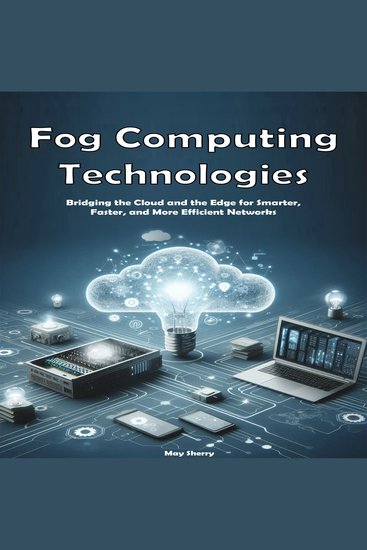
  • Fog Computing Technologies - Bridging the Cloud and the Edge for Smarter Faster and More Efficient Networks - cover

    Fog Computing Technologies -...

    May Sherry

    • 0
    • 0
    • 0
    In a rapidly evolving digital landscape, the demand for real-time processing and low-latency data handling is reshaping the way we think about computing. Fog Computing Technologies: Bridging the Cloud and the Edge for Smarter, Faster, and More Efficient Networks is a comprehensive guide to understanding the transformative power of fog computing and its pivotal role in the future of technology. 
    This book delves into the foundational principles of fog computing, exploring how it extends the capabilities of traditional cloud architectures by bringing data processing closer to the source—at the edge of the network. Through a blend of theory, practical applications, and real-world case studies, readers will gain a deep insight into how fog computing enables faster decision-making, enhances data security, and optimizes bandwidth usage, making it a critical component in industries ranging from smart cities to autonomous vehicles and the Internet of Things (IoT). 
    Key topics include:The evolution and architecture of fog computing and its relationship with cloud and edge computing.How fog computing addresses the challenges of latency, bandwidth, and data security in modern networks.Practical applications of fog computing across various industries, including healthcare, manufacturing, transportation, and smart grids.The role of fog computing in enabling the next generation of AI-driven and IoT-powered solutions.Challenges and future trends in fog computing, including its integration with emerging technologies such as 5G, blockchain, and AI. 
    Fog Computing Technologies provides the knowledge and insights you need to harness the full potential of this groundbreaking technology, driving innovation and efficiency in your organization. 
     
    Zum Buch
  • Reality Hacked - Inside the Hidden World of Bot Farms Fake News and Digital Manipulation - cover

    Reality Hacked - Inside the...

    Sergey Berezkin

    • 0
    • 0
    • 0
    Bot farms, fake news, and AI propaganda are rewriting what we think is real. 
    Every day, millions of invisible accounts and automated networks fight for your attention. Some sell products. Some push politics. Many exist only to keep you angry, distracted, or uncertain. 
    Reality Hacked pulls back the curtain on the hidden systems that shape what we see and believe online. It shows how bot farms amplify outrage, how “firehose of falsehood” tactics flood social media with conflicting stories, and how artificial intelligence now manufactures entire people, movements, and events from data. 
    You’ll discover:Why truth feels harder to recognize in the digital age — and who profits from the confusion.How propaganda has evolved from state operations to a global industry run by marketers, influencers, and algorithms.How AI makes manipulation faster, cheaper, and more personal than ever.Simple, practical habits that help you see through the noise and protect your mind from engineered emotion. 
    Clear, grounded, and surprisingly hopeful, Reality Hacked explains the new rules of an online world where everything competes for belief — and how to stay human when reality itself is up for debate.
    Zum Buch
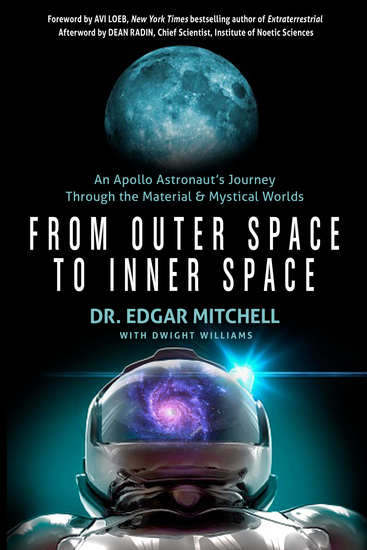
  • From Outer Space to Inner Space - An Apollo Astronaut's Journey Through the Material and Mystical Worlds - cover

    From Outer Space to Inner Space...

    Dr. Edgar Mitchell

    • 0
    • 0
    • 0
    The sixth man who walked on the moon shares his journey to the stars, into the mind, and beyond. 
    In February 1971, as Apollo 14 astronaut Edgar Mitchell hurtled Earthward through space, he was engulfed by a profound sense of universal connectedness. He intuitively sensed that his presence and that of the planet in the window were all part of a deliberate, universal process, and that the glittering cosmos itself was, in some way, conscious. The experience was so overwhelming, Mitchell knew his life would never be the same.  
    For the next thirty-five years, he embarked on another journey, an inward exploration of the ineffable mystery of human consciousness and being. Mitchell left NASA to form the Institute of Noetic Sciences (IONS). There he initiated research in areas of study previously neglected by mainstream science and constructed a theory that could explain not only the mysteries of consciousness, but also the psychic event—what spiritualists call a “miracle” and scientists dismiss altogether.  
    Mitchell also created a new dyadic model of reality, revealing a self-aware universe not predetermined by the laws of physics, preordained by deities, or infinitely malleable. While human actions are generally subject to the laws of physics, these laws are also influenced by the mind.  
    From Outer Space to Inner Space traces two remarkable journeys—one through space and one through the mind. Together they fundamentally alter the way we understand the miracle and mystery of being, and ultimately reveal humankind’s role in its own destiny.  
    Previously published as The Way of the Explorer, this edition includes a new foreword by Avi Loeb, an afterword by Dean Radin, and a postscript chapter by the author.
    Zum Buch
  • Mathematical Devotionals - cover

    Mathematical Devotionals

    Dale K. Hathaway

    • 0
    • 0
    • 0
    Mathematical Devotionals serves as a guide to connect Christianity with mathematics through a year's worth of inspirational prompts and meditations. Each devotional is self-contained, including scripture verses and an image. The devotionals fall into four categories: 
    · Mathematical connections to Christianity 
    · Semi-biographical devotionals of Christian mathematicians 
    · Devotionals based on quotes either by a mathematician or about mathematics 
    · A few devotionals using logical reasoning as a form of Christian apologetics 
    The devotionals use mathematics, statistics, computer science, and even occasionally stray into the other science areas to provide a variety of engaging connections to Christianity. The book is intended to show how mathematics and other scientific fields should be considered complementary to Christianity rather than adversarial. 
    About the Author: 
    Dale K. Hathaway has been a faculty member, department chair, and recently selected as the Associate Dean for the Martin D. Walker School of STEM (Science, Technology, Engineering, and Mathematics) at Olivet Nazarene University in Bourbonnais, Illinois 
    since 1989. He received his Ph.D. in Mathematics from Boston University. Mathematically, he has a passion for finding and presenting "Birthday Problem" connections and, as a Christian, he loves finding ways to connect his profession with his faith.
    Zum Buch
  • Future Directions in Cloud Computing - The Future of IT Infrastructure: Strategies and Applications - cover

    Future Directions in Cloud...

    Alexander Brooks

    • 0
    • 0
    • 0
    The indispensable manual "Future Directions in Cloud Computing: The Future of IT Infrastructure: Strategies and Applications" is meant for IT specialists, company executives, and tech enthusiasts excited to explore the quickly changing realm of cloud computing. This thorough book explores how cloud technologies transform IT infrastructure, providing a comprehensive grasp of present methods and potential future developments. 
    The book starts by outlining the historical evolution of cloud computing, including background information and emphasizing key turning points that have influenced the sector. The fundamental ideas and varieties of cloud computing, from hybrid and multi-cloud solutions to public and private clouds, will be thoroughly understood by readers.  
    The book goes beyond theory to examine the practical applications of cloud computing. It demonstrates how cloud technologies can enhance security, modernize infrastructure, and reduce costs in real-world IT operations.  
    A thorough analysis is conducted of the strategic applications of cloud computing, encompassing its function in software development, data administration, and company operations. In addition, the book examines cutting-edge developments and technologies poised to further transform the cloud environment, like blockchain, quantum computing, and serverless architectures. 
    "Future Directions in Cloud Computing" is not just a book about the present state of cloud computing. It's a guide that equips readers with the skills and knowledge they need to navigate the future of this rapidly evolving field. For individuals who wish to thrive in the rapidly changing field of cloud computing, it's an invaluable resource.
    Zum Buch
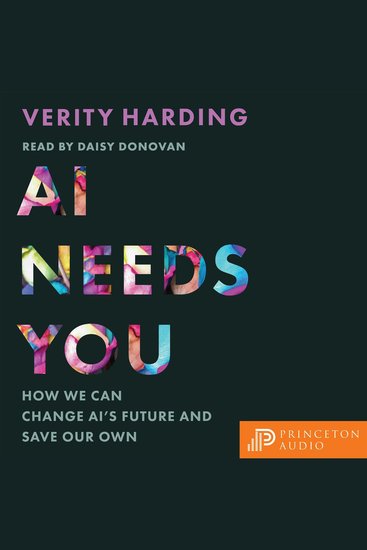
  • AI Needs You - How We Can Change AI's Future and Save Our Own - cover

    AI Needs You - How We Can Change...

    Verity Harding

    • 0
    • 0
    • 0
    This audiobook narrated by Daisy Donovan shares an electrifying vision of how we can safeguard AI's future for the public good
    
    Artificial intelligence may be the most transformative technology of our time. As AI's power grows, so does the need to figure out what—and who—this technology is really for. AI Needs You argues that it is critical for society to take the lead in answering this urgent question and ensuring that AI fulfills its promise.
    
    Verity Harding draws inspiring lessons from the histories of three twentieth-century tech revolutions—the space race, in vitro fertilization, and the internet—to empower each of us to join the conversation about AI and its possible futures. Sharing her perspective as a leading insider in technology and politics, she rejects the dominant narrative, which often likens AI's advent to that of the atomic bomb. History points the way to an achievable future in which democratically determined values guide AI to be peaceful in its intent; to embrace limitations; serve purpose, not profit; and to be firmly rooted in societal trust.
    AI Needs You gives us hope that we, the people, can imbue AI with a deep intentionality that reflects our best values, ideals, and interests, and that serves the public good. AI will permeate our lives in unforeseeable ways, but it is clear that the shape of AI's future—and of our own—cannot be left only to those building it. It is up to us to guide this technology away from our worst fears toward a future that we can trust and believe in.
    Zum Buch