Begleiten Sie uns auf eine literarische Weltreise!
Buch zum Bücherregal hinzufügen
Grey
Einen neuen Kommentar schreiben Default profile 50px
Grey
Jetzt das ganze Buch im Abo oder die ersten Seiten gratis lesen!
All characters reduced
Two Tracts on Civil Liberty the War with America and the Debts and Finances of the Kingdom - With a General Introduction and Supplement - cover

Two Tracts on Civil Liberty the War with America and the Debts and Finances of the Kingdom - With a General Introduction and Supplement

Richard Price

Verlag: DigiCat

  • 0
  • 0
  • 0

Beschreibung

In "Two Tracts on Civil Liberty, the War with America, and the Debts and Finances of the Kingdom," Richard Price presents a critical analysis of the social and political upheavals of his time. Blending Enlightenment ideals with empirical research, Price offers a thorough dissection of civil liberties, specifically in the context of the American Revolution and its financial implications for Britain. His prose is marked by a clarity and urgency that reflects the tumultuous climate of the late 18th century, engaging with evolving notions of liberty, governance, and economic responsibility. This work stands out as both a philosophical treatise and a timely response to contemporary political dilemmas, illustrating the intersection of morality and statecraft. Richard Price was a notable Welsh moral philosopher and political theorist whose commitment to democratic ideals and social reform deeply influenced his writings. His advocacy for civil liberties, coupled with his dissent against established authority, captures the essence of the Enlightenment spirit. An ardent supporter of the American colonies' quest for independence, Price's life experiences and scholarly pursuits fueled his critique of government practices and financial mismanagement, culminating in these essential tracts. This book is essential for readers seeking to understand the foundations of modern democratic thought and the historical trajectory that shaped civil liberties. Price's incisive arguments and passionate advocacy resonate well beyond his time, offering invaluable perspectives for contemporary discussions on governance, freedom, and the responsibilities of citizenship.
Verfügbar seit: 20.07.2022.
Drucklänge: 201 Seiten.

Weitere Bücher, die Sie mögen werden

  • Urban Planning - Designing the Cities of Tomorrow (3 in 1) - cover

    Urban Planning - Designing the...

    Lyric Vale

    • 0
    • 0
    • 0
    Cities are living, breathing organisms that reflect humanity's most ambitious dreams and most pressing challenges. More than mere collections of buildings and infrastructure, they are complex ecosystems where social, economic, technological, and environmental dynamics interweave to create the spaces where human life unfolds. This comprehensive exploration—encompassing City Planning, the Evolution of Urban Planning, and Urban Design—offers a deep dive into the art and science of crafting urban environments that are not just functional, but transformative, sustainable, and responsive to the ever-changing needs of human communities. 
    The narrative of urban development is fundamentally a story of human adaptation, innovation, and collective imagination. From ancient civilizations' first planned settlements to today's smart, technologically integrated metropolises, urban planning represents a continuous dialogue between human potential and environmental constraints. By examining the historical trajectories, contemporary challenges, and future possibilities of urban design, this book illuminates the intricate processes that shape our collective living spaces. Readers will journey through the strategic thinking, technological innovations, social considerations, and visionary approaches that transform abstract concepts into tangible urban landscapes—revealing how thoughtful planning can address critical issues like sustainability, social equity, technological integration, and quality of life in an increasingly urbanized world.
    Zum Buch
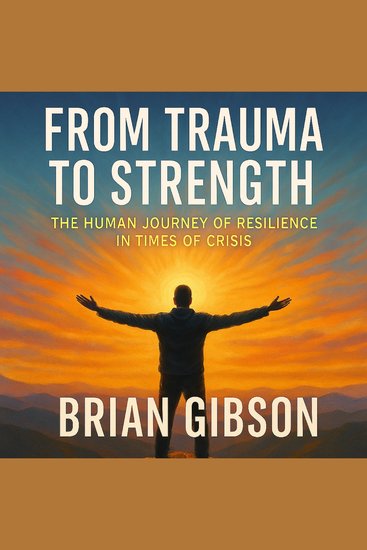
  • From Trauma to Strength - The Human Journey of Resilience in Times of Crisis - cover

    From Trauma to Strength - The...

    Brian Gibson

    • 0
    • 0
    • 0
    Is your child struggling after a crisis, loss, or traumatic experience? 
     You're not alone—and neither are they. 
    When children face trauma—whether through family upheaval, natural disasters, violence, or loss—they often don't have the tools or language to process what's happened. From Trauma to Strength offers parents, caregivers, educators, and professionals a compassionate guide to helping children heal and thrive after crisis. 
    This book will help you understand what trauma looks like in children and what resilience can become. 
    Inside, you'll learn: 
    ·        How trauma affects a child's brain, behavior, and development 
    ·        The signs of hidden trauma and how to identify them early 
    ·        Proven strategies for supporting children through grief, anxiety, and emotional overwhelm 
    ·        How to create a safe, healing environment—at home, in classrooms, or therapy 
    ·        Tools and exercises that promote emotional regulation, connection, and long-term resilience 
    Whether you're a parent trying to comfort your child after a painful experience or a professional supporting traumatized youth, this book equips you with the knowledge and tools to make a difference. 
    Help your child turn their pain into power. 
    Buy From Trauma to Strength now, and start guiding the young people in your life toward healing, resilience, and lasting strength.
    Zum Buch
  • The Soviet Famine of 1932-1933 - Stalin's Harvest of Despair - cover

    The Soviet Famine of 1932-1933 -...

    Sarah Willards

    • 0
    • 0
    • 0
    The Soviet famine of 1932-1933, one of the most devastating events in Soviet history, can be traced back to the aggressive agricultural policies enforced under Joseph Stalin’s leadership. The roots of the famine lay in the drastic changes to agriculture during the late 1920s and early 1930s, particularly the forced collectivization campaign, which aimed to reshape the entire agricultural sector to fit the needs of the Soviet state. This chapter explores the key policies that set the stage for the disaster that would unfold in the early 1930s. 
    The first step towards the famine was the rise of collectivization, a policy introduced by Stalin to consolidate individual farms into large, state-controlled collective farms. The goal was to increase agricultural productivity and provide the state with a surplus of grain to fuel industrialization. However, this policy met with widespread resistance from peasants who feared losing their land and livelihood. In response, the Soviet government resorted to violent measures to force peasants to join collective farms, including the execution or deportation of so-called "kulaks"—wealthier peasants—whom the regime labeled as class enemies. 
    Alongside collectivization, Stalin’s government implemented harsh grain procurement quotas. These quotas demanded that peasants surrender large portions of their harvest to the state at low prices, which were often below the cost of production. The policy was particularly detrimental to regions with fertile land, where the government set even higher quotas to maximize exports, often at the expense of local populations. The pressure to meet these quotas, combined with the challenges of collectivized farming, led to a dramatic reduction in food available for local consumption.
    Zum Buch
  • The Stories They Hear - Expecting Greatness as the Key to Success - cover

    The Stories They Hear -...

    William A. Keyes IV

    • 0
    • 0
    • 0
    The Stories They Hear is a profound testament to the power of mentorship and the impact one visionary program has had on America's best and brightest African American male college students.  
     
    Through the Institute for Responsible Citizenship, Dr. Bill Keyes has transformed the lives of over 300 young men, including Rhodes Scholars, Fulbright Scholars, doctors, lawyers, professors, and community leaders. Founded in 2003, the Institute has helped these men achieve remarkable success, nurturing their talents and instilling values of resilience, respect, and service. 
     
    This book offers readers an intimate glimpse into the Institute’s life-changing experiences. Each chapter is filled with personal stories and valuable lessons shared by Dr. Keyes with his scholars over two decades. Key insights include identifying one’s gifts, using influence responsibly, and practicing resilience in the face of adversity. These stories, once shared in a Washington DC conference room, now invite readers to be inspired by the guidance that has shaped these young men into leaders and role models. 
     
    The Stories They Hear is an inspiring guide for mentors, educators, and anyone invested in helping young people unlock their potential to create a legacy that empowers future generations.
    Zum Buch
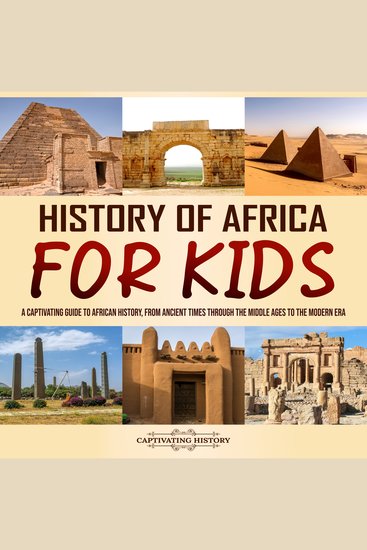
  • History of Africa for Kids: A Captivating Guide to African History from Ancient Times through the Middle Ages to the Modern Era - cover

    History of Africa for Kids: A...

    Captivating History

    • 0
    • 0
    • 0
    Three manuscripts in one audiobook:African History for Kids: A Captivating Guide to the History of AfricaAncient Africa for Kids: A Captivating Guide to Ancient African Civilizations, Empires, and HistoryMedieval Africa for Kids: A Captivating Guide to Mansa Musa, the Mali Empire, and other African Civilizations of the Middle Ages 
    In the first part of this audiobook, you will learn about:Ancient Egypt’s incredible inventions, pharaohs, and architecture.The Egyptians weren’t the only African nation to build pyramids. Find out what other African civilizations built more pyramids in one town than there were in the whole of Egypt!The introduction of Christianity and Islam and how they impacted tribal religions.How a huge monument was dismantled and taken to Rome for seventy years before being returned to its original site.Things are looking up! What the future holds for Africa. 
    In the second part of this audiobook, you will discover:Where is the Land of the Bow?Why did the Egyptians make mummies?How many war elephants did Hannibal have?What civilization conquered Egypt?What is the legend of King Solomon, the Queen of Sheba, and their son?Where exactly was ancient Ghana? 
    In the third part of this audiobook, you will discover:Was Mansa Musa I really the wealthiest person in world history?Why wasn’t the Ghana Empire close to modern Ghana?How did Islam come to Africa?Are any of the medieval empires still here today?How did the African kingdoms react to the slave trade?Who was the most famous African leader during the Middle Ages?And much, much more! 
    Scroll up and click the “add to cart” button to learn more about the history of Africa!
    Zum Buch
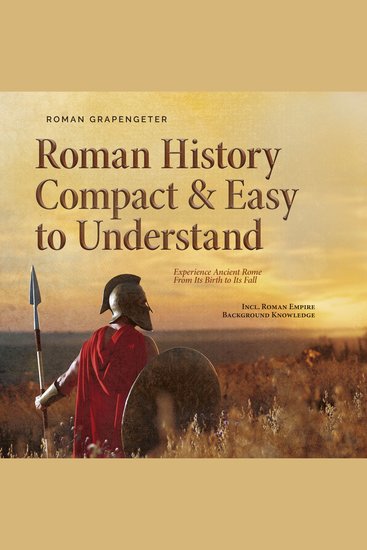
  • Roman History Compact & Easy to Understand Experience Ancient Rome From Its Birth to Its Fall - Incl Roman Empire Background Knowledge - cover

    Roman History Compact & Easy to...

    Roman Grapengeter

    • 0
    • 0
    • 0
    Starting from the two iconic dates of 753 BC (according to legend, the founding of Rome) and 476 AD (the deposition of the last Western Roman emperor Romulus Augustulus), the history of the Roman Empire spans more than 1200 years. This was not only a long period of time, but also an eventful one - after all, the inhabitants of the city on the Tiber River conquered an empire that, at its greatest expansion in 116 AD, encompassed most of Europe as well as parts of North Africa and Asia Minor.
    It would not be difficult to fill hundreds of pages with names and dates from the history of the Roman Empire, and of course such comprehensive accounts already exist.
    But don't worry, that's not what awaits you here. This book will give you an entertaining introduction to the history of the Roman Empire. You will find here only the information you need to understand why the 1200-year development took place as the sources tell us. And because incontrovertible facts are often sparser than one would expect or wish, you will also learn what we don't know (anymore) today and why that is so.
    Zum Buch