Rejoignez-nous pour un voyage dans le monde des livres!
Ajouter ce livre à l'électronique
Grey
Ecrivez un nouveau commentaire Default profile 50px
Grey
Abonnez-vous pour lire le livre complet ou lisez les premières pages gratuitement!
All characters reduced
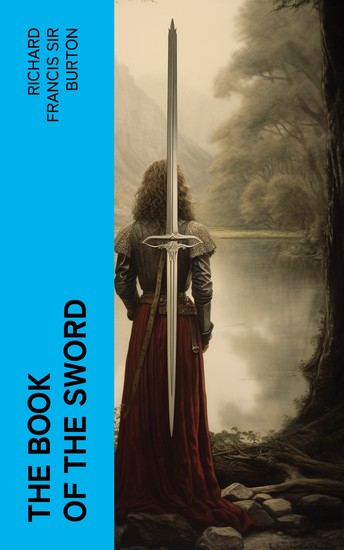
The Book of the Sword - cover

The Book of the Sword

Richard Francis Burton

Maison d'édition: e-artnow

  • 0
  • 0
  • 0

Synopsis

"The Book of the Sword" by Sir Richard Francis Burton is a late 19th century book is a weapon's history book that will fascinate even the most casually interested reader. Giving a comprehensive look at bladed tools that date back from ancient history to the modern-day (at the time the book was written), this book is a must-read for anyone who has ever been interested in swords, daggers, and more.
Disponible depuis: 09/12/2023.
Longueur d'impression: 623 pages.

D'autres livres qui pourraient vous intéresser

  • Z Generation - Into the Heart of Russia's Fascist Youth - cover

    Z Generation - Into the Heart of...

    Ian Garner

    • 0
    • 0
    • 0
    How did Vladimir Putin galvanize the Russian people to back his genocidal war in Ukraine, and why are so many of them willing to embrace fascism? This vivid, on-the-ground narrative reveals how Russia's fascist generation came into being—and the dark future that awaits the country if that hold cannot be broken. 


    Wartime Russia is drowning in fascist symbols. Zealous patriots attack journalists, opposition activists, and anyone suspected of betraying the motherland. Russians are urged to join the cause by hordes of online trolls and sleek videos of angry young men bellowing patriotic slogans. State television terrifies viewers with trumped up tales of anti-Russian conspiracies and genocidal yearnings. Child soldiers proudly parade across Red Square. This is Russia in the 2020s: a land of performative rage and nationalist untruth, where play-acting, pretense, and broken promises are a way of life. But in a world where pretense has become the norm, a terrifying, apocalyptic mindset is seizing the Russians of tomorrow. 


    As enrapturing as it is terrifying, Z Generation reveals how Russia ended up where it is today, and where its young people are headed: a fascist generation more zealous, violent, and ideological than anything the country has seen before.
    Voir livre
  • Kings and Queens - The History of Mary Tudor Charlemagne and Anne Boleyn - cover

    Kings and Queens - The History...

    Kelly Mass

    • 0
    • 0
    • 0
    This is a book that consists of 3 titles, which are these: 
    1 - As King Henry VIII's 2nd marriage partner, Anne Boleyn ruled as Queen of England from 1533 till 1536. Her marriage and execution by beheading for treason and other criminal offenses made her an essential player in the political and religious chaos that identified the start of the English Reformation. Anne was the daughter of Thomas Boleyn, first Earl of Wiltshire, and his marriage partner, Girl Elizabeth Howard. She got her education in Holland and France, mainly as a housemaid of honor to Queen Claude of France. Anne went to England in early 1522, meaning to wed her Irish cousin James Butler, 9th Earl of Ormond; nevertheless, the marriage failed, and she found work as a housemaid of honor to Henry VIII's partner, Catherine of Aragon. 
    2 - Mary I, typically called Mary Tudor and called "Bloody Mary" by her Protestant challengers, ruled as Queen of England and Ireland from July 1553 till November 17th, 1558. She is well recalled for her solid attempts to reverse the English Reformation, which started throughout her dad's reign, Henry VIII's reign. 
    Bloody Mary was cruel, cold, and from what we know, there was a cause for this. Let’s take a look at her life, her problems, and the way she handled them. 
    3 - From 768 to 800, Charlemagne, also referred to as Charles the Great, was King of the Franks, King of the Lombards, and Emperor of the Romans. Charlemagne combined many western and main Europe at the time of the Early Middle Ages. Since the fall of the Western Roman Empire 3 centuries before, he was the first acknowledged emperor to rule from western Europe. The Carolingian Empire is the name given to Charlemagne's broadening Frankish world. Antipope Paschal the Third later canonized him.
    Voir livre

  • The Fate of Man - cover

    The Fate of Man

    H. G. Wells

    • 0
    • 0
    • 0
    In the design of this book three primary themes interlace and pursue and develop each other.There is first, that invention and science have completely altered the material environment ofhuman life. Next, that the disruptive driving force of an excess of bored and unemployed young men., which must in some manner find relief, will probably shatter human life altogether under the new conditions. And thirdly, that the existing mental organisation of our species is entirely insufficient to control the present situation, which nevertheless might, with an adequate effort, be controlled. 
    Every community can be shown to be either sending out the plethora of its population as emigrants and settlers, or reducing it by warfare, or else suffering from acute social trouble, such social trouble as the words Russian Hooligans, Chinese Boxers, Moonlighters, Nazis, Fascists, revolutionary terrorists, gangsters, will call to mind. The young man surplus, if it is not consumed, is the main source of rebels, revolutionaries and disturbances of all kinds. Somehow that tension must find relief. The comparative social stability of the nineteenth century was largely due to emigration and the settlement of new lands.
    Voir livre
  • Qabbalistic Keys to the Creation of Man - cover

    Qabbalistic Keys to the Creation...

    Manly Palmer Hall

    • 0
    • 0
    • 0
    The Old Testament--especially the Pentateuch--contains not only the traditional account of the creation of the world and of man, but also, locked within it, the secrets of the Egyptian initiators of the Moses concerning the genesis of the god-man (the initiate) and the mystery of his rebirth through philosophy. While the Lawgiver of Israel is known to have compiled several works other than those generally attributed to him, the writings now commonly circulated as the purported sixth and seventh books of Moses are in reality spurious treatises on black magic foisted on the credulous during the Middle Ages. Out of the hundreds of millions of pious and thoughtful students of Holy Writ, it is almost inconceivable that but a mere handful have sensed the sublimity of the esoteric teachings of Sod (the Jewish Mysteries of Adonai). Yet familiarity with the three Qabbalistical processes termed Gematria, Notarikon, and Temurah makes possible the discovery of many of the profoundest truths of ancient Jewish superphysics.
    Voir livre
  • Whatever Next? - On Adult Adoptee Identities - cover

    Whatever Next? - On Adult...

    Josephine Jay, Adaline Bara,...

    • 0
    • 0
    • 0
    For adoptees, the word 'lucky' gets thrown around a lot. They're regularly told they're lucky to not be in an orphanage, lucky to have been brought into a family, lucky to be adopted at all. Often they're depicted in media as being broken, in need of saving and fixing. Then they're expected to become the hero of their own journeys and overcome their origins.
    Whatever Next? considers how these traditional narratives surrounding adoption have both dominated and damaged adoptive communities for many years, and what we should do to avoid these pitfalls.
    Inspired by the conversations within their Whatever Next? community project, Jo, Addie and Hannah explore the key tropes that adoptees grapple with and how these conversations are evolving, with the goal of kickstarting new dialogues around the adoption experience more broadly, and showcase how beneficial shared discussion can be.
    Voir livre
  • Khalsa Butt Na Manne Koi Part- 2 - (ਖਾਲਸਾ ਬੁੱਤ ਨਾ ਮਾਨੌ ਕੋਇ -2) - cover

    Khalsa Butt Na Manne Koi Part- 2...

    Edited by: Parmjeet Singh Gazi,...

    • 0
    • 0
    • 0
    Book: Khalsa Butt Na Manne Koi Part-2 
    Edited By: Parmjeet Singh Gazi, Ravinderpal Singh 
    Khalsa But Na Maane Koi Part- 2 is a thoughtful and important book that explains why idol worship is not allowed in Sikhism. The book includes a collection of articles written by different Sikh writers and scholars. These articles talk about how Sikh history, teachings of the Gurus, and Gurbani clearly say that Sikhs should not use statues or pictures for worship. 
    Khalsa But Na Maane Koi Part- 2 gives answers to new ideas that try to bring idol worship into the Sikh community. The writers use strong examples from Sikh scriptures and history to explain why such practices go against Sikh beliefs. The book is edited by Parmjeet Singh Gazi and Ravinderpal Singh, who have carefully chosen articles that are full of useful information and references. 
    The main message of this book is to stay true to Sikh values and to avoid any practice that changes the original path shown by the Gurus. The book helps readers understand the difference between true Sikh practice and ideas that have come from outside.If you want to learn more about Sikh beliefs or understand why idol worship is not part of Sikhism, this book is a great book to read. It is simple, clear, and based on facts. Get your copy and reconnect with the true teachings of Sikhism.
    Voir livre