Rejoignez-nous pour un voyage dans le monde des livres!
Ajouter ce livre à l'électronique
Grey
Ecrivez un nouveau commentaire Default profile 50px
Grey
Abonnez-vous pour lire le livre complet ou lisez les premières pages gratuitement!
All characters reduced
Historical record of the Seventh Regiment or the Royal Fusiliers - Enriched edition Containing an Account of the Formation of the Regiment in 1685 and of Its Subsequent Services to 1846 - cover

Historical record of the Seventh Regiment or the Royal Fusiliers - Enriched edition Containing an Account of the Formation of the Regiment in 1685 and of Its Subsequent Services to 1846

Richard Cannon

Maison d'édition: DigiCat

  • 0
  • 0
  • 0

Synopsis

In "Historical Record of the Seventh Regiment, or the Royal Fusiliers," Richard Cannon presents a meticulously detailed account of the illustrious history of one of Britain's most distinguished military regiments. Written with precision and a narrative style that marries factual reporting with engaging storytelling, this work captures the evolution of the Royal Fusiliers from their inception to the contemporary era. The book is replete with primary sources, including battle reports and personal accounts, which situate the regiment within the broader context of British military history, highlighting its pivotal role in various conflicts from the Napoleonic Wars to the colonial undertakings of the Victorian era. Richard Cannon, a noted military historian and army officer, had a profound understanding of the institution he chronicled. His own experiences in the armed forces, coupled with his scholarly pursuits in military history, informed his commitment to preserving the legacy of the Royal Fusiliers. Cannon's dedication to accuracy and detail stems from his belief in the importance of remembering the sacrifices and achievements of those who served, reflecting the values of honor and duty central to military ethos. This book is an indispensable resource for anyone interested in military history, regimental heritage, or the intricate dynamics of British imperialism. Scholars, historians, and casual readers alike will find Cannon's work to be a compelling and informative exploration of the Royal Fusiliers, celebrating their storied past while serving as a reminder of the sacrifices made by generations of soldiers.

In this enriched edition, we have carefully created added value for your reading experience:
- Hand‐picked Memorable Quotes shine a spotlight on moments of literary brilliance.
- Interactive footnotes clarify unusual references, historical allusions, and archaic phrases for an effortless, more informed read.
Disponible depuis: 16/09/2022.
Longueur d'impression: 101 pages.

D'autres livres qui pourraient vous intéresser

  • On Forgiveness - cover

    On Forgiveness

    Russell Hasan

    • 0
    • 0
    • 0
    This is an essay on forgiveness, not in the religious sense, but in a purely secular meaning, as in, when one person forgives another person for something they did wrong. The primary focus is on self-forgiveness, where a person forgives themselves, a concept which this essay explains as "moral bankruptcy," using debts and credits and bankruptcy and economics and finance as a metaphor for the moral debts and moral credits that you owe to yourself and to others, that you owe it to yourself to be a good person, and you owe it to other people to be good to them, and, where you fail, you owe them a debt. The human brain evolved in such a way that humans tend to subconsciously seek to repay moral debts through the infliction of emotional pain, either inflicting emotional pain upon the self for debts owed to self (guilt), inflicting pain upon the self for debts owed to others (shame), or inflicting pain upon others for debts they owe to you (anger). This essay, despite being atheistic and secular in nature, does explore forgiveness in the context of areas that are commonly thought of as religious sins: lust, greed, pride, envy, and evil, as well as shame and guilt. The key central idea is that self-forgiveness, "moral bankruptcy," can help set you free from any guilt, shame, and anger that is holding you back in your life, and forgiveness will enable you to live a happier life, by giving you the confidence to act, and to achieve, with a greater resistance to fear of feeling guilt or shame if you fail, thereby tranquilizing fear of rejection or fear of failure or fear of disappointment. This theory of emotions will define honor, emotional maturity, self-esteem, and confidence, as well as explaining all of the seven major emotions: happiness, sadness, love, fear, guilt, shame, and anger. This book is cold, logical, no-nonsense wisdom about forgiveness, and is not mere wishy-washy empty generalities like most self-help books.
    Voir livre
  • Hidden Brilliance - Redefining Genius: The Overlooked Intellectual Giant - cover

    Hidden Brilliance - Redefining...

    John Harpoon

    • 0
    • 0
    • 0
    Genius is often perceived through a narrow lens, typically defined by extraordinary achievements, groundbreaking discoveries, or exceptional skills. However, this traditional view of genius overlooks many individuals whose brilliance remains hidden from the mainstream. The nature of genius is far more complex and multifaceted than society tends to acknowledge. It exists not only in those who are celebrated publicly but also in those whose contributions go unnoticed or unrecognized due to societal limitations or biases. 
    At its core, genius is about exceptional intellectual capacity, but this capacity can manifest in many different ways. It is not always about creating world-changing inventions or becoming a famous name. For many, genius lies in quiet innovation, subtle insights, and the ability to solve problems in unique and unconventional ways. It can be seen in the person who finds creative solutions to everyday challenges or in the thinker who makes a significant impact in a specific, narrow field of knowledge, even if that knowledge doesn’t capture the world’s attention.
    Voir livre
  • The True Story of Thanksgiving Smallpox and Native Genocide - cover

    The True Story of Thanksgiving...

    William Blatch

    • 0
    • 0
    • 0
    History is full of missing pieces, fragments, and half-truths... The tale of our beloved Thanksgiving is no exception.  
    We know the story of the Pilgrims and the Wampanoags that taught them how to harvest the land. We celebrate Thanksgiving each year to commemorate their friendly interaction through feasts of our own.  
    But the stories we know of the happy gathering in 1621 aren’t all that they seem.  
    Amongst the feasting and budding relationships were genocide, disease, and atrocities too great to include around the dinner table.  
    Legacies worthy of being told are shared. The violence following the giddy union is brought to light. The genocide of the native peoples of America is uncovered. The True Story of Thanksgiving, Smallpox, and Native Genocide amplifies the voices muffled by historians to reveal the true history of the holiday.  
    Join William Blatch in his first book in the History as We Never Knew It series and learn how to look at history with a critical eye. unravel the false truths of well-known stories and tales. examine the bigger picture behind retellings of history. see the full truth in all its depth and color.  
    History is written by the winners... but not in its entirety. Read now to see all sides of the story and determine for yourself what truths should be told! 
    Voir livre
  • Manipulation - Influencing Others Covertly for Personal Gain - cover

    Manipulation - Influencing...

    Cito Harder

    • 0
    • 0
    • 0
    Manipulation is a form of covert influence where an individual or group uses deceptive tactics to control or alter the behaviors, beliefs, or decisions of others, often without their awareness. This subtle, often underhanded form of influence aims to achieve personal gain or power, typically at the expense of the manipulated party. Understanding the nature of manipulation requires delving into the methods and psychological mechanisms that make it so effective and insidious. 
    At its core, manipulation is about exerting influence in a way that is not immediately obvious to the target. Unlike more overt forms of control, manipulation operates in the shadows, using psychological tactics to induce desired behaviors or responses. It thrives on exploiting vulnerabilities, uncertainties, and emotional triggers in individuals, often capitalizing on their desires, fears, or insecurities. Manipulators may use a variety of techniques, such as flattery, guilt-tripping, emotional blackmail, and gaslighting, to sway decisions or actions in their favor. 
    One of the defining characteristics of manipulation is its covert nature. The manipulator often works behind the scenes, creating situations or presenting information in a way that influences the target’s perception of reality. This can lead the victim to make decisions they would not otherwise have made, under the false belief that they are acting independently or in their own best interest. For instance, a manipulative partner may use guilt to convince their significant other to compromise on something they would normally resist. Over time, these manipulative tactics can erode the target's sense of agency and self-worth, making them more susceptible to future manipulation.
    Voir livre
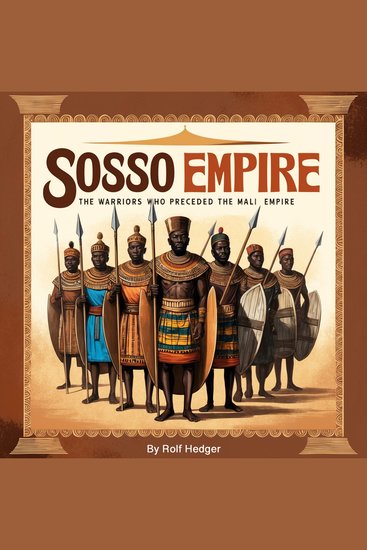
  • Sosso Empire - The Warriors Who Preceded the Mali Empire - cover

    Sosso Empire - The Warriors Who...

    Rolf Hedger

    • 0
    • 0
    • 0
    The Sosso Empire emerged during a period of great upheaval in West Africa, following the decline of the once-powerful Ghana Empire. The Sosso people, a group of warriors and rulers, capitalized on the weakening of Ghana to establish their dominance in the region. Their rise was marked by military aggression, strategic leadership, and a desire to control the lucrative trade routes that had long been the backbone of West African wealth. 
    The origins of the Sosso people remain somewhat obscure, but they were likely a subgroup within the greater Soninke-speaking population that had once formed the core of the Ghana Empire. As Ghana’s power waned due to external invasions and internal struggles, smaller states sought to assert their independence. The Sosso, led by a series of ambitious leaders, were among the most successful in carving out a new political and military identity for themselves. 
    One of the most defining moments in the rise of the Sosso Empire was the ascent of Sumanguru Kanté, a warrior-king whose leadership transformed Sosso into a dominant force. Sumanguru’s reputation as a ruthless and determined leader spread quickly. He capitalized on the disintegration of Ghana by taking control of its former capital, Koumbi Saleh, and imposing his rule over the surrounding regions. His conquest of Ghana marked a shift in power, with Sosso assuming the role of the dominant state in the region.
    Voir livre
  • Summary: High Performance Habits - How Extraordinary People Become That Way by Brendan Burchard: Key Takeaways Summary & Analysis - cover

    Summary: High Performance Habits...

    Brooks Bryant

    • 0
    • 0
    • 0
    Disclaimer: This is a summary; not the official book nor does it accompany it. 
    Performance Habits: How Extraordinary People Become That Way' by Brendan Burchard. This insightful book lays out the crucial habits used by top performers to excel in their personal and professional lives. 
    Burchard, a world-renowned high-performance coach, has based his findings on one of the most extensive research projects on high performance ever conducted. He provides a scientifically-backed approach to achieving extraordinary success across multiple domains of life. 
    Our efficient summary highlights the six habits that high performers have in common and how these practices can help you rise above the rest. Learn how to increase productivity, enhance your energy, condition your mind for success, maintain motivation, develop influence, and demonstrate courage.
    Voir livre