Begleiten Sie uns auf eine literarische Weltreise!
Buch zum Bücherregal hinzufügen
Grey
Einen neuen Kommentar schreiben Default profile 50px
Grey
Jetzt das ganze Buch im Abo oder die ersten Seiten gratis lesen!
All characters reduced
Going Circular - The Evolution of Reverse Logistics into a Competitive Weapon - cover

Going Circular - The Evolution of Reverse Logistics into a Competitive Weapon

Rich Bulger

Verlag: Brown Books Publishing Group

  • 0
  • 0
  • 0

Beschreibung

The essential business guide for using reverse logistics to drive profits, growth, and sustainability. Long considered a “necessary evil” of doing business, reverse logistics is quickly becoming the key to staying competitive in today’s dynamic marketplace. In Going Circular, RecirQ Global CEO Rich Bulger reveals its potential for boosting revenue, enhancing customer experience, and supporting the circular economy. Urging a strategic shift, Going Circular showcases how integrating reverse logistics in sales, marketing, and customer retention can achieve broader business objectives, including cost reduction and environmental responsibility. It offers practical strategies for minimizing unwanted returns and repurposing products, fostering sustainable business models and market expansion. Comprising seven comprehensive chapters and three “reUse” case studies, this guide redefines reverse logistics as a vital tool for business resilience and success. A must-read for professionals in the field, Going Circular is a call to action for integrating reverse logistics into evolving business strategies, promising a pathway to sustainable transformation and profitability.
Verfügbar seit: 05.03.2024.
Drucklänge: 354 Seiten.

Weitere Bücher, die Sie mögen werden

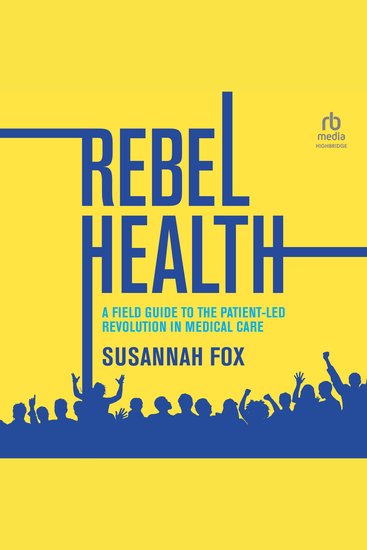
  • Rebel Health - A Field Guide to the Patient-Led Revolution in Medical Care - cover

    Rebel Health - A Field Guide to...

    Susannah Fox

    • 0
    • 0
    • 0
    Anyone who has fallen off the conveyer belt of mainstream health care and into the shadowy corners of illness knows what a dark place it is to land. Where is the infrastructure, the information, the guidance? What should you do next? In Rebel Health, Susannah Fox draws on twenty years of tracking the expert networks of patients, survivors, and caregivers who have come of age between the cracks of the health care system to offer a way forward. Covering everything from diabetes to ALS to Moebius Syndrome to chronic disease management, Fox taps into the wisdom of these individuals, learns their ways, and fuels the rebel alliance that is building up our collective capacity for better health. 


    Rebel Health shows how the next wave of health innovation will come from the front lines of this patient-led revolution. Fox identifies and describes four archetypes of this revolution: seekers, networkers, solvers, and champions. Each chapter includes tips, such as picking a proxy to help you navigate the relevant online communities, or learning how to pitch new ideas to investors and partners or new treatments to the FDA. 


    Proactive, optimistic, and innovative, Rebel Health is a guiding light for anyone who wishes to join the health rebel alliance and become the hero of their own story.
    Zum Buch
  • The Hill - cover

    The Hill

    Rupert Brooke

    • 0
    • 0
    • 0
    Librivox volunteers bring you 15 recordings of The Hill by Rupert Brooke. This was the Weekly Poetry project for May 15, 2011.Rupert Chawner Brooke was an English poet known for his idealistic war sonnets written during the First World War (especially The Soldier). He was also known for his boyish good looks, which prompted the Irish poet William Butler Yeats to describe him as "the handsomest young man in England". (summary from Wikipedia)
    Zum Buch
  • Low-Hanging Fruit - 77 Eye-Opening Ways to Improve Productivity and Profits - cover

    Low-Hanging Fruit - 77...

    Terri Long, Jeremy Eden

    • 0
    • 0
    • 0
    Every day, thousands of hidden and ignored problems frustrate  workers and customers and, in turn, reduce profits.  The key  to finding and fixing these problems is to engage employees closest  to the work and closest to the customer in new ways so they can  contribute their ideas. This book provides rules that, if followed,  will allow employees to harvest all the low hanging fruit   and some that is not so low hanging  that will grow  earnings, make customers happier, and increase morale. Some  examples of these rules include    Rule 15: Routinely review  and stop   zombie projects.  No one admits it, but projects  approved with fanfare are often completed even when midway through  it is clear that they wont work because no one wants to say  they made a mistake.  Killing zombie projects  saves money and allows precious resources to be reallocated to  worthwhile projects.  Rule 17: Get out of the habit of always doing the best job you  can!  Its counter-intuitive, but conscientious  employees often waste time and money trying to do a great job when  a good job is all that is needed.  This rule finds ideas that  eliminate well-intentioned gold plating.      Rule 30: Always ask, how do you know that is  true?  Nothing kills good ideas faster than someone  uttering, customers wont like it or  operations cant do it or it wont  pay back.  These tend to be opinions not facts.   By simply learning to ask how do we know thats  true? and demanding facts, many perfectly good ideas will  live to see the light of day!
    Zum Buch
  • Abundance vs Scarcity - How to Use Financial Education to Make the Right Choices - cover

    Abundance vs Scarcity - How to...

    Digital World

    • 0
    • 0
    • 0
    Hello everyone! I'm excited to introduce you to the fascinating world of financial psychology. In this series, we'll explore how our emotions, beliefs, and behaviors influence our financial decisions. We'll see how this understanding can transform our relationship with money and help us achieve our goals. What is Financial Psychology? Financial psychology studies the relationship between the human mind and money. It explores how psychological factors such as emotions, perceptions, and beliefs influence our financial decisions. It combines concepts from psychology and economics to understand financial behavior. Financial psychology isn't just about numbers and graphs. It helps us understand why we sometimes make financial decisions that don't make rational sense. By understanding the psychological mechanisms behind our decisions, we can make more informed decisions that align with our goals. The Power of Emotions in Finance Emotions such as fear, greed, and anxiety significantly influence our financial decisions. Fear of losing money can lead to conservative decisions, while greed can lead to excessive risk-taking. Hope for a better future can motivate us to save, but it can also lead us to invest in high-risk assets. Emotions are like an internal GPS that guides us in our financial decisions. However, they can lead us down a wrong path if not managed properly. By identifying and understanding our emotions, we can make more rational decisions that are aligned with our long-term goals. Cognitive Biases and Finance Cognitive biases are mental shortcuts we use to make decisions faster, but they can lead us to make mistakes. Examples of biases include loss aversion, confirmation bias, and herd behavior. How to identify and overcome these biases to make sounder financial decisions. Our brains are incredible machines, but they are also prone to making mistakes. Cognitive biases are like optical illusions that distort our perception of reality. By being aware of these biases, we can take steps to counteract their effects and make more rational decisions. The Importance of Financial Habits Our financial habits are shaped by our experiences and beliefs. The importance of developing healthy financial habits, such as saving, investing, and planning for the future. How to create new habits and break old financial habits. Our financial habits are like paths we follow on autopilot. If we want to change our financial results, we need to change our paths. By developing new positive financial habits, we can transform our financial lives. Financial psychology offers us a new perspective on money. Instead of seeing money as an end in itself, we can see it as a means to achieve our goals and live a more fulfilling life.
    Zum Buch
  • I Hate Marketing - A Marketing Book For People Who Don't Like Marketing - cover

    I Hate Marketing - A Marketing...

    Jonathan M. Wenzel

    • 0
    • 0
    • 0
    Do you want to know a secret? Marketing stinks. I have a feeling you might agree. In fact, odds are that when you started your business, you didn't start it because you wanted to get involved with marketing. You were good at something or had something to sell, and you wanted to do it for yourself. And now marketing feels like one of those necessary evils you just can't get away from. But you know what? You're not alone. And...there's hope.
    Zum Buch
  • Selling on Amazon - 2 Manuscripts-how to sell on amazon Getting Started With Filfilment by Amazon and Learn to Build a Profitable Business by Following a Proven Up-to-Date Blueprint - cover

    Selling on Amazon - 2...

    Owen Hill

    • 0
    • 0
    • 0
    Getting Started With Filfilment by Amazon and Learn to Build a Profitable Business by Following a Proven, Up to Date Blueprints 
    The complete Amazon selling blueprint. Start a brand new career today! 
    In this Audiobook you will find how to:Make a passive income with their Amazon FBA business!Work from home as an entrepreneur!Analyse a product and product category on Amazon in minutes and decide what to sell on Amazon!Source products from around the world!Negotiate the best price for various manufactured goods!Minimally be able to find a product that will sell 10 units or net profit $100/day!How to sell on Amazon and earn a second income! 
    Do you want to invest in Amazon? 
    Do you know the reasons to be a real investor in Amazon? 
    Are you thinking like a real Amazon seller? 
    Do you want to become a successful seller in Amazon? 
    There are many different ways to sell your product. We can try the old door-to-door salesman method, opening a store of our own or setting up an e-commerce website. Sadly, all these options require a lot of initial capital and are time-consuming. The best option would be, is to sell on Amazon. It's very easy to get started, the traffic is already there, and you can start with just one product!
    Zum Buch