¡Acompáñanos a viajar por el mundo de los libros!
Añadir este libro a la estantería
Grey
Escribe un nuevo comentario Default profile 50px
Grey
Suscríbete para leer el libro completo o lee las primeras páginas gratis.
All characters reduced
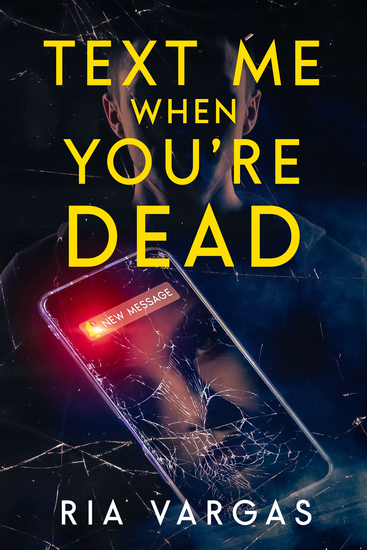
Text Me When You’re Dead - cover

Text Me When You’re Dead

Ria Vargas

Editorial: Trunk Up Books

  • 0
  • 0
  • 0

Sinopsis

He’s dead. Or someone really wants her to think he isn’t.​​​​​​​
 
Three weeks after Sloane’s boyfriend falls to his death during a solo hike, she’s still drowning in grief—until she gets a message from his number.
 
“I’m sorry. I love you more than you know.”
 
It sounds like Theo. It reads like Theo. But it can’t be Theo… can it?
 
As Sloane spirals down a dark rabbit hole of surveillance photos, missing records, and contradictions no one else seems to notice, a terrifying pattern emerges: the man she loved might not have been who he claimed to be. And the person texting her now—whether he’s alive, a stranger, or something else entirely—knows far too much about her life.
 
There’s only one way to find out the truth: follow the messages. But the truth isn’t the end of the story. It’s the beginning of the nightmare.
Disponible desde: 23/09/2025.
Longitud de impresión: 80 páginas.

Otros libros que te pueden interesar

  • The House of May Flowers - A Kodava tale - cover

    The House of May Flowers - A...

    Dr Geetha Kariappa

    • 0
    • 0
    • 0
    Step into the pages of 'The House of May Flowers,' a touching narrative that traces the protagonist Raja's path from childhood loss to a poignant quest for identity. Born as the prince to the vast estates Pulianda clan, his life takes a sudden turn with the untimely death of his father Kushalappa. Sent to his uncle's care after his father's demise, Raja returns years later, unearthing hidden family truths. With captivating characters and a rich portrayal of Kodagu's culture, readers are immersed in a world both familiar and new. The novel's exploration of generational dynamics resonates, although the shift in narration style offers a unique twist. From grief to joy, the book navigates a spectrum of emotions, making it a compelling choice for those intrigued by urban fiction and cultural revelations, offering a window into the lifestyle of Kodagu.
    Ver libro
  • Tales From An Ironic Mind Two - cover

    Tales From An Ironic Mind Two

    Paul A. Hernandez

    • 0
    • 0
    • 0
    TALES FROM AN IRONIC MIND TWO 
    Come take a little journey, maybe just a bit out of your comfort zone, maybe dancing a bit on that line of sanity and madness. Maybe you are one of those people who see things a bit differently, from an angle not often noticed. Do you walk on that road not often traveled? Do you sometimes want to take just a little peak at that great abyss? Do you find life sometimes mystical and magical while others are complaining about the gray? Go ahead, try and guess where the story is going and how it is going to end. Maybe you too, have an ironic mind.  
    Ver libro
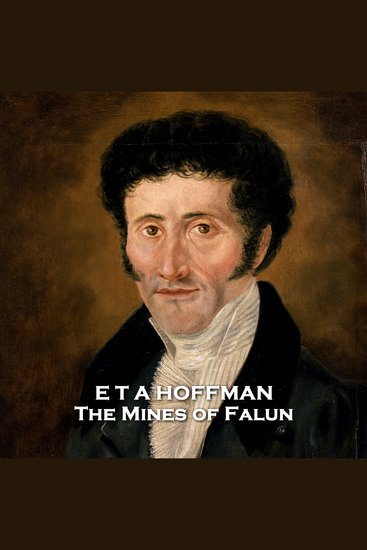
  • The Mines of Falun - From their pens to your ears genius in every story - cover

    The Mines of Falun - From their...

    E T A Hoffman

    • 0
    • 0
    • 0
    Ernst Theodor Wilhelm Hoffman was born on the 24th January 1776, the youngest of three children, in Königsberg, then in Prussia but now part of the Kaliningrad Russian enclave. 
    His parents separated when he was two and for many years life was to be provincial and, despite his talents for the creative arts and the classics, much was passing him by. 
    At 20 Hoffman obtained employment as a clerk and to the art that now surrounded him.  Two years later he was in Berlin attempting a career as a composer with an operetta called ‘Die Maske’.  His gift for drawing caricatures and sharing them often got him into trouble that was easier to avoid. 
    The years of Napoleon ravaging Europe were bad for Hoffman; he moved often and took on works as varied as theatre management and music critic.  In this his talents were now more evident.  His works on Beethoven where highly regarded by the master himself. 
    His literary breakthrough came in 1809, with ‘Ritter Gluck’, about a man who believes he has met the composer 20 years after his death.  However the various jobs and the wars continued and plagued any career advancement despite his constant travel for opportunities, often through dangerous territories. 
    In the wake of Napoleon’s defeat in 1814, Hoffmann returned to Berlin where his opera ‘Undine’ was performed by the Berlin Theatre.  Life was now more settled and many of his most famous works were written at his time. 
    From 1819, Hoffmann was struggling with both legal disputes and ill health.  Alcohol abuse and syphilis were physically weakening him and from 1822 paralysis set in.  His last works were dictated to his wife or to a secretary as all around him society descended into an anti-liberal agenda, stifling dissent with threats of legal action and even treason.  The ailing Hoffman was among them. 
    E T A Hoffmann died on the 25th June 1822 in Berlin of syphilis.  He was 46.
    Ver libro
  • Chivalry - From their pens to your ears genius in every story - cover

    Chivalry - From their pens to...

    Ricardo Fernandez Garcia

    • 0
    • 0
    • 0
    The bookshelves of World literature are incredible collections that have gathered together centuries of very talented authors.  From their countries and continents their fame spread and whilst among their number many are now forgotten or neglected their talents endure.  Among them is Ricardo Fernandez Garcia.
    Ver libro
  • A Legend of Old Egypt - From their pens to your ears genius in every story - cover

    A Legend of Old Egypt - From...

    Boleslaw Prus

    • 0
    • 0
    • 0
    Aleksander Głowacki who wrote under the nom de plume Boleslaw Prus was born on 20th August 1847 at Hrubieszów in the Kingdom of Poland, at that time, controlled by the Russian Empire. 
    At three his mother died and then at nine his father.  Female relatives helped raise him but at 15 he joined the Polish uprising against the might of Imperial Russia.  Wounded on the battlefield, arrested and imprisoned, he was later released into the care of a relative and resumed secondary school and then Warsaw University but poverty forced him to leave after two years.  At some point he developed agoraphobia which often caused problems. 
    In 1869, he enrolled in the Forestry Department at Puławy but was soon sacked and so he began a system of self-education that led to work as a newspaper columnist on a wide-ranging series of topics that eventually became the ‘Weekly Chronicles’ and spanned 40 years. 
    With his finances now stabilized he married and then adopted his late brother-in-law’s son.  
    It seems he had doubts as to the scale of his talents and early on adopted the name ‘Boleslaw Prus’ for both his journalistic and literary offerings. 
    His work as a short-story writer met with much acclaim. He wrote several dozen of them, originally published in newspapers and ranging in length from micro-story to novella. His keen observation of everyday life and sense of humor are evident in them.  
    During his career he also wrote novels. After ‘Pharoah’, in 1895, he embarked on a four-month journey taking in Berlin, Dresden, Nuremberg, Rapperswil in Switzerland, where he stayed for two months, and his final destination, Paris.  Here his agoraphobia was so bad he couldn’t cross the Seine.  
    However, his writing continued and in 1911 his novel ‘Changes’, though uncompleted, began to be serialised.  It was never finished. 
    Boleslaw Prus died on 19th May 1912, at his Warsaw apartment.  He was 64.  A National Hero, thousands attended both his funeral service and interment.
    Ver libro
  • As the Crow Flies - From their pens to your ears genius in every story - cover

    As the Crow Flies - From their...

    John Davys Beresford

    • 0
    • 0
    • 0
    John Davys Beresford was born on 17th March 1873.  His life was blighted by infantile paralysis which left him partially disabled. 
    After an education at Oundle school he trained to be an architect.  However, he quickly decided that his life was to be centred on a literary career.  His first offerings were in drama and as a journalist. 
    As well as being a book reviewer for the Manchester Guardian he contributed to New Statesman, The Spectator, Westminster Gazette, and the Theosophist magazine The Aryan Path.   
    His spiritual journey in early adulthood had claimed him as an agnostic, in defiance of his clergyman father.  This view he later abandoned in preference to describing himself as a Theosophist and a pacifist. 
    As well as many novels, many themed with spiritual and philosophical elements.  Beresford was also a gifted short story writer particularly across the science-fiction, horror and ghost genres. 
    All of these elements helped him to obtain a prominent place in Edwardian Literary London. 
    John Davys Beresford died on the 2nd February 1947. He was 73.
    Ver libro