Begleiten Sie uns auf eine literarische Weltreise!
Buch zum Bücherregal hinzufügen
Grey
Einen neuen Kommentar schreiben Default profile 50px
Grey
Jetzt das ganze Buch im Abo oder die ersten Seiten gratis lesen!
All characters reduced
Inside the Russian Revolution - All Truth Revealed - cover

Inside the Russian Revolution - All Truth Revealed

Rheta Louise Childe Dorr

Verlag: DigiCat

  • 0
  • 0
  • 0

Beschreibung

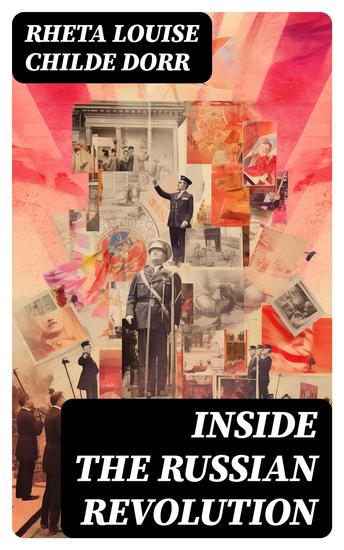
In "Inside the Russian Revolution," Rheta Louise Childe Dorr presents a vivid and insightful examination of the tumultuous period that reshaped Russia in the early 20th century. Employing a journalist's clarity and a novelist's flair, Dorr chronicles her experiences during a pivotal moment in history, capturing the tumult of revolutionary fervor through a deeply personal lens. The narrative weaves together firsthand observations, political commentary, and social critique, revealing the complexities of the revolution's impact on ordinary lives amidst the chaos of war and upheaval. Rheta Louise Childe Dorr was an American journalist and suffragist, whose passion for social justice and international affairs informed her writing. Having traveled extensively and engaged with prominent figures of the time, her perspective is deeply rooted in empathy and observation. Dorr's dedication to understanding the human condition, coupled with her experiences as a female journalist navigating a male-dominated field, uniquely qualifies her to offer a compelling and nuanced account of the Russian Revolution. For readers interested in the intersections of history, politics, and the human experience, "Inside the Russian Revolution" is an indispensable text. Dorr's eloquence and incisive commentary invite readers to experience the upheaval of the era, making it a vital resource for anyone wishing to understand the legacies of revolution and resilience.
Verfügbar seit: 24.11.2023.
Drucklänge: 180 Seiten.
Weitere Bücher, die Sie mögen werden

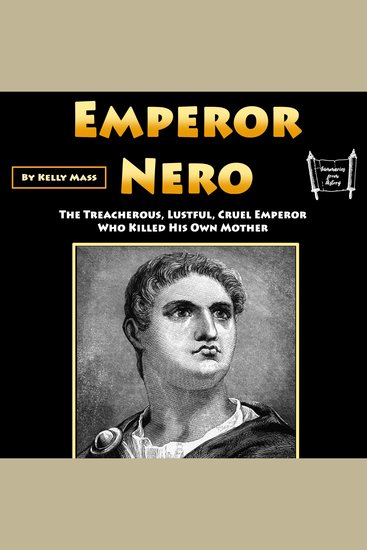
  • Emperor Nero - The Treacherous Lustful Cruel Emperor Who Killed His Own Mother - cover

    Emperor Nero - The Treacherous...

    Kelly Mass

    • 0
    • 0
    • 0
    Nero Claudius Caesar Augustus Germanicus, the fifth and final emperor of the Julio-Claudian dynasty, ruled the Roman Empire from AD 54 to 68. He was thrust into the highest seat of power at the age of sixteen after being adopted by Emperor Claudius, his stepfather. While Nero enjoyed popularity among the lower classes and the Praetorian Guard, who benefited from his patronage, the Roman aristocracy and Senate viewed him with contempt. Ancient historians portray him as a tyrannical and self-indulgent ruler, notorious for his extravagance, cruelty, and disregard for tradition. His reign ended in disgrace when the Senate declared him a public enemy, leading to his suicide at the age of thirty.  
    Born in AD 37 in the coastal town of Antium, Nero was the son of Gnaeus Domitius Ahenobarbus and Agrippina the Younger, a great-granddaughter of Emperor Augustus. His father died when he was only two years old, and his mother soon remarried, securing a position of influence at the imperial court. When Agrippina married Emperor Claudius, she maneuvered to have her son adopted as his heir, ultimately sidelining Claudius’ biological son, Britannicus. Following Claudius’ suspicious death in AD 54—widely believed to have been orchestrated by Agrippina—Nero ascended the throne with the backing of the Senate and the powerful Praetorian Guard.  
    In the early years of his reign, Nero was heavily influenced by a triad of advisers: his ambitious mother Agrippina, the philosopher and statesman Seneca the Younger, and the Praetorian prefect Sextus Afranius Burrus. Initially, the empire benefited from their guidance, as Nero enacted policies that were generally seen as moderate and pragmatic. However, as he grew older, he sought to rule independently, resenting the influence of his mother.
    Zum Buch
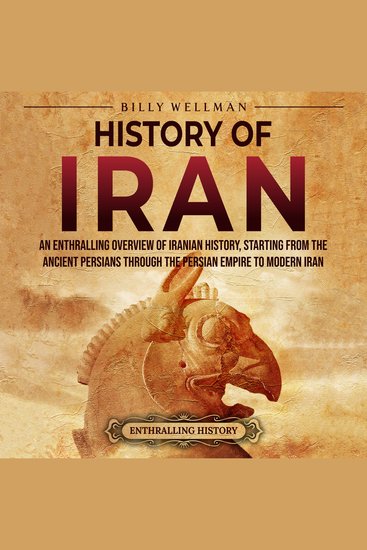
  • History of Iran: An Enthralling Overview of Iranian History Starting from the Ancient Persians through the Persian Empire to Modern Iran - cover

    History of Iran: An Enthralling...

    Billy Wellman

    • 0
    • 0
    • 0
    Full of exciting events, memorable actors, bloody conflicts, and thriving cultural accomplishments, the history of Iran is a pleasure to dive into for any curious mind. 
    From the prehistoric ages to the modern Islamic Republic, Iran has always maintained its prevalent position in history as one of the most vibrant, distinct, and diverse countries in the world. 
    Located in western Asia, sandwiched between the Caspian Sea and the Persian Gulf, the mountainous regions of the Zagros Mountains have long been home to a civilization whose marvelous development throughout history is like no other. 
    This audiobook seeks to explore the rich history of Iran, all the way from the first Iranian peoples to the creation of the modern nation-state we know today. It analyzes the transformation of the region’s inhabitants from a primitive society to a world superpower to a country centered around strong religious principles and beliefs. 
    Here’s just a small portion of what you will discover in this audiobook:Detailed descriptions of Iran’s demography, culture, and physical and political geographiesHistory of the first Iranian civilizations before 1000 BCEAn in-depth look at the rise and fall of different powerful dynasties in the ancient and early medieval periodsA journey through the Muslim Arab domination and the emergence of Islam as the prominent faithThe age of various empires until the early modern timesThe Qajar and Pahlavi monarchies and the birth of the Iranian nation-stateThe triumph of the Islamic Revolution under Ruhollah KhomeiniAnd much, much more! 
    Click the “add to cart” button to begin learning more about Iran today!
    Zum Buch
  • A Heart Finally Open - cover

    A Heart Finally Open

    Lamont Kellum Jr.

    • 0
    • 0
    • 0
    Lamont Kellum Jr. is a very profound and prolific writer. Taking his poetry and spoken word to new heights, he is now telling his story in his own cadence unapologetically. From having the artistical architecture in his writing of poetry, he decided to utilize his gifted craft with a story telling of his own after all these years of everyone else telling it. After being wrongfully convicted and sentenced to life in prison, Lamont, also known as King Ccholo, is now giving his true self in this audiobook. Speaking on his life experiences with his upbringing, friends, family, previous and current relationships; Lamont is now setting the tone with a new approach to poetry and spoken word and it starts NOW!
    Zum Buch
  • First Bull Run: The History of the Civil War’s First Major Battle - cover

    First Bull Run: The History of...

    Jonathan Gianos-Steinberg

    • 0
    • 0
    • 0
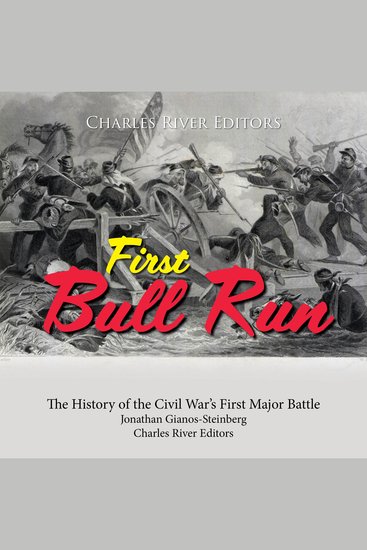
    After Fort Sumter, the Lincoln Administration pushed for a quick invasion of Virginia, with the intent of defeating Confederate forces and marching toward the Confederate capitol of Richmond. Lincoln pressed General Irvin McDowell to push forward. Despite the fact that McDowell knew his troops were inexperienced and unready, pressure from Washington politicians forced him to launch a premature offensive against Confederate forces in Northern Virginia.  
    	McDowell’s strategy during the First Battle of Bull Run was grand, and in many ways it was the forerunner of a tactic Robert E. Lee, Stonewall Jackson and James Longstreet executed brilliantly on nearly the same field during the Second Battle of Bull Run in August 1862. McDowell’s plan called for parts of his army to pin down General P.G.T. Beauregard’s Confederate soldiers in front while marching another wing of his army around the flank and into the enemy’s rear, rolling up the line. McDowell assumed the Confederates would be forced to abandon Manassas Junction and fall back to the next defensible line, the Rappahannock River. In July 1861, however, this proved far too difficult for his inexperienced troops to carry out effectively.  
    	As the first major land battle of the Civil War, the First Battle of Bull Run made history in several ways. The two sides fought near the railroad junction at Manassas on July 21, 1861, just 25 miles away from Washington, which was close enough for many civilians from the nation’s capital to come and watch what they expected to be a rout of Confederate forces, and for awhile it appeared as though that might be the case.  
    	McDowell’s strategy ultimately fell apart though, mostly thanks to the use of the railroad. Confederate reinforcements under General Joseph E. Johnston, including a brigade led by Thomas Jonathan Jackson, arrived by train in the middle of the day, a first in the history of American warfare.
    Zum Buch
  • Oliver Cromwell - The English Military Political Leader - cover

    Oliver Cromwell - The English...

    Kelly Mass

    • 0
    • 0
    • 0
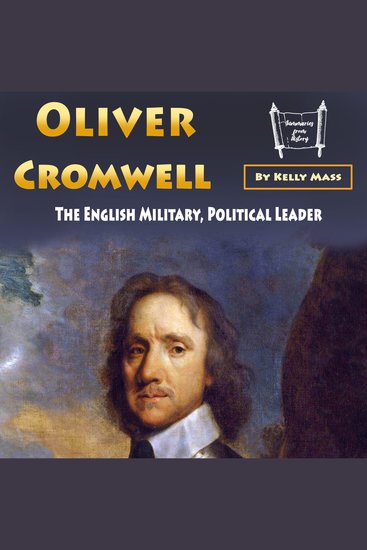
    Oliver Cromwell was an English army and statesman who led Parliamentary armies against King Charles I throughout the English Civil War. From 1653 till his death in the year 1658, he lead the British army in the British Islands area. 
    Why was he so hated by so many? And is this image of him historically correct? 
    Even though we cannot go back in time 450 years ago, we can certainly try to find the answers in the sources we have. 
    The reason why people thought he was so evil, is because of his brutality against the Irish at that time. Several Irish and English scholars agree that Cromwell was too cruel in Ireland. Other academics blame him of 'ethnic cleansing,' or the systematic expulsion of a certain ethnic population from a territory. It typically entails the execution and deportation of Catholics, and that he is despised by Irish Catholics. 
    Is this true? And why did he do this? 
    Find out more about his time, his life, his circumstances and his legacy.
    Zum Buch
  • The Dark Side of Winston Churchill - Unmasking The Complexity of The Man Behind The Myth - cover

    The Dark Side of Winston...

    Davis Truman

    • 0
    • 0
    • 0
    This audiobook is narrated by an AI Voice.   
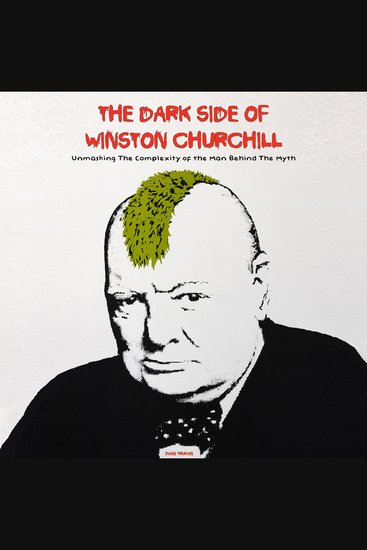
    What if the hero of World War II wasn’t as heroic as history remembers? 
    Winston Churchill is widely celebrated as the indomitable leader who stood against tyranny and rallied a nation in its darkest hour. But behind the rousing speeches and iconic persona lies a far more complicated figure—one whose decisions, beliefs, and actions raise hard questions about power, privilege, and morality. 
    The Dark Side of Winston Churchill strips away the myth to reveal the man—and forces us to confront the full truth of his legacy. 
    This provocative and deeply researched book examines the contradictions, controversies, and consequences of Churchill’s political career, from his involvement in the Bengal Famine and colonial repression to his perspectives on race, empire, and social class. Drawing on primary sources, personal letters, and historical records, it paints a nuanced portrait of a man revered by some and reviled by others. 
    Inside, you’ll discover: 
    How Churchill’s imperialist ideology shaped British policies from India to Africa 
    His controversial decisions during World War II—and their human cost 
    The political maneuvering and rhetoric that built his myth while obscuring uncomfortable truths 
    How Churchill’s legacy continues to influence modern politics, nationalism, and historical memory 
    History isn’t just what we remember—it’s also what we choose to forget. 
    👉 Buy The Dark Side of Winston Churchill today and take a bold step beyond the myth.
    Zum Buch