Begleiten Sie uns auf eine literarische Weltreise!
Buch zum Bücherregal hinzufügen
Grey
Einen neuen Kommentar schreiben Default profile 50px
Grey
Jetzt das ganze Buch im Abo oder die ersten Seiten gratis lesen!
All characters reduced
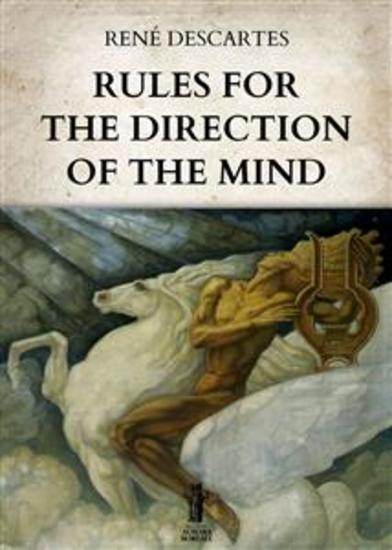
Rules for the Direction of the Mind - cover

Rules for the Direction of the Mind

René Descartes

Verlag: Edizioni Aurora Boreale

  • 0
  • 0
  • 0

Beschreibung

René Descartes (1596-1650), also known as Renatus Cartesius, was a French philosopher, scientist, and mathematician, widely considered a seminal figure in the emergence of modern philosophy and science.Descartes has often been called the father of modern Philosophy, and is largely seen as responsible for the increased attention given to Epistemology in the 17th century. He laid the foundation for continental Rationalism, later advocated by Spinoza and Leibniz, and was later opposed by the empiricist school of thought consisting of Hobbes, Locke, Berkeley, and Hume. The rise of early modern Rationalism – as a highly systematic school of Philosophy in its own right for the first time in history – exerted an immense and profound influence on modern Western thought in general, with the birth of two influential rationalistic philosophical systems of Descartes (Cartesianism) and Spinoza (Spinozism), and opening the doors to the “Age of Reason”.Regulae ad directionem ingenii, or Rules for the Direction of the Mind is an unfinished treatise regarding the proper method for scientific and philosophical thinking by René Descartes. The French philosopher started writing the work in 1628, and it was published in 1701 after Descartes’ death. This treatise outlined the basis for his later work on complex problems of mathematics, geometry, science, and philosophy. The work is estimated to have been written over approximately ten years, and as such Descartes shifted in his utilization and definition of these rules. Rules for the Direction of the Mind is described as a precursor and 'scrapbook' for his other workings and methods.
Verfügbar seit: 16.08.2023.


Weitere Bücher, die Sie mögen werden

  • Forgiving Humanity - How the Most Innovative Species Became the Most Dangerous - The Curse of Exponential Change - cover

    Forgiving Humanity - How the...

    Peter Russell

    • 0
    • 0
    • 0
    Why has the most innovative of species become so dangerous? The answer, suggests Peter Russell, lies in humanity’s accelerating pace of development. He shows how innovation breeds further innovation—a positive feedback loop leading to exponential rates of change. But our minds cannot grasp the full implications of exponential growth. We think more in terms of linear change, leading to a blind spot on the future.  
    However fast the pace of change may be today, it will be even faster in the years to come, bringing ever more rapid scientific and technological advances. But ever-accelerating change also creates stress on the systems involved. The faster the change, the greater the stress, and the more likely systemic breakdown. We are heading into a future with technology beyond our dreams, but in a world that is breaking at the seams. 
    Russell argues there is no blame for this. Spiraling rates of development, with all their consequences, positive and negative, are the inevitable fate of any intelligent, technologically-empowered species.  
    How do we live with such unsettling conclusions? How can we prepare for a world that is becoming increasingly unpredictable? What does it mean for the future of humanity? 
    Peter Russell, the widely acclaimed author of The Global Brain and other pioneering works, earned an honors degree in theoretical physics and psychology —as well as a masters degree in computer science —at the University of Cambridge. He subsequently went to India where he explored meditation and Eastern philosophy, and was one of the first people to introduce personal development programs to corporations in the 1970s. His other books include The TM Technique, The Upanishads, Waking Up in Time, From Science to God, and Letting Go of Nothing.
    Zum Buch
  • The Black Death And Its Impact on The Church And Popular Religion - cover

    The Black Death And Its Impact...

    Jack Stew Barretta

    • 0
    • 0
    • 0
    This book concerns the religious impact of the Black Death. This plague devastated Europe in the fourteenth century. It examines the impact of the Black Death on the Catholic Church and the religious movements that arose in response to it. The conclusions drawn here are based on the research of both primary and secondary sources. The Church played a significant role during the Middle Ages because religion was an essential aspect of daily life for European Christians. When the Black Death struck Europe in 1347, the Church struggled to cope with the plague’s damaging consequences, and its reputation suffered as a result. This book concludes that the Black Death contributed to a decline in the confidence and faith of the Christian laity towards the Church and its leadership. The scope of this book focuses on the plague’s impact on the clergy, the rise of the flagellant movement, and the widespread Jewish persecutions that ensued in the wake of the epidemic. The Black Death was a pivotal event in the history of Western society, with profound cultural and demographic consequences. Its impact on the Church and religion within the medieval community justifies the study of this topic.
    Zum Buch
  • Byzantine-Seljuk Wars The: The History and Legacy of the Battles for Asia Minor in the 11th Century - cover

    Byzantine-Seljuk Wars The: The...

    Editors Charles River

    • 0
    • 0
    • 0
    By the end of the Byzantine Empire’s existence, the old age had weakened both the state and church, making it an easy target for invading forces.  
    	The most notable invaders were the the Turkish-speaking Seljuks, led through a series of battles by Kutalmishouglu Suleiman, who supported different usurpers against the Byzantine emperor. The expansion of the Seljuks was so successful that when Suleiman died, he had put all of Bithynia under his control as well as several important harbor towns along the shores on the Asian side of Bosphorus. With that accomplishment, he had managed to separate the Byzantines living in Anatolia from their emperor in Constantinople. This immediately weakened the unity of the Byzantine Empire.  
    	When another invading Muslim army took control of what is now Syria, Israel, and Northern Africa, the dismembered Byzantine Empire lost significant portions of land, but that allowed it to grow into a smaller and stronger unity. It took a lot of power struggles and battles on many fronts for the empire to recapture some of the lands, but gradually the Byzantine Empire lost all influence in Anatolia. By the end of the 11th century, the Hellenic culture and Greek language were replaced by Islam and Turkish.  
    	Of all the conflicts that brought this state of affairs into being, few were as instrumental as the Battle of Kapetron, the culmination of one of the first major Seljuk raids into Byzantine territory. It represented not just a clash of ethnicities, cultures, and religions, but also a harbinger of a changing of the guard, and one that would shape geopolitics in the region for the next several centuries. 
    Zum Buch
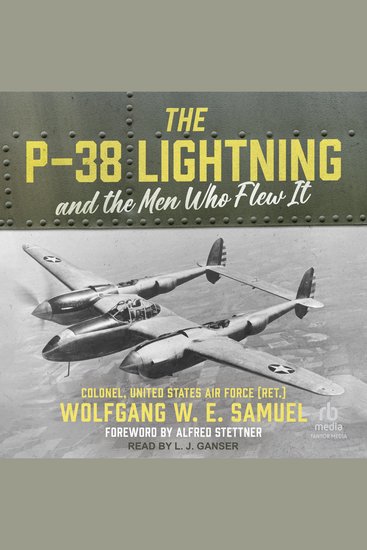
  • The P-38 Lightning and the Men Who Flew It - cover

    The P-38 Lightning and the Men...

    Colonel Wolfgang W. E. Samuel,...

    • 0
    • 0
    • 0
    The P-38 Lightning was one of the fastest operational fighters of World War II, famous for its successes in North Africa and the Pacific. In The P-38 Lightning and the Men Who Flew It, Wolfgang W. E. Samuel shares the stories of the young men who climbed into the cockpits of the P-38 to fight for freedom, and of those who created, tested, and deployed these fearsome machines. 


    The P-38 was the product of the Lockheed Corporation, the first fighter they ever built, principally conceptualized by Kelly Johnson, whose design was to meet Air Corps specifications. But it was no easy plane to fly. 


    P-38 units were formed quickly once the United States entered World War II in December 1941. Training was rushed to get pilots and planes to Europe as quickly as possible to serve as bomber escorts. Although the P-38 could fly at the high altitudes the bombers flew, it was not the right aircraft for the mission. In North Africa's warmer air, however, the P-38 came into its own. 


    This book focuses on the men who flew this challenging aircraft and the men who designed and decided how to deploy it. In the Pacific skies, the P-38, its pilots, and designers made the heroic history captured here.
    Zum Buch
  • Crimes Against Nature: Book Summary & Analysis - cover

    Crimes Against Nature: Book...

    Briefly Summaries

    • 0
    • 0
    • 0
    This is a concise summary and analysis of Crimes Against Nature, by  Robert F. Kennedy Jr.
    It is not the original book and is not affiliated with or endorsed by 
    Robert F. Kennedy Jr.
     
    Ideal those seeking a quick and insightful overview.
     
    Crimes Against Nature reveals the devastating effects of corporate greed and governmental corruption on the environment and public health. With a sharp focus on the collusion between powerful industries and regulatory agencies, this compelling exposé uncovers how environmental policies have been dismantled to prioritize profits over people and ecosystems. From polluted waterways to endangered wildlife, the book offers an urgent call to action for citizens to reclaim their rights and protect the planet for future generations.
    Zum Buch
  • Consciousness - Existence Altered States And Artificial Intelligence - cover

    Consciousness - Existence...

    Petros Michaelides

    • 0
    • 0
    • 0
    What is consciousness and who are we beneath the noise of thought? 
    In a world dominated by distraction, artificial intelligence, and endless stimulation, Consciousness invites you to step back and remember what is real. This short but powerful audiobook is not just a collection of ideas, it’s an invitation to awaken. 
    Through contemplative insights, clear language, and a calm, grounded tone, author Petros Michaelides explores the mystery of awareness, the illusion of the self, and the paradox of machines that simulate thought yet lack experience. With roots in philosophy, spirituality, and science, this audiobook offers a path through confusion, toward clarity. 
    You’ll explore:The nature of consciousness and the egoHow altered states reveal hidden truthsThe line between human awareness and artificial intelligenceWhat remains when everything you thought you were dissolves 
    Whether you’re a seeker, a skeptic, or simply someone trying to make sense of the world, this is not an audiobook to consume. it’s an experience to feel. 
    Perfect for one sitting. Meant to be returned to often.
    Zum Buch