Rejoignez-nous pour un voyage dans le monde des livres!
Ajouter ce livre à l'électronique
Grey
Ecrivez un nouveau commentaire Default profile 50px
Grey
Abonnez-vous pour lire le livre complet ou lisez les premières pages gratuitement!
All characters reduced
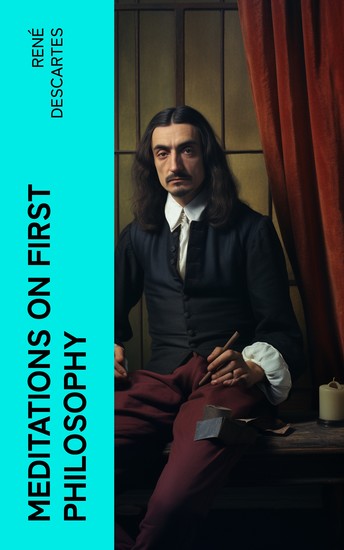
Meditations on First Philosophy - A Philosophical Treatise in Which the Existence of God and the Immortality of the Soul Are Demonstrated - cover

Meditations on First Philosophy - A Philosophical Treatise in Which the Existence of God and the Immortality of the Soul Are Demonstrated

René Descartes

Traducteur John Veitch

Maison d'édition: e-artnow

  • 0
  • 0
  • 0

Synopsis

"Meditations on First Philosophy" is made up of six meditations, in which Descartes first discards all belief in things that are not absolutely certain, and then tries to establish what can be known for sure. He wrote the meditations as if he had meditated for six days: each meditation refers to the last one as "yesterday". "Meditations on First Philosophy" is one of the most influential philosophical texts ever written and it is widely read to this day.
Disponible depuis: 21/12/2023.
Longueur d'impression: 71 pages.

D'autres livres qui pourraient vous intéresser

  • Sengoku - Warring States and the Path to Unification - cover

    Sengoku - Warring States and the...

    Rolf Hedger

    • 0
    • 0
    • 0
    The Sengoku period, meaning “Warring States,” was one of the most turbulent and transformative eras in Japanese history. Lasting from the mid-15th century to the early 17th century, it was marked by ceaseless conflict, shifting alliances, and the gradual disintegration of centralized authority. The roots of this period can be traced back to the decline of the Ashikaga Shogunate, the Ōnin War, and the rise of regional warlords known as daimyo, each vying for control over Japan’s fractured political landscape. 
    The Ashikaga Shogunate, which had ruled Japan since the early 14th century, gradually lost its grip on the country due to internal corruption, weak leadership, and an inability to maintain order. By the mid-15th century, the shogunate had become largely symbolic, with real power resting in the hands of feudal lords. These tensions erupted into full-scale conflict with the outbreak of the Ōnin War (1467–1477), a devastating civil war primarily fought in and around Kyoto. What began as a succession dispute within the shogunate spiraled into a nationwide conflict, leading to the destruction of Kyoto and the collapse of central authority. 
    With the Ashikaga Shogunate rendered powerless, Japan entered a chaotic era where military might determined control. Local daimyo, originally appointed as provincial governors, seized the opportunity to establish autonomous domains. These warlords fortified their territories, raised armies, and engaged in relentless battles to expand their influence. The traditional system of hereditary rule began to erode as capable military leaders, often of humble origins, overthrew established families. This period saw the rise of powerful daimyo such as the Takeda, Uesugi, and Hojo clans, each striving to dominate the fractured nation.
    Voir livre

  • Native American Resistance in the Midwest: The History and Legacy of the Wars that Pushed Indigenous Groups Out of the Region - cover

    Native American Resistance in...

    Editors Charles River

    • 0
    • 0
    • 0
    Throughout history, there have been men of war and men of peace, but few have actually had a war named after them. One of them was Pontiac, also known as Obwandiyag, an Odawa chief who left his mark on history by continuing the battle against the British after their official triumph during the French and Indian War. While modern historians question how important Pontiac’s role was in shaping America’s destiny, his leadership during Pontiac’s War was seen at that time as important enough to warrant significant articles and even a few 18th century books. Since these books were written by the British, or at least men who supported their cause, the descriptions of Pontiac were often not complimentary. Likewise, 19th century authors tended to portray him as something of an evil genius who plotted against the British and then drove his people into battle. Not surprisingly, 20th century scholarship depicted him differently, portraying Pontiac as an important leader who had more influence over his own local band of Native Americans than over some vast army. 
    When it comes to Pontiac, a few facts are certain. For one thing, he certainly led the first major attack of Pontiac’s War in May 1763, when he and 300 of his men attacked Fort Detroit in what is now the city by the same name. Unfortunately for his cause, Pontiac failed to gauge just how strong the British presence there was, and his attack was quickly repelled. On the other hand, he was not a man who gave up easily, so instead of retreating, he and his warriors would lay siege to the British stronghold. In the days that followed, word spread of his efforts, and in short order nearly 1,000 men from various tribes in the area had joined him. They remained camped around the fort throughout the summer before finally giving up the siege.
    Voir livre
  • Beer - A Global Journey through the Past and Present - cover

    Beer - A Global Journey through...

    John W. Arthur

    • 0
    • 0
    • 0
    Beer is and has always been more than an intoxicating beverage. Its invention 13,000 years ago was one of the fundamental motivations for the domestication of grains around the world. In early states, the control over the technological knowledge and resources to produce beer contributed to social hierarchies. Beer even likely provided the capital to motivate laborers to construct the ancient pyramids and other large-scale public works. Beer is a social lubricant that brings people together and, in many Indigenous societies both past and present, is a gift connecting people to their ancestors. The same innovations pioneered by ancient brewers are transforming the types of ingredients and flavors produced by the global craft beer industry. 


    In Beer, archaeologist John W. Arthur takes listeners on an exciting global journey to explore the origins, development, and recipes of ancient beer. This unique book focuses on past and present non-industrial beers, highlighting their significance in peoples' lives through four themes: innovating new technologies, ensuring health and well-being, building economic and political statuses, and imbuing life with ritual and religious connections. As this book amply illustrates, beer has shaped our world in remarkable ways for the past 13,000 years.
    Voir livre
  • The Illusionist - The True Story of the Man Who Fooled Hitler - cover

    The Illusionist - The True Story...

    Robert Hutton

    • 0
    • 0
    • 0
    Cairo, 1942: If you had asked a British officer who Colonel Clarke was, they would have been able to point him out. Always ready with a drink and a story, Clarke was a well-known figure in Cairo social circles and nightlife. If you then asked what he did, you would have less success. Those who knew didn't tell—and almost no one really knew at all. 


    Clarke thought of himself as developing a new kind of weapon. Its components? Rumor, stagecraft, a sense of fun. Its target? The mind of Erwin Rommel, Hitler's greatest general. Throughout history, military commanders have sought to mislead their opponents. Dudley Clarke set out to do it on a scale no one had imagined before. Even afterwards, almost no one understood the magnitude of his achievement. 


    Drawing on recently released documents and hugely expanding on the louche portrait of Clarke as seen in SAS: Rogue Warriors, journalist and historian Robert Hutton reveals the amazing story of Clarke's "A Force," the invention of the SAS and the Commandos, and the masterful hoodwinking of the Desert Fox at the battle of El Alamein. The Illusionist tells for the first time the dazzling tale of how, at a pivotal moment in the war, British eccentricity and imagination combined to thwart the Nazis and save innumerable lives—on both sides.
    Voir livre
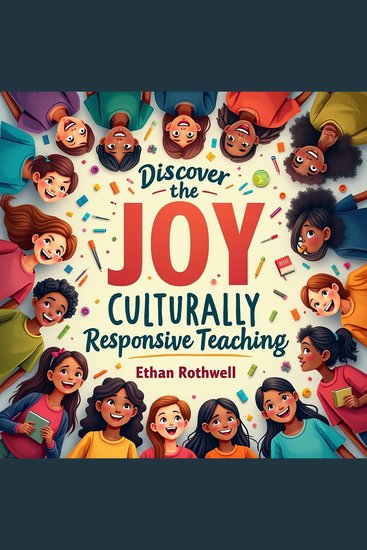
  • Discover the Joy of Culturally Responsive Teaching - Supercharge your cultural teaching skills with engaging audio lessons for outstanding classroom results! - cover

    Discover the Joy of Culturally...

    Ethan Rothwell

    • 0
    • 0
    • 0
    Discover the Joy of Culturally Responsive Teaching 
    ⭐⭐ Simplified Guide & Explanations Included ⭐⭐ 
    Are you looking to progress in your career and solidify your knowledge by successfully empowering students through culturally responsive teaching practices? 
    Seeking a comprehensive guide that provides all necessary elements to empower students through culturally responsive teaching practices? 
    Your search ends here! 
    This guide serves as your definitive companion for deepening your understanding, applying your skills, and engaging in hands-on exercises. With this, you're geared for success. 
    Updated for the latest teaching methodologies and educational frameworks. 
    Key features of this enriched guide: 
    - Profound insights about empowering students through culturally responsive teaching practices 
    - Detailed explanation of culturally responsive teaching 
    - Fruitful strategies for preparation and application 
    Our guide distinguishes itself through comprehensive coverage, which is essential for your teaching success. Concepts aren't merely skimmed; they are delved into with precision. 
    Please note that this guide is not affiliated with any official educational entity and is purely an independent resource for your benefit. 
    Designed with a clear structure and easy-to-understand language, our guide ensures smooth transitions between topics. Say goodbye to dense jargon and welcome clear, precise, and technically accurate content. 
    So, why wait? Click the BUY NOW button, secure your guide, and begin your journey to empowering students through culturally responsive teaching practices!
    Voir livre
  • Addiction Becomes Normal - On the Late-Modern American Subject - cover

    Addiction Becomes Normal - On...

    Jaeyoon Park

    • 0
    • 0
    • 0
    Addiction is now seen as an ordinary feature of human nature, an idea that introduces new doubts about the meaning of our desires. 
      
    Over the last forty years, a variety of developments in American science, politics, and culture have reimagined addiction in their own ways, but they share an important understanding: increasingly, addiction is described as normal, the natural result of a body that has been exposed to potent stimuli. This shift in thinking suggests that addiction is a condition latent in all of us, a common response to a society rich in thrills. 
      
    In Addiction Becomes Normal, Jaeyoon Park provides a history and critical analysis of the normalization of addiction in late-modern American society. By exploring addiction science, diagnostic manuals, judicial reform, and public health policy, he shows how seeing addiction as normal has flourished in recent decades and is supported throughout cultural life in the United States by the language of wellness, psychotherapy, and more. Building on Michel Foucault’s depiction of the human figure, Park argues that this shift reflects the emergence of a new American subject, one formed by the accretion of experiences. This view of the human subject challenges the idea that our compulsions reflect our characters, wills, or spirits. For if addiction is an extreme but ordinary attachment, and if compulsive consumption resembles healthy behavior, then desire is no longer an expression of the soul so much as the pursuit of a past reward. A perceptive work of recent history and political theory, Addiction Becomes Normal raises new questions about what it means to be human in America today.
    Voir livre