Begleiten Sie uns auf eine literarische Weltreise!
Buch zum Bücherregal hinzufügen
Grey
Einen neuen Kommentar schreiben Default profile 50px
Grey
Jetzt das ganze Buch im Abo oder die ersten Seiten gratis lesen!
All characters reduced
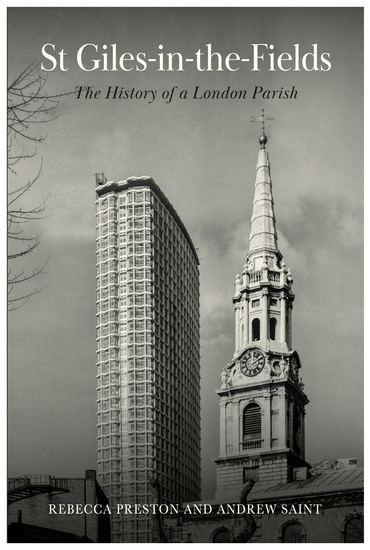
St Giles-in-the-Fields - The History of a London Parish - cover

St Giles-in-the-Fields - The History of a London Parish

Rebecca Preston

Verlag: Brown Dog Books

  • 0
  • 0
  • 0

Beschreibung

St Giles-in-the-Fields: History of a London Parish resurrects a neglected area of Central London, rich in history and incident. St Giles is at the centre of one of the greatest cities in the world – but you’ve probably never heard of it. But it is an area with a dense and tangled history that tells us a great deal about the experience of living in London across the span of time from the twelfth century to today. This history has rarely been glamorous, but it is packed with the stories of lives touched by many of the most momentous events in British history.St Giles began as a mediaeval leper hospital. After the Reformation it grew into one of London’s largest parishes, stretching east to Lincoln’s Inn Fields and north to Bedford Square and Bloomsbury. Aristocrats, poets, musicians, artists and lawyers lived here. St Giles was notorious too for its slums – notably the Rookery where Centre Point now stands. Its streets also boasted a hive of industry, printing, brewing and crafts. Later came music shops in Charing Cross Road and Denmark Street.  As its population dwindled, St Giles lost heart. But vitality returned from the 1970s, with the renaissance of nearby Covent Garden and the boom of office employment. Far more than a fringe part of Covent Garden, Soho or Bloomsbury, this book re-establishes the individuality of St Giles, centred on its noble and enduring Georgian parish church.
Verfügbar seit: 05.08.2024.


Weitere Bücher, die Sie mögen werden

  • Anglo-Ashanti Wars and the Anglo-Zulu War The: The History of the British Empire’s Costliest Campaigns against Indigenous Africans - cover

    Anglo-Ashanti Wars and the...

    Editors Charles River

    • 0
    • 0
    • 0
    By the mid-19th century, other European powers became interested not only in the exploration of Africa but the exploitation of it, especially once the German Empire unified after the Franco-Prussian War. This began a rush, spearheaded mainly by European commercial interests in the form of chartered companies, to penetrate the African interior and woo its leadership with guns, trinkets and alcohol, and having thus obtained their marks or seals upon spurious treaties, begin establishing boundaries of future European colonies. The ease with which this was achieved was due to the fact that, at that point, traditional African leadership was disunited, and the people had just staggered back from centuries of concussion inflicted by the slave trade. Thus, to usurp authority, to intimidate an already broken society, and to play one leader against the other was a diplomatic task so simple, much of Africa would come under European influence in a short time.  
    	For almost a century, the British in West Africa were faced with a powerful and stubborn African opponent: the Ashanti Empire. The Ashanti were formed by alliance and the conquest of the Akan people in the rainforest zone between the West African coast and the Sahel country to the north. 	The Ashanti fought the British in five wars over the nineteenth century, and they were the only West African people inflicting more than one defeat on the British. War in tropical West Africa was different from most of the rest of the world. The prevalence of endemic diseases like malaria typically killed half of the Europeans posted there per year; it was called “The White Man’s Grave” for a reason. A second factor was the presence of the tsetse fly that carried a disease able to kill horses quickly. Military expeditions were left to move entirely on foot, carrying whatever drafted or hired laborers could carry. There were no carts, no wagons, no pack animals, and no cavalry. 
    Zum Buch
  • The Sealed Train - cover

    The Sealed Train

    Stefan Zweig

    • 0
    • 0
    • 0
    Lenin's journey in a sealed train took place in April 1917 during the First World War. The journey took Vladimir Ilyich Lenin together with other emigrants from Swiss exile through the German Reich via Scandinavia to Petrograd, today's Saint Petersburg. The "sealed train" was only used on the German part of the route. Lenin's arrival in Russia led to the 1917 revolution and the peace treaty between Russia and Germany in March 1918.
    Zum Buch
  • History of Denmark: A Captivating Guide to Danish History - cover

    History of Denmark: A...

    Captivating History

    • 0
    • 0
    • 0
    Did you know that one of Europe’s greatest queens, the incredible Margaret I, united Denmark, Sweden, and Norway in the Kalmar Union in the mid-1300s?  
    For centuries, Denmark “punched above its weight” and was a major player on the European stage. Many know about the Danish Vikings and their voyages of conquest and discovery, but Denmark is more than just those medieval raiders and traders, even though interest in their adventures is at an all-time high today. 
    Denmark became the first Scandinavian country to convert to Christianity, though this was likely as much to protect themselves from Christian kingdoms to the south and to increase their trade with Christian nations than any love for Christian beliefs.  
    Denmark has been at peace since WWII, but its position between the North and Baltic Seas makes it an important part of NATO, allowing it to once more “punch above its weight.” But despite its location, Denmark has managed to not only remain at peace but is today ranked as one of the happiest nations on Earth. 
    Discover the answer to fascinating questions like the following: Does Denmark really appear in the top three of the world’s “happiest” countries?Were the Danish Vikings only interested in conquest? And what were their relations like with Europe before the Viking Age? Who was Cnut the Great, and why was he so important in the history of countries like England, Denmark, Norway, and Sweden? Who the current Danish royal family is descended from? (Hint: it is not a Dane!) How and when did Denmark establish the wide-ranging social safety net it is so well-known for today? What role did Germany play in Denmark losing its status as an offensive military power?What was life like for Danish Jews during WWII? 
    Scroll up and click the “add to cart” button to learn more about the history of Denmark!
    Zum Buch
  • The Dying Art of Menstruation - 5 Secret Laws to Accessing Your Primal Power - cover

    The Dying Art of Menstruation -...

    Sarah Killingsworth

    • 0
    • 0
    • 0
    In a world deluged with careful, pandering voices, Killingsworth's book stands apart as anything but safe. The author leaves no sacred stone unturned and asks the reader to do the hardest thing: to question our selves. This book dares us to reconsider EVERYTHING we've ever known. The author masterfully navigates a path in our minds leading us to profound, personal power we have had with us all along.
    Zum Buch
  • Historical Influences - How History Shaped Contemporary Jewish Culture - cover

    Historical Influences - How...

    Joseph Arston

    • 0
    • 0
    • 0
    Jewish culture and identity are deeply rooted in ancient history, shaped by significant events, traditions, and teachings that continue to influence contemporary Jewish life. From biblical narratives to the Second Temple period, these early foundations laid the groundwork for Jewish beliefs, customs, and communal structures. 
    The impact of biblical narratives is one of the most defining aspects of Jewish history. The Torah, regarded as the cornerstone of Jewish faith and law, provides a historical and spiritual framework that has guided Jewish life for millennia. Stories of the patriarchs, such as Abraham, Isaac, and Jacob, emphasize themes of faith, covenant, and resilience. The Exodus story, recounting the Israelites’ liberation from Egypt, remains a central symbol of perseverance and divine intervention, shaping Jewish festivals like Passover and reinforcing the concept of Jewish unity. The laws and ethical teachings in the Torah continue to influence Jewish traditions, values, and social practices. 
    Jewish identity in the ancient world was shaped by interactions with surrounding civilizations. Living in lands governed by powerful empires such as Egypt, Babylon, Persia, and Rome, Jewish communities maintained their distinct religious and cultural practices while also adapting to changing political and social landscapes. The Babylonian Exile in the 6th century BCE was a turning point, as it not only led to the destruction of the First Temple but also forced Jews to develop new ways of preserving their heritage in foreign lands. This period saw the rise of synagogue worship and the emphasis on textual study, both of which remain central to Jewish life today.
    Zum Buch
  • Dreams - Forging My Own Path - cover

    Dreams - Forging My Own Path

    Rugare Gomo

    • 0
    • 0
    • 0
    Rugare Gomo's powerful memoir, Dreams, chronicles his extraordinary journey from Zimbabwe to Australia, where he navigates the complexities of identity, belonging, and self-discovery. It will leave readers empowered to embrace their truths, chase their dreams, and create lives of purpose and meaning.
    Zum Buch