Rejoignez-nous pour un voyage dans le monde des livres!
Ajouter ce livre à l'électronique
Grey
Ecrivez un nouveau commentaire Default profile 50px
Grey
Abonnez-vous pour lire le livre complet ou lisez les premières pages gratuitement!
All characters reduced
The Prairie Traveler: A Hand-book for Overland Expeditions - cover

The Prairie Traveler: A Hand-book for Overland Expeditions

Randolph Barnes Marcy

Maison d'édition: DigiCat

  • 0
  • 0
  • 0

Synopsis

In "The Prairie Traveler: A Hand-book for Overland Expeditions," Randolph Barnes Marcy presents a meticulous guide to the American frontier during the mid-19th century. Through a blend of practical advice and personal narratives, Marcy offers invaluable insights into the challenges of overland travel, including navigation, terrain, supplies, and interpersonal dynamics among travelers. His style, characterized by clarity and detail, reflects the burgeoning interest in westward expansion, serving both as a prescriptive manual and a vivid portrayal of the rugged American landscape. Randolph Barnes Marcy, a seasoned military officer and veteran of various campaigns, drew upon his extensive experiences in the field to compose this seminal work. His firsthand observations of the Great Plains, coupled with his knowledge of military logistics, provided him a unique perspective on the intricacies of travel during an era marked by migration and exploration. Marcy's pragmatic approach was guided not only by personal experience but also by an earnest desire to prepare future pioneers for the perilous journey ahead. This book is an essential read for historians, enthusiasts of the American West, and anyone intrigued by the art of exploration. Marcy's blend of narrative richness and practical guidance makes it a timeless resource for understanding the spirit of adventure and the practicalities of frontier life.
Disponible depuis: 15/09/2022.
Longueur d'impression: 1536 pages.

D'autres livres qui pourraient vous intéresser

  • Ancient Iran: A Captivating Guide to Persia from the Elamites through the Medians Achaemenids Seleucid Empire Parthia and Sasanian Dynasty to the Arab Conquest - cover

    Ancient Iran: A Captivating...

    Captivating History

    • 0
    • 0
    • 0
    Discover the history of Ancient Iran that spans from Iran’s mysterious origins to the Islamic conquest. 
    Ancient Persia conjures images of extravagant palaces, beautiful gardens, mighty armies, and all-powerful kings, queens, and princes. The beginnings of Iranian antiquity are enigmatic, but from the cradle of the western Zagros Mountains came the greatest empires the world has ever known. The Elamites, Medians, Achaemenids, Parthians, and Sassanids all sprang from interlinked cultural origins that could trace their roots back through each successive empire. 
    The ancient Persians experienced cultural mingling over time, such as the Mediterranean Hellenistic era, which brought the Greeks and Romans. Much later, the Muslim Arabs disrupted the last of the ancient empires and imprinted their new religion, Islam, across Greater Iran. But the Persian culture held firm for millennia, and after five thousand years of imperial conquests, Iran retains the ancient identity of its first people. 
    In this audiobook, you will learn: More about the prehistoric ancestors of Iran and their tribal originsWhat is meant by “Persia” and how this changed over timeAbout the mighty Iranian Empires that dominated half of EurasiaThe influence of foreign empires and why they didn’t lastHow the Persian kings impacted major world religionsThe complexity of Iranian culture and why it survived for millenniaHow ancient causes have inspired Iran’s national identity 
    Scroll up and click the “add to cart” button to learn more about Ancient Iran!
    Voir livre
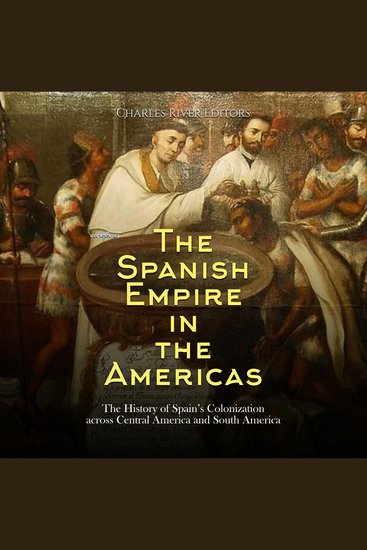
  • Spanish Empire in the Americas The: The History of Spain’s Colonization across Central America and South America - cover

    Spanish Empire in the Americas...

    Editors Charles River

    • 0
    • 0
    • 0
    By the time Christopher Columbus started setting east from the New World, he had explored San Salvador in the Bahamas (which he thought was Japan), Cuba (which he thought was China), and Hispaniola, the source of gold. As the common story goes, Columbus, en route back to Spain from his first journey, called in at Lisbon as a courtesy to brief the Portuguese King John II of his discovery of the New World. King John subsequently protested that according to the 1479 Treaty of Alcáçovas, which divided the Atlantic Ocean between Spanish and Portuguese spheres of influence, the newly discovered lands rightly belonged to Portugal. To make clear the point, a Portuguese fleet was authorized and dispatched west from the Tagus to lay claim to the “Indies,” which prompted a flurry of diplomatic activity in the court of Ferdinand and Isabella. At the time, Spain lacked the naval power to prevent Portugal from acting on this threat, and the result was the hugely influential 1494 Treaty of Tordesillas. 
    The Treaty of Tordesillas was one of the most important documents of its kind of the age, for it established the essential parameters of the two competing empires, the first of the major European imperial entities. The Treaty of Tordesillas drew an imaginary line from pole to pole, running 100 leagues west of the westernmost islands of the Azores. According to the terms of a supporting papal bull, all the lands to the west of that belonged to Spain, and all of those to the east belonged to Portugal. What this meant in practical terms was that Portugal was given Africa and the Indian Ocean while Spain was granted all the lands to the west, including the Americas and the Caribbean, all collectively known as the “Indies,” or the New World. 
    Perhaps inevitably, a regional rivalry had developed as the Portuguese began to establish a colony in Brazil and push its boundaries southwards. 
    Voir livre
  • Dusty Booze - In Search of Vintage Spirits - cover

    Dusty Booze - In Search of...

    Aron Goldfarb

    • 0
    • 0
    • 0
    In Dusty Booze: In Search of Vintage Spirits, journalist Aaron Goldfarb goes on an adventure in vintage spirits. This is an intoxicating story of obsessives on the hunt for old bottles of whiskey, tequila, rum, chartreuse—you name it—from estate sales, grandpa's liquor cabinet, and out-of-the-way and inner-city liquor stores that may just have a case or a few bottles lying around in the basement. 


    What Goldfarb and these "dusty hunters" discover are more than just bottles from bygone brands or old formulations no longer available—they find portals into history. Spirits, once bottled, don't age like wine. A bourbon from the 1935 lets you savor the end of Prohibition. A 1940s rum cocktail with actual 1940s rum tastes the way it would to a GI returning from WWII. An old Italian amaro captures la dolce vita in a glass, and vintage gin is a drinkable time capsule from Mad Men-era lunchtime martinis. 


    Dusty Booze mixes the history of our drinking culture and the Indiana Jones-meets-Simpsons Comic Book Guy adventures of the collectors, including the hunt for rumored stash from a reclusive Hollywood legend. This is a buoyant, thirst-triggering voyage into a unique subculture that has exploded in popularity in recent years.
    Voir livre
  • Cosmic Life - cover

    Cosmic Life

    Walter Russell

    • 0
    • 0
    • 0
    Walter Russell: Cosmic Life  is a profound and immersive exploration of the universe's mysteries, the nature of human existence, and the timeless principles that govern all creation. Walter Russell, one of the most visionary and multi-talented minds of the 20th century, presents a framework for understanding life that bridges the realms of science, art, philosophy, and spirituality. This work is not simply an introduction to his ideas but a transformative experience designed to expand your perspective on reality and your role within the infinite dance of the cosmos.
    Voir livre
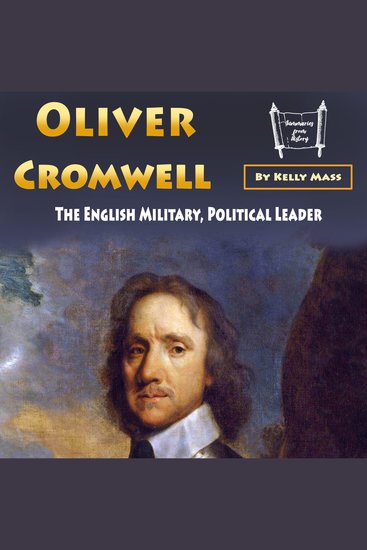
  • Oliver Cromwell - The English Military Political Leader - cover

    Oliver Cromwell - The English...

    Kelly Mass

    • 0
    • 0
    • 0
    Oliver Cromwell was an English army and statesman who led Parliamentary armies against King Charles I throughout the English Civil War. From 1653 till his death in the year 1658, he lead the British army in the British Islands area. 
    Why was he so hated by so many? And is this image of him historically correct? 
    Even though we cannot go back in time 450 years ago, we can certainly try to find the answers in the sources we have. 
    The reason why people thought he was so evil, is because of his brutality against the Irish at that time. Several Irish and English scholars agree that Cromwell was too cruel in Ireland. Other academics blame him of 'ethnic cleansing,' or the systematic expulsion of a certain ethnic population from a territory. It typically entails the execution and deportation of Catholics, and that he is despised by Irish Catholics. 
    Is this true? And why did he do this? 
    Find out more about his time, his life, his circumstances and his legacy.
    Voir livre
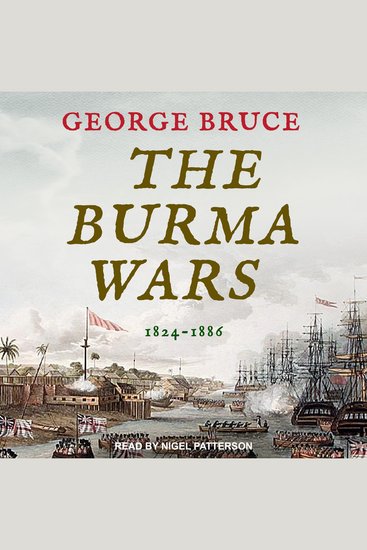
  • The Burma Wars - 1824-1886 - cover

    The Burma Wars - 1824-1886

    George Bruce

    • 0
    • 0
    • 0
    Between 1824 and 1885 Britain and Burma fought in three deadly struggles. 


    The first was the longest and most expensive war in British Indian history, the second was criticized at the time as being caused by gunboat diplomacy, and the third led to the removal of Burma's Konbaung dynasty and the incorporation of Burma into the British Raj. 


    These wars were fraught with military blunders and incompetence. 


    Why did the tensions arise initially and how did the first battles begin? How were Burmese forces able to resist the powerful armaments of their opponents for so long? And what were the implications of this controversial war for the British? 


    The Burma Wars: 1824–1886 uses a vast assortment of contemporary sources to build up a vivid picture of the clashes, highlighting the courage and perseverance of the men who fought for both sides in difficult conditions. 


    The Times described Bruce's books as "well researched, with a keen eye for historical detail." 


    The Burma Wars: 1824–1886 is a brilliant account of one of the conflicts that led to the formation of the British Empire. It is part of the series Conflicts of Empire, which also includes Retreat from Kabul and Six Battles for India.
    Voir livre