Join us on a literary world trip!
Add this book to bookshelf
Grey
Write a new comment Default profile 50px
Grey
Subscribe to read the full book or read the first pages for free!
All characters reduced
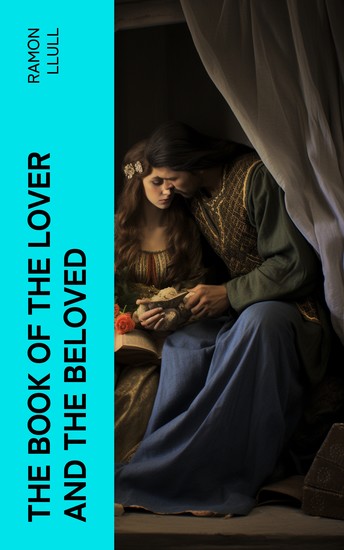
The Book of the Lover and the Beloved - Translated from the Catalan of Ramón Lull with an Introductory Essay by E Allison Peers - cover

The Book of the Lover and the Beloved - Translated from the Catalan of Ramón Lull with an Introductory Essay by E Allison Peers

Ramon Llull

Translator E. Allison Peers

Publisher: e-artnow

  • 0
  • 0
  • 0

Summary

Blurring the lines between love, romance, passion and devotion, this collection of short poems and prose offers an in-depth look at religion and God. Widely considered a masterpiece of philosophy and religion, the book is an illuminating and spiritual look at our connection and relationship with God and romance in a unique take on passion and love. Initially written in Catalan, it is widely considered the author's magnum opus.
Available since: 12/09/2023.
Print length: 57 pages.

Other books that might interest you

  • The Globalization Myth - Why Regions Matter - cover

    The Globalization Myth - Why...

    Shannon K. O’Neil

    • 0
    • 0
    • 0
    A case for why regionalization, not globalization, has been the biggest economic trend of the past forty years 


    The conventional wisdom about globalization is wrong. Over the past forty years as companies, money, ideas, and people went abroad more often than not, they looked regional rather than globally. O'Neil details this transformation and the rise of three major regional hubs in Asia, Europe, and North America. Current technological, demographic, and geopolitical trends look only to deepen these regional ties. O'Neil argues that this has urgent implications for the United States. Regionalization has enhanced economic competitiveness and prosperity in Europe and Asia. It could do the same for the United States, if only it would embrace its neighbors.
    Show book
  • Genghis Khan: A short biography - 5 Minutes: Short on time – long on info! - cover

    Genghis Khan: A short biography...

    5 Minutes, 5 Minute Biographies,...

    • 0
    • 0
    • 0
    Genghis Khan, founder of the Mongol empire : Life and work in a short biography! Everything you need to know, brief and concise. Infotainment, education and entertainment at its best!
    Show book
  • License to Travel - A Cultural History of the Passport - cover

    License to Travel - A Cultural...

    Patrick Bixby

    • 0
    • 0
    • 0
    Discover the surprising global history of how the passport has shaped art, thought, and human experience to define the modern world. 
     
    License to Travel exposes the passport as both an instrument of personal freedom and a tool of government surveillance powerful enough to define our very humanity. 
     
    Patrick Bixby examines the passports of artists and intellectuals, ancient messengers and modern migrants to reveal how these seemingly humble documents implicate us in larger narratives about identity, mobility, citizenship, and state authority. 
     
    This concise cultural history:  
    • Takes the reader on a captivating journey from pharaonic Egypt and Handynasty China to the passport controls and crowded refugee camps of today. 
    • Connects intimate stories of vulnerability and desire with vivid examples drawn from world cinema, literature, art, philosophy, and politics 
    • Highlights the control that travel documents have over our bodies as we move around the globe. 
     
    With unexpected discoveries at every turn, from narrow escapes and new starts, tearful departures and hopeful arrivals, License to Travel shares some of our most memorable experiences involving the passport.
    Show book
  • Zeno - Greek Philosophy and the Paradoxes of Motion - cover

    Zeno - Greek Philosophy and the...

    Hector Davidson

    • 0
    • 0
    • 0
    Zeno of Elea, a philosopher from ancient Greece, is best known for his paradoxes, which have intrigued thinkers for over two millennia. These paradoxes, particularly those dealing with motion, challenge fundamental concepts of space, time, and the nature of infinity. While Zeno's ideas emerged within the context of ancient philosophical debates, their relevance persists today in various fields of study, from physics to mathematics and philosophy. 
    One of the most striking aspects of Zeno's paradoxes is their ability to question assumptions that many take for granted. The Paradox of Achilles and the Tortoise, for example, suggests that a faster runner (Achilles) could never overtake a slower one (the tortoise) if the tortoise has a head start. At first glance, this seems absurd, as we know that Achilles would inevitably pass the tortoise in a real race. However, Zeno’s argument raises deeper questions about how we understand infinite divisions in space and time. Today, this paradox invites reflection on the nature of infinity, a concept that remains central in modern mathematics and the study of calculus. 
    Zeno’s paradoxes also raise critical questions about the nature of motion itself. His Arrow Paradox, for instance, claims that an arrow in flight is always at rest at any given moment in time, suggesting that motion is an illusion. While this may seem like a mere abstract thought experiment, it has significant implications for how we perceive the passage of time and the continuum of motion. In modern physics, the concept of time and motion is constantly reexamined, especially in the context of relativity theory, where time can bend and stretch depending on an object's velocity and position in space. Zeno’s paradoxes, thus, offer an early philosophical precursor to these scientific discussions.
    Show book
  • Thinking Life Through - cover

    Thinking Life Through

    Archbishop Fulton J. Sheen

    • 0
    • 0
    • 0
    In the face of a world crisis, which is manifestly deeper than one can imagine, many are inclined to ask: “Has Christianity failed?” Fulton Sheen’s Thinking Life Through seeks to answer this critical question. The conclusions the author proposes are far-reaching and touch upon subjects as diverse as the truth and meaning of human sexuality, the purpose of life, discordant marriages, angels, alcoholism, the vocation of the soldier, materialism, parenting, and even the question of spanking children.  
    On the critical subject of freedom, Sheen writes, “The true definition of freedom is the right to do whatever one ought, and oughtness implies law, goals, purposes, and perfection. Freedom is a moral power and not a physical one. It revolves around what man is rather than what man does. We are more free within the law than outside of it.” 
    Thinking Life Through also addresses the world’s political climate, something that in many ways mirrors the present political discourse. Focusing on the tragic decline of post-Christian society, Sheen gives special attention to both the threat of communism and the dangers of socialism. Sheen also gives clarity to the role of the individual and the family while living in a time of moral and political uncertainty. Finally, Sheen addresses good manners and politeness as he states in his quintessential style, “Another effect of materialism is to be seen in the decline of courtesy. There is politeness and decorum and a desire to please others when it is generally recognized that every person bears within himself an image of the Divine.” For anyone seeking to grow in wisdom, Thinking Life Through will be your guide.
    Show book
  • Shadows of Salem - Witch Hunts Hysteria and the Making of American Fear - cover

    Shadows of Salem - Witch Hunts...

    Davis Truman

    • 0
    • 0
    • 0
    In 1692, a small Puritan community in Massachusetts became the stage for one of the darkest episodes in American history. The Salem Witch Trials, fueled by superstition, religious zeal, and the fear of the unknown, led to over 150 accusations, countless shattered lives, and the executions of innocent men and women. But beyond the gallows and confessions lies a deeper story, one of resistance, power, and the origins of collective fear in America. 
    In Shadows of Salem, readers are taken inside the trials to witness how hysteria spread, how law was bent to justify injustice, and how individuals, like Giles Corey, chose silence and suffering over submission. Drawing on historical records, legal precedents, and cultural analysis, this book uncovers how Salem’s legacy shaped America’s enduring relationship with fear, authority, and social control. 
    From the use of spectral evidence to the crushing weight of peine forte et dure, Shadows of Salem explores not just what happened in 1692, but why it continues to haunt the American imagination. It is a story of mass panic and manipulation, but also of defiance and resilience, an essential lens for understanding both the past and the patterns of fear that still echo in modern society. 
    Perfect for readers of history, law, and cultural studies, Shadows of Salem offers a compelling examination of how hysteria becomes power, and how silence can be the most powerful act of resistance.
    Show book