Begleiten Sie uns auf eine literarische Weltreise!
Buch zum Bücherregal hinzufügen
Grey
Einen neuen Kommentar schreiben Default profile 50px
Grey
Jetzt das ganze Buch im Abo oder die ersten Seiten gratis lesen!
All characters reduced
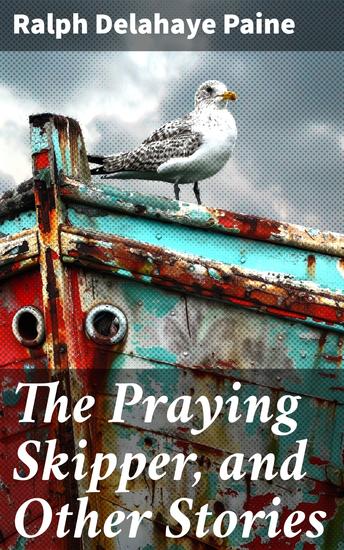
The Praying Skipper and Other Stories - Tales of the Sea: Adventure and Reflection in Nautical Fiction - cover

The Praying Skipper and Other Stories - Tales of the Sea: Adventure and Reflection in Nautical Fiction

Ralph Delahaye Paine

Verlag: Good Press

  • 0
  • 0
  • 0

Beschreibung

In "The Praying Skipper, and Other Stories," Ralph Delahaye Paine artfully weaves an intricate tapestry of maritime adventures, exploring the intimate relationship between man and the sea. Paine's narrative style is marked by vivid imagery and a lyrical cadence, captivating readers as each story unfolds against the backdrop of the ocean's vastness. His collection is not merely a series of tales; it embodies a profound reflection on courage, camaraderie, and the human spirit, echoing the work of contemporaries such as Jack London and Joseph Conrad, while infusing it with a distinct American sensibility and an optimistic zest for life. Ralph Delahaye Paine was not only a gifted storyteller but also an accomplished sailor and journalist, whose diverse experiences significantly shaped his literary output. Raised in a family that encouraged exploration, he developed a keen affinity for the sea and the tales it inspires. His travels and extensive writings on maritime life provided him with a wealth of material, making him uniquely qualified to portray the essence of seafaring and human resilience in his fiction. Readers seeking tales that inspire both adventure and contemplation will find "The Praying Skipper, and Other Stories" an enriching exploration of maritime life. Paine'Äôs adept storytelling, paired with his first-hand experiences, invites us to embark on unforgettable journeys that reveal the depths of the human condition. Whether you're a seasoned maritime enthusiast or new to seafaring literature, this collection is a treasure trove of reflection and excitement.
Verfügbar seit: 14.11.2023.
Drucklänge: 131 Seiten.

Weitere Bücher, die Sie mögen werden

  • The Tapestry of Time - cover

    The Tapestry of Time

    Mike DeFrench

    • 0
    • 0
    • 0
    Doctors have been traveling back in time to vaccinate populations against viruses. 
    But nothing has been changing in the present. 
    One man is about to find out why...
    Zum Buch
  • The Whale - (or Moby Dick) - cover

    The Whale - (or Moby Dick)

    Herman Melville

    • 0
    • 0
    • 0
    "Moby Dick" (or "The Whale" as it was one known) is the unforgettable story of Captain Ahab’s quest to avenge the whale that ‘reaped’ his leg.  The quest and the novel is a story of how man can become blindly obsessed.  The tale is also a testament to democracy and liberation, as the ship's crew work together for a common end. 
    Ishmael, the novel’s narrator is a young, ordinary sailor learning the practice of whaling. 
    Moby Dick is one of the greatest novels ever written and a timeless classic.
    Zum Buch
  • Diary of a Lunatic - From their pens to your ears genius in every story - cover

    Diary of a Lunatic - From their...

    Leo Tolstoy

    • 0
    • 0
    • 0
    Leo Tolstoy was born in 1828 in the Russian province of Tula to a wealthy noble family. As a child, he had private tutors but he showed little interest in any formal education. When he went to the University of Kazan in 1843 to study oriental languages and law, he left without completing his courses.  Life now was relaxed and idle but with some writing also taking place.  Gambling debts forced an abrupt change of path and he joined the army to fight in the Crimean War.  He was commended for his bravery and promoted but was appalled at the brutality and loss of life.  He recorded these and other earlier experiences in his diaries which formed the basis of several of his works. 
    In 1852 ‘Childhood’ was published to immediate success and was followed by ‘Boyhood’ and ‘Youth’. 
    His experience in the army and the horrors he witnessed resulted in ‘The Cossacks’ in 1862 and the trilogy ‘Sevastopol Tales’. After the war he travelled around Europe, visiting London and Paris and meeting such luminaries as Victor Hugo and Charles Darwin.  
    It was now that Tolstoy began his masterpiece, ‘War and Peace’. Published in 1869 it was an epic work that changed literature. He quickly followed this with ‘Anna Karenina’.  
    These successes made Tolstoy rich and helped him accomplish many of his dreams but also brought problems as he grappled with his faith and the lot of the oppressed poor. These revolutionary views became so popular that the authorities now kept him under surveillance.  
    He led a life of asceticism and vegetarianism and put his socialist ideals into practice by establishing numerous schools for the poor and food programmes. He also believed in giving away his wealth, which caused much discord with his wife.  
    His writing continued to bring forth classics such as ‘The Death of Ivan Ilyich’ and many brilliant and incisive short stories such as ‘How Much Land Does A Man Need’.  
    In 1901 Tolstoy was excommunicated from the Church and controversially deselected for the Nobel Prize for Literature. 
    Whilst undertaking a pilgrimage by train in October 1910 with his daughter Aleksandra he caught pneumonia in the nearby town of Astapovo.  Leo Tolstoy died on November 9th, 1910, he was 82.
    Zum Buch
  • The Signalman - cover

    The Signalman

    Charles Dickens

    • 0
    • 0
    • 0
    Title: The Signalman 
    Author: Charles Dickens 
    Narrator: Jonathan Dunne 
    Original Publication: 1866 
    Public Domain: Yes 
    Series Placement: Number 50 in the Timeless Terrors series 
    Description: 
    The Signalman is Charles Dickens’ taut and haunting meditation on fear, fate, and the limits of human perception. Set along a lonely railway cutting, the story follows a traveler who encounters a signalman tormented by a mysterious, foreboding apparition. Their conversation gradually reveals a chilling vision of impending tragedy, as the signalman struggles against forces beyond his comprehension. 
    Blending Gothic suspense with psychological tension, Dickens transforms a seemingly simple ghost story into a darkly reflective exploration of isolation, dread, and the uncanny ways in which warning signs are often ignored. Narrated by Amazon-bestselling horror author Jonathan Dunne, this performance captures both the quiet unease and mounting terror of Dickens’ narrative — a world where the ordinary and the supernatural intersect in subtle but unforgettable ways. 
    While the text is in the public domain, this narration is an original performance and copyright © 2025 Jonathan Dunne. Part of Timeless Terrors, a series devoted to resurrecting the masters of the macabre and uncanny, The Signalman endures as one of Dickens’ most suspenseful and psychologically intense short stories — a tale of foreboding that lingers long after the final words.
    Zum Buch
  • Zen and the Art of Starship Maintenance and Other Stories - cover

    Zen and the Art of Starship...

    Tobias S. Buckell

    • 0
    • 0
    • 0
    Zen and the Art of Starship Maintenance and Other Stories is Tobias S. Buckell's seventh short fiction collection and is comprised of 15 stories, several of which are original to the collection or were previously only available through his Patreon. 
     
    This collection ranges from galactic adventures to intimate explorations of humanity—sometimes in the same story—rich with a sense of wonder and deft storytelling.
    Zum Buch
  • Forgotten Authors The - Volume 3 - Louis Couperus to Ricardo Fernandez Garcia - cover

    Forgotten Authors The - Volume 3...

    James Joyce

    • 0
    • 0
    • 0
    Throughout the long centuries of human history is the want, and the need, to share information, to exchange ideas and for that knowledge and experience, for curiosity and learning, to be the basis of a civil society. 
    In literature the ambition is much narrower.  In order to be known, to be popular, you had to be published.  And for that people had to know you existed and your ideas worth reading.  Obviously for most of humanity’s time people couldn’t read and texts couldn’t be published in any great number. 
    In the 15th Century Gutenberg’s printing press began the revolution to address the second and by the 19th century had gathered pace with startling speed and mass distribution.  Education for the many was brought in to help people understand more of their world and, with new skills, how to have a better place within it.  Now, if the powers that owned the presses and means of distribution agreed an audience would now be able to avail themselves of your ideas, your printed words.  
    Sadly, in the thirst for the new, the recent and the past fell from sight, relegated to dark corners and dusty shelves.   
    But the printed word is rarely without someone, somewhere busying themselves through piles of papers and books rediscovering what a good story is, whatever its age. 
    Sadly, in the thirst for the new, the recent and the past fell from sight, relegated to dark corners and dusty shelves.    
    But the printed word is rarely without someone, somewhere busying themselves through piles of papers and books rediscovering what a good story is, whatever its age. 
    In this volume we offer up a small selection of those talents whose time has now come again.
    Zum Buch