Rejoignez-nous pour un voyage dans le monde des livres!
Ajouter ce livre à l'électronique
Grey
Ecrivez un nouveau commentaire Default profile 50px
Grey
Abonnez-vous pour lire le livre complet ou lisez les premières pages gratuitement!
All characters reduced
The Book of Buried Treasure - True Story of the Pirate Gold and Jewels - cover

The Book of Buried Treasure - True Story of the Pirate Gold and Jewels

Ralph D. Paine

Maison d'édition: Musaicum Books

  • 0
  • 0
  • 0

Synopsis

Ralph D. Paine's 'The Book of Buried Treasure' is a captivating exploration of legendary hidden treasures throughout history, offering readers a blend of adventure, history, and folklore. Paine's vivid storytelling brings these tales to life, making the reader feel as though they are embarking on a treasure hunt themselves. The book is rich in detail and meticulously researched, providing a comprehensive look at the myths and realities surrounding these elusive treasures, making it a valuable resource for both history enthusiasts and aspiring treasure hunters. Paine's writing style is engaging and accessible, making the book an enjoyable and informative read for a wide audience. Set in a literary context of adventure and exploration literature, 'The Book of Buried Treasure' stands out as a unique and intriguing contribution to the genre. Ralph D. Paine's background as a seasoned writer and historian is evident in his meticulous research and captivating storytelling in this book, showcasing his expertise in the subject matter. Recommended for anyone with an interest in adventure, history, or folklore, 'The Book of Buried Treasure' is sure to both entertain and educate readers.
Disponible depuis: 04/01/2022.
Longueur d'impression: 300 pages.

D'autres livres qui pourraient vous intéresser

  • Urban Poverty and Inequality - Analysis and Solutions - cover

    Urban Poverty and Inequality -...

    Lyric Vale

    • 0
    • 0
    • 0
    Urban poverty is a pervasive issue that affects millions of people living in cities worldwide. As cities continue to grow at an unprecedented rate, the number of urban poor continues to rise, with large portions of the population living in conditions of extreme deprivation. The term "urban poverty" refers to the situation where individuals and families in urban areas experience a lack of access to basic resources, such as adequate housing, healthcare, education, and employment opportunities. Despite being situated in areas of economic activity and growth, urban poor populations face numerous challenges that contribute to their ongoing struggle for survival and upward mobility. 
    The growth of cities and urban centers has been accompanied by an increasing divide between the wealthy and the poor. While urban areas are often seen as hubs of opportunity, economic growth, and development, they also tend to highlight social and economic inequalities. Rapid urbanization, coupled with limited resources, leads to overcrowded slums, informal settlements, and a lack of infrastructure in many parts of cities. In such environments, the poor face challenges such as high unemployment rates, limited access to education, and poor healthcare services. These conditions create a cycle of poverty that is difficult to escape. 
    In addition, the urban poor are often excluded from key economic and social systems that would help alleviate their poverty. The concentration of wealth in urban centers disproportionately benefits the middle and upper classes, while marginalized communities remain on the periphery, unable to fully participate in the economic, political, and social life of the city. This growing inequality between different social classes exacerbates poverty and leaves the urban poor trapped in a cycle of disadvantage.
    Voir livre
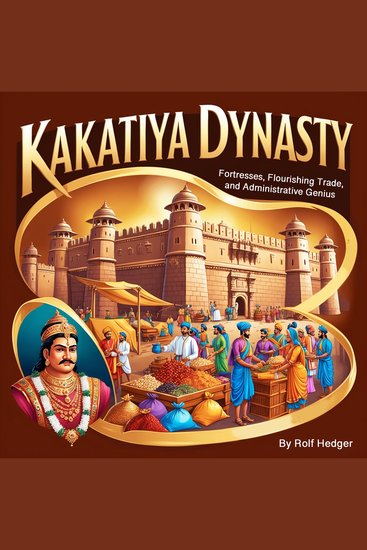
  • Kakatiya Dynasty - Fortresses Flourishing Trade and Administrative Genius - cover

    Kakatiya Dynasty - Fortresses...

    Rolf Hedger

    • 0
    • 0
    • 0
    The Kakatiya Dynasty emerged as a formidable power in the Deccan region of India, leaving behind a rich legacy of military strength, administrative brilliance, and cultural contributions. Their origins can be traced back to the 10th century, though historical records regarding their early rulers remain scarce. Initially, the Kakatiyas served as feudatories under the Rashtrakutas and later the Western Chalukyas, gradually expanding their influence over the Telugu-speaking region. 
    The name "Kakatiya" is believed to have originated from their association with the goddess Kakati, a form of Durga, who was worshipped as their family deity. The earliest known ruler, Venna or Beta I, established the dynasty’s foundation, but it was during the reign of Prola I that the Kakatiyas started asserting their independence. Prola II played a crucial role in strengthening their foothold by resisting Chalukyan dominance and expanding Kakatiya control over the eastern Deccan. 
    During this period, the Deccan was a contested space where multiple regional powers sought dominance. The Kakatiyas capitalized on the declining influence of the Western Chalukyas, strategically aligning themselves with or resisting various rulers to carve out an independent identity. Their stronghold was initially located in Hanamkonda, which later evolved into the grand city of Warangal, a center of Kakatiya power and cultural patronage.
    Voir livre
  • Stolen Family - Captive in Saudi Arabia - cover

    Stolen Family - Captive in Saudi...

    Johanne Durocher

    • 0
    • 0
    • 0
    Canadian Nathalie Morin's four children cannot leave Saudi Arabia without exit visas signed by Nathalie's abusive husband. Her mother chronicles her decades-long struggle to bring her daughter and four grandchildren home to safety in Montreal.
    Voir livre
  • The Historical Records of Fugitive Slaves (1619-1865) - cover

    The Historical Records of...

    Marion Gleason McDougall

    • 0
    • 0
    • 0
    This edition presents a historical record of legal cases tried against escaped slaves across the United States of America. The author, Marion McDougall, has drawn together and compared many cases found in obscure sources and made an effort to use the cases as illustrations of principles of how the legislature worked in certain places and certain eras. Her aim was, in some measure, to trace the development of public sentiment upon the subject, in order to prepare an outline of Colonial legislation and of the work of Congress during the covered period.
    Voir livre
  • Zionism - An Emotional State - cover

    Zionism - An Emotional State

    Derek J. Penslar

    • 0
    • 0
    • 0
    Emotion lies at the heart of all national movements, and Zionism is no exception. For those who identify as Zionist, the word connotes liberation and redemption, uniqueness and vulnerability. Yet for many, Zionism is a source of distaste if not disgust, and those who reject it are no less passionate than those who embrace it. The power of such emotions helps explain why a word originally associated with territorial aspiration has survived so many years after the establishment of the Israeli state. 


    Zionism: An Emotional State expertly demonstrates how the energy propelling the Zionist project originates from bundles of feeling whose elements have varied in volume, intensity, and durability across space and time. Beginning with an original typology of Zionism and a new take on its relationship to colonialism, Penslar then examines the emotions that have shaped Zionist sensibilities and practices over the course of the movement's history. The resulting portrait of Zionism reconfigures how we understand Jewish identity amidst continuing debates on the role of nationalism in the modern world.
    Voir livre
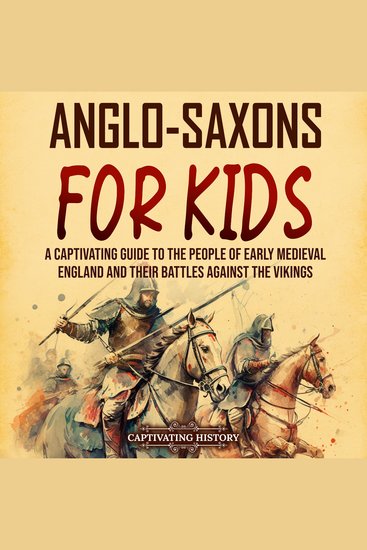
  • Anglo-Saxons for Kids: A Captivating Guide to the People of Early Medieval England and Their Battles Against the Vikings - cover

    Anglo-Saxons for Kids: A...

    Captivating History

    • 0
    • 0
    • 0
    Embark on an exciting journey to the past to meet the Anglo-Saxons! 
    The Anglo-Saxons were people from Northern Germany who came to Britain in waves and quickly established their own kingdoms between the time of the Romans and the Normans. At first glance, it may seem like the Anglo-Saxons did not contribute much to British history. They didn’t even have a writing system until Christian missionaries arrived!  
    So, why are the Anglo-Saxons so important to British history? Some people may think of this time as a dark time full of feuding kings. Although there were a lot of kings and plenty of fighting, the Anglo-Saxons also laid the foundation for modern English society. They created the structure needed to form one country out of different tribes. When the Normans took over in 1066, they built on top of Anglo-Saxon social and political structures.  
    For years, people have focused on leaders like King Alfred the Great or events like the Norman Conquest. But the Anglo-Saxons were more than just a few leaders or events. They structured a nation that would go on to conquer vast swaths of the modern world, and their ingenuity still structures life as we know it today.  
    It’s time to sail back into history and learn about the many facets of the Anglo-Saxons. In this new and captivating history audiobook, you’ll learn what made the Anglo-Saxons special and how they still shape our lives today. 
    Here are some of the questions you will uncover in this audiobook: 
    Was King Arthur real?  
    What made Wessex so special? 
    Which Germanic tribes came to Britain as the Anglo-Saxons? 
    Who was St. Augustine? 
    Where did the Normans come from? 
    Who was the first King of England? 
    Why did William the Conqueror come to England? 
    What is the difference between modern and Old English? 
    Scroll up and click the “add to cart” button to learn more about the history of the Anglo-Saxons!
    Voir livre