Rejoignez-nous pour un voyage dans le monde des livres!
Ajouter ce livre à l'électronique
Grey
Ecrivez un nouveau commentaire Default profile 50px
Grey
Abonnez-vous pour lire le livre complet ou lisez les premières pages gratuitement!
All characters reduced
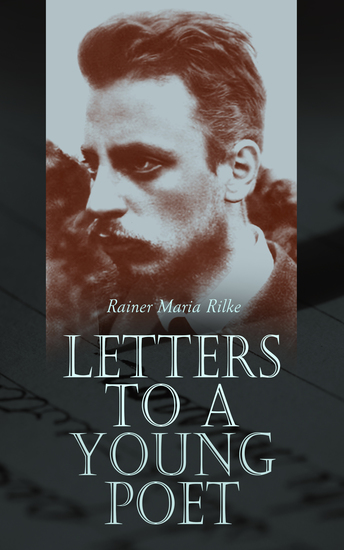
Letters to a Young Poet - cover

Letters to a Young Poet

Rainer Maria Rilke

Traducteur e-artnow

Maison d'édition: e-artnow

  • 0
  • 0
  • 0

Synopsis

Letters to a Young Poet, by Rainer Maria Rilke, is a timeless literary gem that invites readers into the intimate realm of creativity, art, and personal discovery. Composed between 1902 and 1908, these ten letters were addressed to Franz Xaver Kappus, an aspiring poet seeking guidance from the revered Rilke. The resulting correspondences deliver profound insights that transcend time and apply to all who seek deeper self-awareness, emotional resilience, and a sincere understanding of the artistic journey.
Rilke's gentle and introspective voice resonates on every page, urging the young poet—and indeed, every reader—to treasure solitude as a crucible for inner growth. He advocates for patience and unwavering dedication to the craft, emphasizing that true creativity stems from a willingness to explore one's innermost feelings. By sharing his contemplations on love, loneliness, and the purpose of art, Rilke illuminates the transformative power of introspection in developing an authentic sense of self. His reflections unify the personal with the universal, showing how poetry, and all forms of art, can elevate and heal the human spirit.
In addition to its literary merit, Letters to a Young Poet stands as a testament to the enduring impact of correspondence in an age far removed from instant communication. Rilke's words carry the warmth of genuine mentorship, reminding us that passion and vulnerability lie at the heart of the creative process. The book's influence extends beyond aspiring writers, guiding anyone longing to articulate their innermost truths. Even over a century later, Rilke's meditative counsel on courage, belief, and the power of intuitive expression holds profound relevance. Whether read for aesthetic pleasure or spiritual clarity, Letters to a Young Poet remains one of the most stirring explorations of artistic devotion, penned by a poet whose legacy continues to guide and inspire. This correspondence endures as a timeless classic. This translation has been assisted by artificial intelligence.
Disponible depuis: 05/02/2025.
Longueur d'impression: 100 pages.

D'autres livres qui pourraient vous intéresser

  • The Spartans and the Battle of Thermopylae - The Legendary Stand of King Leonidas and His 300 Warriors - cover

    The Spartans and the Battle of...

    Peter Mason

    • 0
    • 0
    • 0
    The Battle of Thermopylae is one of the most legendary last stands in history. Facing overwhelming Persian forces, King Leonidas and his 300 Spartan warriors stood their ground, choosing honor and bravery over surrender. But what really happened during this epic battle? 
    This audiobook explores the Spartan way of life, military strategies, and the brutal combat that defined Thermopylae. Learn about the training of the hoplites, the Persian invasion under King Xerxes, and how this battle became a symbol of courage and sacrifice. 
    The Spartans and the Battle of Thermopylae is a gripping journey into ancient history, perfect for war history enthusiasts, military strategists, and those fascinated by heroic tales.
    Voir livre
  • Beacon Lights of History Vol 3: Ancient Achievements - cover

    Beacon Lights of History Vol 3:...

    John Lord

    • 0
    • 0
    • 0
    The third book in the Beacon Lights of History series, Lord discusses achievements such as the formation of laws, the development of the fine arts, ancient science, and key people such as Cicero and Cleopatra.  Summary by KHand
    Voir livre
  • The Prince (Hero Classics) - cover

    The Prince (Hero Classics)

    Niccolò Machiavelli

    • 0
    • 0
    • 0
    Part of the Hero Classics series 
    “Everyone sees what you appear to be, few experience what you really are.” 
    The Prince is generally labelled as a cynical and overly pragmatic account of gaining and retaining political power. It is a significant deviation from the righteous meditations of Plato and Aristotle, which emphasise the goodness of human nature. Living in a harsh political climate, Machiavelli devised a more practical and true-to-life guide for leaders who cannot possibly be always good and just. For instance, he talks among other things about the importance to inflict pain all at once but distribute the rewards available gradually and in limited amounts. Besides, the idea that ‘the ends justify the means’ had never been featured in literature so prominently and openly before. Far-fetched at first glance, Machiavelli’s insights after some analysis starts making practical sense when every state and society need to maintain one thing – stability. 
    Although not idealistic, the text is undeniably valid as we can easily track the Prince’s features in the best and the worst political leaders of the previous century who are united by the amount of power they were able to exerts – from political heroes such as Churchill and JFK to fascist and communist dictators. In the modern world, The Prince is a viable manual of conduct more than ever with the intense demand for competitiveness not only in the political but equally in business and other spheres. 
    The text is also famous for being written in the vernacular rather than in classical Latin. What might surprise modern readers is that, actually, this peculiarity halted the text’s dissemination across Europe as most translations were still done from Latin. The text nevertheless has reached its audience and become one of the most recognizable and accessible reads on politics and leadership. 
    The Hero Classics series:MeditationsThe ProphetA Room of One’s OwnIncidents in the Life of a Slave GirlThe Art of WarThe Life of Charlotte BronteThe RepublicThe PrinceNarrative of the Life of Frederick Douglass, an American SlaveUtopia
    Voir livre
  • Fishing with a Worm - cover

    Fishing with a Worm

    Bliss Perry

    • 0
    • 0
    • 0
    Fishing with a Worm by Bliss Perry includes the poignant and philisophical observations of a fly fisherman lured by the worm. Bliss Perry was a professor of literature at Princeton and Harvard Universities and spent time in Vermont writing and fly fishing. (Summary written by Sadie, Betsie, and Wikipedia)
    Voir livre
  • Above Life's Turmoil - Rise Above the Madness and Find Inner Peace in a World of Chaos - cover

    Above Life's Turmoil - Rise...

    James Allen

    • 0
    • 0
    • 0
    James Allen (1864–1912) was a man who lived his philosophy. Forced to leave school at 15 after his father's murder, he worked in manual labor jobs before dedicating his life to writing and spiritual inquiry. Despite his lack of formal education, he authored nearly twenty books, with As a Man Thinketh becoming his most famous. Above Life's Turmoil was written during the height of his literary career and reflects his deep synthesis of Christian, Buddhist, and Stoic thought, offering a pragmatic path to peace during the tumultuous Industrial Age—a message that resonates even more powerfully today. 
    In an era of relentless noise and external pursuit, James Allen’s Above Life’s Turmoil offers a timeless sanctuary for the soul. This profound work, penned in 1910, is more than a book; it is a practical philosophy for living. Allen, a British philosophical writer who rose from poverty and personal tragedy to become a quiet pioneer of the self-help movement, argues that while chaos is an inevitable part of life, peace is an internal creation. He guides the reader to rise above adversity not by changing the world, but by mastering the self. 
    Through a series of insightful essays, Allen reveals how the cultivation of pure thoughts, compassionate actions, and a disciplined mind is the only true path to unshakable happiness. He explores the immutable law of cause and effect in one’s inner life, demonstrating how we shape our destiny with every thought. This is not a promise of wealth or fame, but of something far greater: enduring serenity, self-conquest, and a harmonious existence. For anyone feeling overwhelmed by the storms of modern life, this classic text remains an essential guide to finding calm, clarity, and purpose within.
    Voir livre
  • Thomas Paine: Common Sense - Addressed to the Inhabitants of America - cover

    Thomas Paine: Common Sense -...

    Thomas Paine

    • 0
    • 0
    • 0
    Common Sense is a pamphlet written by Thomas Paine in 1775–76 that inspired people in the Thirteen Colonies to declare and fight for independence from Great Britain in the summer of 1776. In clear, simple language it explained the advantages of and the need for immediate independence. It was published anonymously on January 10, 1776, at the beginning of the American Revolution and became an immediate sensation. It was sold and distributed widely and read aloud at taverns and meeting places. Washington had it read to all his troops, which at the time had surrounded the British army in Boston. In proportion to the population of the colonies at that time (2.5 million), it had the largest sale and circulation of any book published in American history. 
    Common Sense presented the American colonists with an argument for freedom from British rule at a time when the question of whether or not to seek independence was the central issue of the day. Paine wrote and reasoned in a style that common people understood. Forgoing the philosophical and Latin references used by Enlightenment era writers, he structured Common Sense as if it were a sermon, and relied on Biblical references to make his case to the people. He connected independence with common dissenting Protestant beliefs as a means to present a distinctly American political identity. Historian Gordon S. Wood described Common Sense as "the most incendiary and popular pamphlet of the entire revolutionary era".
    Voir livre