Join us on a literary world trip!
Add this book to bookshelf
Grey
Write a new comment Default profile 50px
Grey
Subscribe to read the full book or read the first pages for free!
All characters reduced
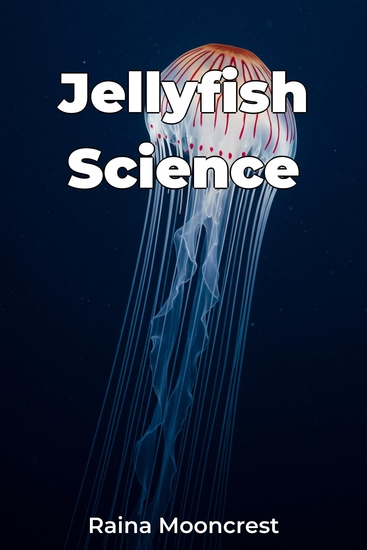
Jellyfish Science - cover

Jellyfish Science

Raina Mooncrest

Translator A AI

Publisher: Publifye

  • 0
  • 0
  • 0

Summary

Jellyfish Science explores the fascinating biology of jellyfish, creatures that capture our attention with their beauty and intrigue with their unique adaptations. The book delves into three core aspects: the powerful stinging mechanisms of nematocysts, which deliver toxins, the captivating phenomenon of bioluminescence used for defense and communication, and the remarkable regenerative abilities of some species, even hinting at biological immortality. Understanding these biological systems offers insights into marine life and potential innovations for medicine and materials science.

 
Beginning with a foundation in marine biology and evolutionary history, the book progresses through the intricacies of jellyfish biology. It dissects the nematocysts and their potential pharmaceutical applications, explores the chemistry and uses of bioluminescence in bioimaging, and examines the unusual life cycles that could influence aging research. Supported by scientific literature, experimental data, and genomic analyses, Jellyfish Science reveals how these seemingly simple organisms possess sophisticated biological systems with far-reaching implications.

 
This book uniquely combines a comprehensive overview of current knowledge with emerging research areas. By adopting a conversational and engaging approach, Jellyfish Science makes complex scientific concepts accessible to a broad audience interested in marine biology, evolutionary biology, and the life sciences, highlighting the potential of these gelatinous creatures.
Available since: 03/05/2025.
Print length: 65 pages.

Other books that might interest you

  • Lean Principles - Achieving Excellence in Efficiency and Innovation - cover

    Lean Principles - Achieving...

    Simon Winston

    • 0
    • 0
    • 0
    In a world where efficiency and innovation are paramount, Lean Principles have emerged as the guiding light for organizations seeking to thrive. This book, "Lean Principles: Achieving Excellence in Efficiency and Innovation," takes you on a transformative journey into the heart of Lean thinking, equipping you with the knowledge and tools to revolutionize your business, whether it's in manufacturing, services, healthcare, IT, or beyond. 
    Inside, you'll find: 
    · Practical Guidance: Navigate the Five Principles of Lean and an array of essential tools and techniques to eliminate waste and boost efficiency. 
    · Real-World Applications: Explore how Lean principles can be tailored to suit manufacturing, services, healthcare, software development, and IT, with case studies that illustrate their transformative impact. 
    · Leadership and Culture: Understand the critical role of leadership in fostering a Lean culture, and learn how to inspire and engage your workforce in the Lean journey. 
    · Measuring Success: Discover how to track and evaluate your Lean initiatives using key performance indicators (KPIs) and balanced scorecards. 
    · Future-Forward Thinking: Explore the intersection of Lean with digital transformation, sustainability, and innovation, ensuring your organization remains agile and adaptable. 
    Prepare to embark on a Lean journey that will revolutionize the way you do business, empower your teams, and position your organization at the forefront of a rapidly evolving world. The future belongs to those who embrace Lean principles—join them on this transformative adventure today! 
     
    Show book
  • AI Dystopian Apocalypse - Navigating Joblessness and The End of Employment as We Know It - cover

    AI Dystopian Apocalypse -...

    Robert Enochs

    • 0
    • 0
    • 0
    This visionary work encourages readers to prepare for an AI-dominated world and actively shape a future where technology and humanity coexist harmoniously. In an era where the future of the human workforce is uncertain, this dystopian nonfiction book stands as a beacon of hope and a guide for those willing to understand and adapt. Join us in exploring the labyrinth of challenges and opportunities that lie ahead. The future is not just coming; it's already here. Are you ready? 
    This new nonfiction book is not just a fast read; it's an urgent call to understand and adapt to the tidal wave of change propelled by AI's relentless advance that may force many of us onto a Universal Basic Income as millions are displaced in the job markets or find ourselves searching for other types of self-employment. 
    Embark on a journey through time with The Age of AI (unveiling the layers of this new world), from its sudden emergence to its exponential growth in 2024. Witness industries crumble in The AI Job Apocalypse, understand the personal toll through harrowing Human Cost stories, and confront the stark realities of wealth and power dynamics in The Economics of AI. Each chapter weaves a compelling and unnerving narrative in the realm of automation displacement, revealing the facets of a future fraught with challenges. 
    But your career path doesn’t have to be all doom and gloom. In AI Dystopian Apocalypse, discover the silver linings and innovative career solutions emerging from the ashes of traditional employment. From global movements battling AI displacement in Resisting the Inevitable to groundbreaking strategies in Building a New Society, learn how humanity is surviving and attempting to flourish.
    Show book
  • Life After Lyme Healed With Bee Venom Your Resource Guide - cover

    Life After Lyme Healed With Bee...

    Mindy Giles

    • 0
    • 0
    • 0
    In Life After Lyme Healed with Bee Venom Your Resource Guide, Mindy shares her deeply personal journey of overcoming chronic Lyme disease through an unconventional yet transformative path to healing. This inspiring memoir and resource guide offers hope to those seeking alternative therapies and a deeper understanding of the body’s innate ability to recover. 
    Through the ancient practice of Bee Venom Therapy, Mindy broke free from Lyme’s relentless grip. Her story is one of resilience, courage, and the unwavering power of belief. Drawing from extensive research and personal experience, she provides a comprehensive guide to natural wellness, including mitochondrial support, oxygen cycling, grounding, and more. 
    Packed with nearly 400 references, practical advice, and heartfelt poetry, Life After Lyme is an invaluable companion for anyone navigating the challenges of chronic illness. Whether you’re battling Lyme disease, chronic fatigue, or simply seeking to optimize your health, this book equips you with the knowledge and inspiration to reclaim your well-being. 
    Discover the transformative power of nature, the profound impact of belief, and the healing potential of simple yet effective therapies. Let Mindy’s story empower you to embrace life after Lyme and unlock the vibrant health you deserve.
    Show book
  • I survived psychiatry - cover

    I survived psychiatry

    Christelle Rosar, Martine...

    • 0
    • 0
    • 0
    1.8 million people are directly affected by psychiatry in France. 350,000 are in hospital. For every 1,000 inhabitants, there is one compulsory hospitalization. Yet this system, which generates social exclusion and stigmatization, dominates. Admitted at the age of 16, Christelle Rosar was hospitalized for twenty years. They tied her down, injected her with drugs, and kept her in a vegetative state. She saw patients who remained in hospital from adolescence until their death, and others who gradually suffered the side effects of the treatments. Now free, she tells us about her struggles to regain her independence and her place in society, and denounces the abuses and failings of the French psychiatric system, which is particularly violent.
    Show book
  • The New World on Mars - What We Can Create on the Red Planet - cover

    The New World on Mars - What We...

    Robert Zubrin

    • 0
    • 0
    • 0
    When Robert Zubrin published his classic book The Case for Mars a quarter century ago, setting foot on the Red Planet seemed a fantasy. Today, manned exploration is certain, and as Zubrin affirms in The New World on Mars, so too is colonization. 


    We will settle on Mars, and with our knowledge of the planet, analyzed in depth by Dr. Zubrin, we will utilize the resources and tackle the challenges that await us. What we will we build? Populous Martian city-states producing air, water, food, power, and more. Zubrin's Martian economy will pay for necessary imports and generate income from varied enterprises, such as real estate sales—homes that are airtight and protect against cosmic space radiation, with fish-farm aquariums positioned overhead, letting in sunlight and blocking cosmic rays while providing fascinating views. Zubrin even predicts the Red Planet customs, social relations, and government that will overcome traditional forms of oppression to draw Earth immigrants. 


    With all of this in place, Zubrin's Red Planet will become a pressure cooker for invention, benefiting humans on Earth, Mars, and beyond. We can create this magnificent future, making life better, less fatalistic. The New World on Mars proves that there is no point killing each other over provinces and limited resources when, together, we can create planets.
    Show book
  • Africulture - How the Principles Practices Plants and People of African Descent Have Shaped American Agriculture - cover

    Africulture - How the Principles...

    Michael Carter Jr.

    • 0
    • 0
    • 0
    "Africulture is a gift and inspiration."—Michael W. Twitty, author of the James Beard Foundation Award-winning The Cooking Gene 
     
    A bold, timely history illuminating the essential contributions to U.S. agriculture arising from the expertise and innovations of Black men and women. 
     
    In Africulture, fifth-generation family farmer Michael Carter, Jr. has blended an eclectic brew of history, culture, African-centered perspectives, and African American farm realities. Throughout, he includes inspiring stories of innovators as well as sobering facts tracking the severe decline in the number of Black farmers in the United States over the last century. Descriptions of tropical crops that Carter grows, from jute to Nigerian spinach, enliven the text, as do anecdotes from his compelling family history and profiles of contemporary Black farmers and activists. Drawing on the lifecycle of a plant as a metaphor for both individual growth and the larger story of African American farming, Carter evokes the relationship between soil health (metaphorically, society and community) and plant health (i.e., the ability of Black farmers and families to thrive). 
     
    Africulture also includes Carter’s heartfelt reflections on the cycles of progress and backsliding—what he calls “blacklash”—that are an inescapable part of the history of Black people in the United States, in agriculture and beyond. In the present moment, when the civil rights gains and progress toward economic parity for Black Americans of the past fifty years may be slipping away, Carter offers the possibility of a better future through several foundational principles of Africulture. 
     
    Destined to surprise, challenge, and enrich, Africulture lays bare the undeniable revelation that without African expertise and innovation, American agriculture—and America itself—would not exist. 
     
    “The ancestors are undoubtedly shaking their tambourines in celebration of Africulture...[it] provides a blueprint for the blossoming of an agriculture rooted in cultural memory, ecological care, and mutual thriving.”—Leah Penniman, cofounder, Soul Fire Farm; author of Farming While Black
    Show book