Rejoignez-nous pour un voyage dans le monde des livres!
Ajouter ce livre à l'électronique
Grey
Ecrivez un nouveau commentaire Default profile 50px
Grey
Abonnez-vous pour lire le livre complet ou lisez les premières pages gratuitement!
All characters reduced
The Greatest Sea Adventure Novels: 30+ Maritime Novels Pirate Tales & Seafaring Stories - The Coral Island Fighting the Whales Sunk at Sea The Pirate City Under the Waves… - cover

The Greatest Sea Adventure Novels: 30+ Maritime Novels Pirate Tales & Seafaring Stories - The Coral Island Fighting the Whales Sunk at Sea The Pirate City Under the Waves…

R. M. Ballantyne

Maison d'édition: DigiCat

  • 0
  • 0
  • 0

Synopsis

In "The Greatest Sea Adventure Novels: 30+ Maritime Novels, Pirate Tales & Seafaring Stories," R. M. Ballantyne compiles an enthralling array of maritime literature that captures the romantic allure and peril of the sea. Each tale, rich in vivid imagery and adventurous spirit, engages readers with tales ranging from swashbuckling pirates to brave explorers navigating treacherous waters. Ballantyne's signature style melds suspenseful storytelling with meticulous attention to nautical detail, all while weaving thematic elements of bravery, survival, and the moral complexities of piracy, inviting readers to immerse themselves in an eclectic maritime tapestry grounded in its Victorian literary context. R. M. Ballantyne, a Scottish author and adventurer, dedicated his life to recounting his experiences on the high seas, which profoundly influenced his narrative craft. His firsthand knowledge of maritime life alongside his passion for exploration is evident in this collection, as he illustrates the richness of the seafaring world with authenticity. Ballantyne's historical and geographical insights reveal the broader cultural fascination with the ocean that characterized the 19th century, making this collection significant not only for its stories but for its reflection of societal values and adventurous dreams. This compilation serves as a vital contribution to both maritime literature and adventure storytelling, appealing to readers of all ages. Whether you're a seasoned sailor at heart or an armchair explorer, Ballantyne's exquisite selection provides an enthralling journey through the uncharted depths of human experience and the vast oceans, making it a must-read for anyone longing for adventure and discovery.
Disponible depuis: 14/11/2023.
Longueur d'impression: 5753 pages.

D'autres livres qui pourraient vous intéresser

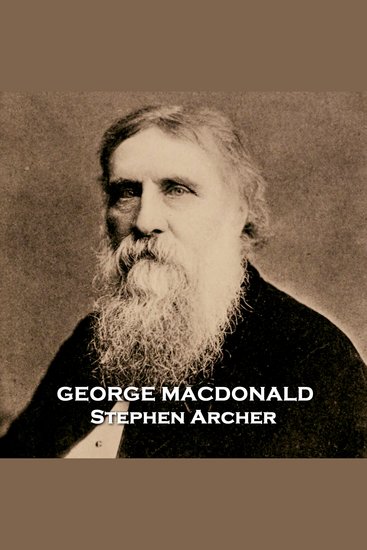
  • Stephen Archer - From their pens to your ears genius in every story - cover

    Stephen Archer - From their pens...

    George Macdonald

    • 0
    • 0
    • 0
    George MacDonald was born on December 10th 1824 at Huntly, Aberdeenshire, Scotland.  
    The MacDonald family had proud and long historical roots. His father, was a farmer, was a direct descendant of one of the families that suffered in the infamous massacre of 1692 when the Campbells set upon the MacDonalds. 
    George grew up with the Congregational Church, with its atmosphere of Calvinism to which George never really attached himself. A story often told is that the young George on hearing that life was already mapped out and pre-destined burst into tears and was only comforted by the re-assurance that he was one of the elect. 
    When he was only 8, his mother Helen died. His father re-married 7 years later in 1839. The next year George was successful in obtaining a bursary to study at King’s College in Aberdeen and from which he also received his M.A.  
    In 1846 George was first published, anonymously, but his poem was there in print in the Scottish Congregational Magazine. 
    In 1848 he attended Highbury Theological College to study for the Congregational ministry.  That same year he became engaged to Louisa Powell. An enduring relationship that would see them as life long companions coupled with a marriage of over fifty years. 
    By 1850 George was appointed as the pastor of Trinity Congregational Church in Arundel. His sermons were however sometimes at odds with the Church and their more segmented views.  
    It is also at this time that George’s health becomes a major concern.  In November he suffered what would be termed ‘a severe haemorrhage’.  However Louisa was by his side and her support and nursing ensured his recovery. 
    On March 8th 1851 George and Louisa married.  As a Christmas gift to friends later that year he had printed his translation of Twelve of the Spiritual Songs of Novalis. 
    The year of 1852 started on a very bright note with the birth of his daughter on January 4th – Lilia.  
    Meanwhile George preached that with God’s universal love and the possibility that none would, ultimately, fail to unite with God were deemed to be almost heretical by the Church elders and as a punishment his salary was cut in half in June of 1852. 
    In May 1853 George could no longer reconcile with the Church’s demands and he resigned from the pulpit. Interestingly in his later novels, such as Robert Falconer and Lilith, there is common theme for distaste at the idea that God's electing love is limited to some and denied to others running through. 
    Happier news for 1853 was the birth of his daughter Mary Josephine born on July 23rd. 
    And with this the family decided to move to Manchester where he continued his ministerial work but his health again deteriorated. Another daughter, Caroline Grace was born on September 16th 1854.  In 1855 his collection of poems ‘Within and Without’ was published.  
    On 20th January 1856 his son Greville was born. The year brought further good news when Lady Byron decided to become his patron. However his health once more deteriorated and the family moved to Algiers to recuperate over the winter. 
    The following spring he was back in London and teaching at the University of London. 
    On August 31st 1857 a fourth daughter, Irene, was born and the family decided to settle in Hastings. 
    1858 brought bitter sweet times. His brother and Father both died but another daughter, Winifrid Louisa was born and his classic work ‘Phantastes’ was published. 
    The following year, 1859, George returned again to London and became the Professor of English Literature at Bedford College. 
    The following few years brought several more children into the ever growing family and a growing literary reputation. 
    In 1869 George accepted the editorship of Good Words for the Young and embarked on a lecture tour of Scotland. 
    In 1871 ‘At the Back of the North Wind’ was published followed by such other classics as Wilfrid Cumbermede, The Princess and the Goblin and in 1876, Exotics. 
    In 1877 came the beginning of a new chapter in
    Voir livre
  • The Serial Wife - For Better or Worse - cover

    The Serial Wife - For Better or...

    N'Tyse, Anna J.

    • 0
    • 0
    • 0
    Bestselling authors N'Tyse (Twisted Seduction) and Anna J. (My Woman His Wife) present a double dose of insanity in their latest collaboration, The Serial Wife, resurrecting the home-wrecking hellraiser of them all. 
     
    Many have claimed they would die for what they want?but would they kill? Hollywood, California, and far away from anything and everyone who knows her name is the strikingly beautiful Monica Tyler, living life incognito and on her  
    terms. That's until Justin enters her world and shakes it to the core. He's the perfect find, but there's one condition?he wants an heir to the Shields' throne. Just when Monica thought her scandalous days were behind her, she whips out  
    her old bag of tricks. How far will she go to prove her love, again?
    Voir livre
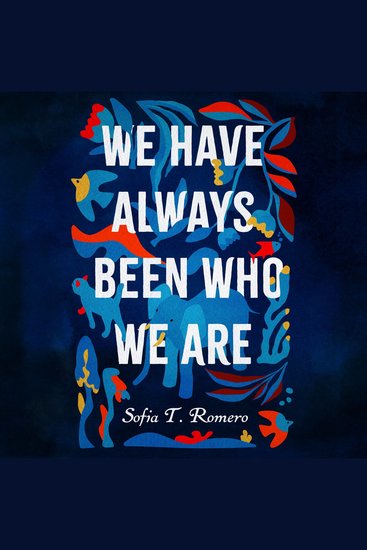
  • We Have Always Been Who We Are - cover

    We Have Always Been Who We Are

    Sofia T. Romero

    • 0
    • 0
    • 0
    From Pushcart Prize–nominated author Sofia T. Romero comes a breathtaking debut collection of interrelated stories suffused with magical realism. 
    In stories that evoke the haunting beauty of New England beaches and resonate with a bittersweet loneliness, Romero blurs the lines between life and death, reality and fantasy. A deceased woman counsels her son’s fiancée on how to be a good wife to him, with disastrous consequences. A mysterious, commanding cat appears in a young woman’s home, as inexplicable as the demise of her years-long relationship with her boyfriend. At turns humorous, sorrowful, and whimsical, this collection spans the familiar setting of a college-town supermarket and eerie dystopias that are not just postpandemic but postart. Romero masterfully conveys the follies of youth and the regrets of life, and a sense of loss—of a relationship, a child, a time before—pervades each page. 
    With this remarkable debut, Romero joins the ranks of writers such as Brenda Peynado and Marytza K. Rubio, offering a superb collection of speculative fiction with a distinctly Latina perspective. We Have Always Been Who We Are is at its heart a testament to the power of storytelling, and an invitation to develop our inner strength through the imagination.
    Voir livre
  • Devereux's Last Smoke - From their pens to your ears genius in every story - cover

    Devereux's Last Smoke - From...

    Izola Forrester

    • 0
    • 0
    • 0
    The bookshelves of American literature are incredible collections that have gathered together centuries of very talented authors.  From this continent their fame spread and whilst among their number many are now forgotten or neglected their talents endure.  Among them is Izola Forrester.
    Voir livre
  • A Lesson on a Tortoise - From their pens to your ears genius in every story - cover

    A Lesson on a Tortoise - From...

    D H Lawrence

    • 0
    • 0
    • 0
    David Herbert Lawrence was born on the 11th September 1885 in Eastwood, Nottinghamshire, a coal mining town where the reality of a harsh life was only useful as experiences for future literary works. 
    He was educated at Beauvale Board School and became the first local boy to receive a scholarship to attend Nottingham High School. After 3 years he became a junior clerk in Haywood’s surgical appliances factory. He was also attempting a literary career which, in the short term, led to a teacher training position in Eastwood and later a teaching qualification from University College, Nottingham.  
    Lawrence’s first efforts were poems, short stories and a draft of ‘The White Peacock’. Moving to London and a teaching position in Croydon his writing attracted the attention of Ford Madox Ford, editor of The English Review, and he commissioned him to write ‘Odour of Chrysanthemums’.  
    Wanting to write full-time he now began work on what would become ‘Sons and Lovers.   
    In 1912 he met the older and married mother-of-three Frieda Weekley. They eloped to Germany and here Lawrence could see for himself the growing tensions with France.  So keen was his interest that he was arrested and accused of being a British spy.  
    In early 1914 Frieda obtained her divorce and they returned to Britain to be married just days before the outbreak of war. Owing to her German parentage, and his own public dislike of militarism and violence, the couple were treated with contempt and suspicion throughout the war years.  
    Despite this he continued to write but his reputation in England was so tarnished and, mirrored by his own disdain for the country, he and Frieda left England in November 1919, first for Europe and then America via Ceylon and Australia. 
    They bought a ranch in Taos, New Mexico and visited Mexico several times. The third visit in March 1925 caused a near fatal attack of malaria. To convalesce they moved to Florence. Here he continued work on ‘Lady Chatterley’s Lover’ which for many years would cause controversy. A renewed interest in oil painting resulted in an exhibition in 1929 which was raided by the police and several works were confiscated.  
    D H Lawrence died of complications arising from a bout of tuberculosis on the 2nd of March 1930 in Vence, France.  He was 44.
    Voir livre
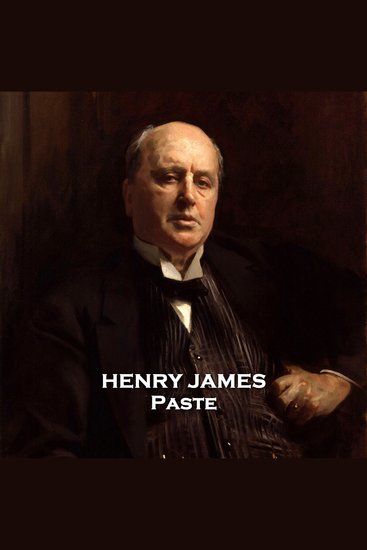
  • Paste - From their pens to your ears genius in every story - cover

    Paste - From their pens to your...

    Henry James

    • 0
    • 0
    • 0
    Henry James was born 15th April 1843 in New York City. 
    His youth was spent travelling with his family receiving what was an "extraordinarily haphazard and promiscuous" education as they journeyed through London, Paris, Geneva, Boulogne-sur-Mer and Newport, Rhode Island, according to the father's current interests and publishing ventures. James studied primarily with tutors and only briefly attended schools.    
    Undoubtedly the quality of his writing has ensured his name is enshrined in the American literary tradition.  
    James was a committed Anglophile and spent most of his adult life as an expatriate in Europe.  Many of his novels juxtapose the Old World with the New World. Classics such as ‘The Portrait of a Lady’, ‘Daisy Miller’ and ‘The Ambassadors’, display the entanglement between American and European cultures and mentalities. They highlight the differences between the two worlds through following the experiences of American expatriates in Europe.  
    A prolific author he was able to easily move across genres to create vivid and totally real worlds and situations and to offer sophisticated observations of human relations as well as realistic, social criticism.  
    As a critic James was unafraid to venture into reviews and essays of those other literary giants around him.  These together with his short stories and, of course, classic novels, make Henry James an author to be not only admired but read, and read often.  
    In 1915 Henry James became a British citizen. 
    On 28th February 1916, at the age of 72, Henry James died in Chelsea, London. 
    He was nominated for the Nobel Prize in Literature in 1911, 1912 and 1916. He never won.
    Voir livre