Rejoignez-nous pour un voyage dans le monde des livres!
Ajouter ce livre à l'électronique
Grey
Ecrivez un nouveau commentaire Default profile 50px
Grey
Abonnez-vous pour lire le livre complet ou lisez les premières pages gratuitement!
All characters reduced
The Complete Works Novels Plays Stories Ideas and Writings of Songling Pu - cover

The Complete Works Novels Plays Stories Ideas and Writings of Songling Pu

Pu Songling

Maison d'édition: ICTS

  • 0
  • 0
  • 0

Synopsis

The Complete Works, Novels, Plays, Stories, Ideas, and Writings of Songling Pu

This Complete Collection includes the following titles:
--------
1 - Strange Stories from a Chinese Studio (Volumes I and II)
2 - Strange Stories from a Chinese Studio Vol. I (of 2)
3 - Strange Stories from a Chinese Studio vol. II (of 2)
 
Disponible depuis: 22/12/2023.

D'autres livres qui pourraient vous intéresser

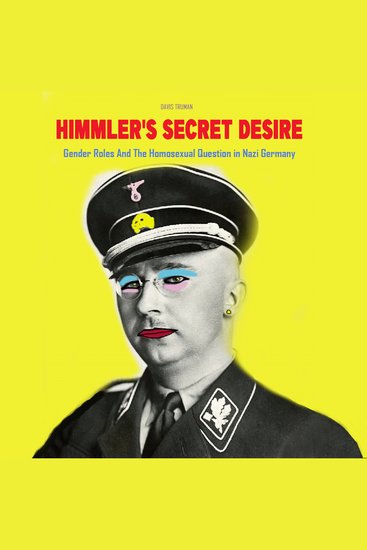
  • Himmler's Secret Desire - Gender Roles And The Homosexual Question in Nazi Germany - cover

    Himmler's Secret Desire - Gender...

    Davis Truman

    • 0
    • 0
    • 0
    In the whirlwind of early 20th-century Germany, Heinrich Himmler grapples with questions of masculinity and identity amidst a society in flux. Denied the opportunity to prove himself in war, Himmler is forced to confront his own biases when faced with the complexities of homosexuality. 
    Coming from a conservative background, Himmler's beliefs clash with the realization that masculinity can manifest in diverse ways, including within the LGBTQ+ community. As he ascends to power, his inner struggle reaches a climax with the notorious Bad Tölz speech of 1937, marking a dark chapter in Nazi history. 
    "Himmler's Secret Desire" delves deep into Himmler's journey, offering insights into Nazi attitudes towards gender and sexuality. It serves as a poignant reminder of the dangers of prejudice and the ongoing pursuit of acceptance and understanding. 
     
    Voir livre
  • Grow - 12 Unconventional Lessons for Becoming an Unstoppable Entrepreneur - cover

    Grow - 12 Unconventional Lessons...

    Mike Fata

    • 0
    • 0
    • 0
    Align people with profits and watch your business thrive 
    Sustainable companies are the ones that turn a profit. But in an ever-evolving world, gearing yourself up for entrepreneurial success means looking beyond the ledger. Because a business isn’t built by financial statements, it’s built by the person in the mirror, for the betterment of society. 
    In Grow: 12 Unconventional Lessons for Becoming an Unstoppable Entrepreneur, Mike Fata details his journey from high-school dropout to successful CEO and how his achievements (and failures), led him to create a guide that will put entrepreneurs on a pathway to success. Spoiler alert: it isn’t a fancy business degree, a high-flying network, or tons of investment capital. 
    By stressing the importance of passion, integrity, and community, these 12 easy-to-follow lessons will highlight how to grow intentionally and build a business that is both authentic to you and relevant to the current landscape. A landscape that values not only the health and well-being of the bank balance, but also of people and the environment. 
    It may seem scary to stray from the conventional business-model, but Fata knows that it is possible to build a sustainable, health-giving business that is also financially viable—because he has done it. And he wants to help you do the same. There is a successful entrepreneur inside everyone. The question is, are you ready to discover yours?"
    Voir livre
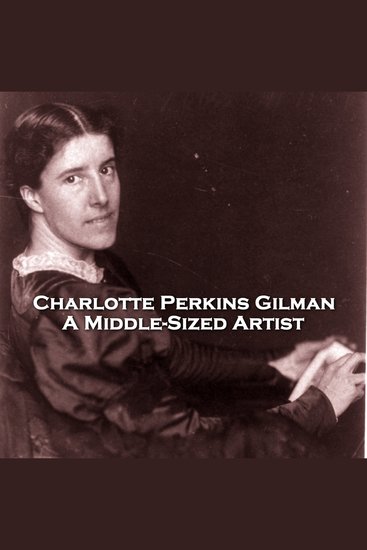
  • A Middle-Sized Artist - From their pens to your ears genius in every story - cover

    A Middle-Sized Artist - From...

    Charlotte Perkins Gilman

    • 0
    • 0
    • 0
    Charlotte Perkins Gilman was born on 3rd July 1860 in Hartford, Connecticut, to an unaffectionate mother and a father who abandoned her and her older brother to a life of poverty. 
    Inevitably her schooling was limited and by 15 she had attended seven different schools but received only four years education.  However Charlotte was resourceful and did spend time with her father’s aunts – the suffragist Isabella Beecher Hooker and the ‘Uncle Tom Cabin’s’ author, Harriet Beecher Stowe as well as many hours at the public library studying ancient civilisations. 
    In 1878, she enrolled in classes at the Rhode Island School of Design where she met Martha Luther and they developed a close relationship until Luther married in 1881. Charlotte was devastated and detested romance and love until she met and married the artist Charles Walter Stetson.  
    Their only child, Katharine Beecher Stetson, was born in 1885 but left Charlotte with post-natal depression, then often dismissed as a case of hysteria or nerves.  Unsuited to domestic life she ruptured her life and moved to California with Katherine.  She divorced in 1894 and then sent Katharine east to live with her father and his second wife confirming that his paternal rights be acknowledged and that Katherine establish a relationship with her father. 
    After her mother died in 1893, Charlotte moved back east and became involved with her first cousin, Wall Street attorney, Houghton Gilman who she married in 1900. After his death she moved back to California, where Katherine now lived.   
    Her most popular story is ‘The Yellow Wallpaper’ which touched on her own post-partum depression and underlined the need for women to be responsible for their mental and physical well-being, as the narrator is ordered by her husband/doctor to take compete rest in her room where she is isolated and becomes obsessed with the revolting yellow wallpaper.   
    She wrote other notable short stories the best of which we also include.   
    Charlotte lectured widely for social reform, wrote important non-fiction works that questioned our patriarchal system and left a legacy as a leading and positive spokesperson for feminism.  
    She was diagnosed with incurable breast cancer in 1932 and, as she wrote in her suicide note and autobiography, she ‘chose chloroform over cancer’    
    Charlotte Perkins Gilman took her own life on 17th August 1935, aged 75, in Pasadena, California.
    Voir livre
  • A Snowflake Named Hannah - Ethics Faith and the First Adoption of a Frozen Embryo - cover

    A Snowflake Named Hannah -...

    John Strege

    • 0
    • 0
    • 0
    The story of John and Marlene Strege, their struggle with infertility, and how God orchestrated something much bigger than their own desire to have children.  From desperation to hope, A Snowflake Named Hannah tells the story of John and Marlene and their daughter Hannah, the first ever adopted frozen embryo.  John, by profession a syndicated sports writer, walks the reader through their life story from personal accounts and meticulous research - how they were a part of starting the Snowflakes Embryo Adoption Program, how they befriended Dr. James Dobson and ended up on his Christian radio program Family Talk, how they found themselves in the fight for preborn life in American Politics during the embryonic stem cell research debate, and how they ended up at the White House more than once during George W. Bush's administration.  John's no nonsense approach to telling their story is both personal and a piece of American political history. It tells their story of how their simple desire to have children, combined with their faith in God, lead them to experience and tell this amazing true-life story.
    Voir livre
  • Georgy Zhukov: The Life and Legacy of the Soviet Union’s Greatest General during World War II - cover

    Georgy Zhukov: The Life and...

    Editors Charles River

    • 0
    • 0
    • 0
    In the warm predawn darkness of June 22, 1941, 3 million men waited along a front hundreds of miles long, stretching from the Baltic coast of Poland to the Balkans. Ahead of them in the darkness lay the Soviet Union, its border guarded by millions of Red Army troops echeloned deep throughout the huge spaces of Russia. This massive gathering of Wehrmacht soldiers from Adolf Hitler's Third Reich and his allied states – notably Hungary and Romania – stood poised to carry out Operation Barbarossa, Hitler's surprise attack against the country of his putative ally, Soviet dictator Joseph Stalin.  
    Of the Soviet generals, none played as crucial a role in the war as Georgy Konstantinovich Zhukov, one of the most highly decorated army officers in Russian military history. At critical stages during the Second World War, it seemed as if it was Zhukov alone who stood between Russian defeat and German victory. Zhukov was ultimately involved in all the major battles on the Eastern Front, including Moscow, Leningrad, Stalingrad, Kursk, Bagration, and the final assaults into Poland and Germany to capture Berlin.  
    Stalin came to depend on Zhukov’s ruthless military skills for victory, but in the cut-throat Soviet Union, that was always a double-edged sword, because it seemed that Stalin envied Zhukov and feared him as well. Zhukov, who could be as aggressive and blunt as Stalin, was one of the few people prepared to stand up to the Soviet dictator and argue with him, and as many Soviet politicians and generals learned to their detriment, going toe to toe with one of the most brutal leaders of the 20th century was a highly risky venture. However, the mutual understanding they forged as they confronted the Germans may have played the biggest role in Hitler’s demise. 
    Voir livre
  • Writing - Articles Blog Posts EBooks Messages And PLR - cover

    Writing - Articles Blog Posts...

    Owen Jones

    • 0
    • 0
    • 0
    I hope that you will find the information helpful, useful and profitable. 
    More people are writing now than at any time in the history of civilisation. This is mainly down to education and more free time. The generation of the parents of the Baby Boomers was the first generation of mass readers – certainly in the West, and probably globally. Their parents could read, usually, but had no tradition of reading books. Instead, they read mostly newspapers. Their children had a better education, and picked up the reading habit from their parents. They were also encouraged to read books at school. The first generation where this happened. 
    Their children, the post World War II Baby Boomers, continued the progression and became avid readers. In those days, not so long ago, say, between seventy and thirty years ago, people wrote letters by hand. It was a long, but very pleasant, personal experience. Then the home computer, email, and the Internet began to spread among the masses, and pen and ink gradually became replaced with message boards, posting to forums and email. 
    Before this point, writing had been a special event for most people... thank you letters, postcards, birthday cards, and the odd personal letter home or to a friend. The home computer made it easy to dash off a quick note to someone. It took far less time to write and deliver, or have delivered by the post office. Suddenly, everyone began writing and posting to family, friends, strangers and even enemies. A barrier had been lifted – barriers of time and formality, perhaps. 
    A high percentage of those Boomers, compared with other generations, have gone on to write some kind of book, or ebook. So, the Boomers are the first generation of working-class writers, and their parents were the first working-class generation of readers.
    Voir livre