Begleiten Sie uns auf eine literarische Weltreise!
Buch zum Bücherregal hinzufügen
Grey
Einen neuen Kommentar schreiben Default profile 50px
Grey
Jetzt das ganze Buch im Abo oder die ersten Seiten gratis lesen!
All characters reduced
CTET Paper 2 Class VI to VIII Social Science - cover

CTET Paper 2 Class VI to VIII Social Science

Priti Singhal

Verlag: Poorav Publications

  • 0
  • 0
  • 0

Beschreibung

Welcome to the CTET Paper 2 Class VI to VIII Social Science Book! Teaching is a journey of learning, discovery, and personal growth. This book is designed to support you on that journey as you prepare for the Central Teacher Eligibility Test (CTET). Whether you are an aspiring educator or looking to enhance your knowledge, this book will equip you with essential concepts, strategies, and insights to excel in the exam and in your future teaching career. Our goal is to make your learning experience meaningful and effective. Each chapter in this book has been carefully crafted to engage both your curiosity and critical thinking, covering core topics essential for the CTET exam. Along the way, you will find opportunities to reflect on best practices in education, the role of teachers in shaping society, and the importance of fostering an inclusive and supportive learning environment.
Verfügbar seit: 13.11.2024.
Drucklänge: 36 Seiten.


Weitere Bücher, die Sie mögen werden

  • University - A Reckoning - cover

    University - A Reckoning

    Lee C. Bollinger

    • 0
    • 0
    • 0
    The American university―one of the most successful institutions in human history―is facing an unprecedented assault from the president of the US. Experts on authoritarianism have drawn comparisons to other countries where strongmen subdued universities as part of their power grabs. Yet as former Columbia president Lee C. Bollinger points out in his account of the university's significance, in such dire times one has no choice but to state clearly and forcefully what one stands for. 
     
    Bollinger reveals how the structure of the university contributes to the success of the American system―because it provides those who study and work within it a degree of creative freedom hard to find elsewhere―and why that structure is both impossible to recreate and vulnerable to outside attack. The fundamental mission of the university is to enhance knowledge, but this is not merely a high-minded idea. It is, as Bollinger demonstrates, a notion rooted deeply in the Constitution, specifically the First Amendment, the basis of our political and social life. The university helps realize the First Amendment; the First Amendment helps make the university. Bollinger argues that, with the press diminished, the university remains the only source of truth-seeking for those who still believe in democracy. The university must be defended if the American experiment is to continue.
    Zum Buch
  • The American Revolution - War for independence The Founding Fathers and their Role in the Birth of a Nation - cover

    The American Revolution - War...

    History Retold

    • 0
    • 0
    • 0
    Curious about the influential figures who shaped the American Revolution? 
    Ready to Uncover the Lasting Legacy and Lessons of this Pivotal moment in History? 
    If so, this book is for you! 
    Step onto the battlefield of history and relive the pulse-pounding saga of the American Revolution. Feel the adrenaline of rebellion surging through your veins, witness the birth of a nation amid thunderous clashes, and become one with the unyielding courage that ignited a seismic shift. This masterfully forged tome thrusts you into the midst of bone-rattling warfare, where battles roar, leaders charge, and the very spirit of the United States takes shape. 
    Plunge into narratives that surge like a roaring tide. Let captivating insights pierce through the smoke of conflict, casting light on this pivotal juncture. Whether you're a fervent history warrior or an intrepid seeker of knowledge, this volume is your ticket to a realm where determination carves destinies. 
    Together we will explore:Colonial Grievances and TaxationBoston Tea Party, Intolerable ActsContinental Congress, Declaration of IndependenceRevolutionary War, BattlesTreaty of Paris 1783: IndependenceConstitution Drafting, New GovernmentBill of Rights: FreedomsBirth of the United StatesThe founding fathersAnd much more! 
    Unearth the very foundations of a nation—seize your copy now and embark on a relentless expedition through the monumental narrative that forged America's indomitable identity. 
    Scroll up and get your copy now!
    Zum Buch
  • Southern Song Dynasty - Art Culture and Survival in a Fragmented China - cover

    Southern Song Dynasty - Art...

    Rolf Hedger

    • 0
    • 0
    • 0
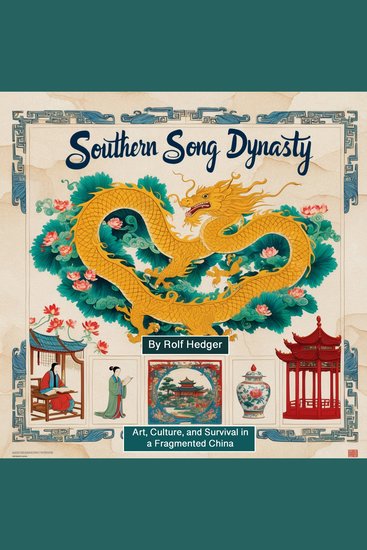
    The Southern Song Dynasty emerged in 1127 after the fall of the Northern Song to the Jurchen-led Jin Dynasty. This period marked a time of resilience, adaptation, and cultural flourishing, despite ongoing threats from external forces. The dynasty’s establishment in the southern region of China reshaped political, economic, and artistic developments that would leave a lasting impact on Chinese history. 
    Following the invasion of the Jin forces, the Song court was forced to abandon its northern capital, Kaifeng. The remnants of the ruling family, led by Emperor Gaozong, retreated southward, eventually establishing a new capital in Lin’an (modern-day Hangzhou). This move signified not only a geographical shift but also a fundamental transformation in governance and strategy. Without control over the traditional heartland of Chinese civilization, the Southern Song had to develop new approaches to survival and stability. The dynasty focused on strengthening its bureaucracy, relying on a sophisticated civil service system that emphasized merit and Confucian ideals. Unlike the Northern Song, which had struggled with military weaknesses, the Southern Song sought to bolster its defenses by investing in naval power and fortifications along the Yangtze River. 
    The loss of northern territories meant that the Southern Song had to rely heavily on its southern provinces, which were rich in agricultural resources and well-positioned for trade. The economy shifted toward maritime commerce, with ports such as Quanzhou and Guangzhou becoming vital centers for international trade. Merchants expanded connections with Southeast Asia, India, and the Middle East, ensuring a steady flow of goods, wealth, and cultural exchanges. This economic shift allowed the Southern Song to sustain itself despite territorial losses and military pressures from the Jin and, later, the Mongols.
    Zum Buch
  • Planes Trains and Toilet Doors: 50 Places That Changed British Politics - cover

    Planes Trains and Toilet Doors:...

    Matt Chorley

    • 0
    • 0
    • 0
    ‘’F *** ing brilliant. I would describe it as like a bag of political nuts – moreish and fabulously salty’ JOE LYCETT  
    A TIMES BOOK OF THE YEAR 
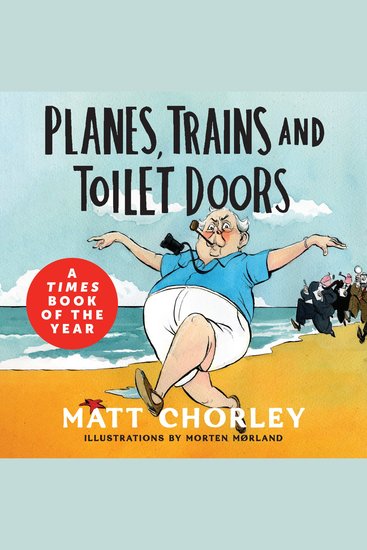
    Planes, Trains and Toilet Doors is an entertaining and original romp through the highs and lows of British political history and the unlikely locations that have decided our national fate. 
    Forget Westminster bust-ups and PMQs, some of the key events that have shaped modern British politics happened not in the cloisters of parliament or Downing Street’s many corridors of power, but in car parks, village halls and seaside resorts where the mundane have played host to the mighty. From Pitt the Younger’s Putney Heath duel to finding Margaret Thatcher a voice coach on a train, Harold Wilson’s ‘Scilly’ season holidays to John Major’s dental appointment clearing his path to No10 – these (and many more) are the places where chance meetings, untimely deaths and snap, sometimes daft, decisions changed the course of politics. 
    Matt Chorley has spent almost two decades covering Westminster, interviewing prime ministers, mocking ministers and chronicling the serious, and sometimes unintentionally absurd, events which act as unlikely turning points in the direction of a nation. Illustrated by award-winning political cartoonist Morten Morland, Planes, Trains and Toilet Doors combines Matt’s insider-knowledge, smart analysis and detailed research with his background in comedy to create an hilarious history of how politics actually happens. 
    Planes, Trains and Toilet Doors by Matt Chorley is a humorous and insightful commentary on the unexpected events and locations that have shaped Britain's political landscape. This non-fiction biography, which spans from the 21st century to the times of Pitt the Younger, is a top pick for anyone interested in the often absurd process of politics. 
    For fans of Rory Stewart (The Places In Between), David Kynaston (A Northern Wind), Chris Bryant (Code of Conduct), Tom Holland (Athelstan), and Wes Streeting (One Boy, Two Bills and a Fry Up). 
    HarperCollins 2023
    Zum Buch
  • The Second Coming of Napoleon - What If France Had Won at Waterloo? - cover

    The Second Coming of Napoleon -...

    Marcus Draysun

    • 0
    • 0
    • 0
    The Battle of Waterloo, fought on June 18, 1815, is widely regarded as one of history’s most decisive conflicts. It marked the end of Napoleon Bonaparte’s reign and the beginning of a new European order. However, had the battle played out differently—had Napoleon emerged victorious—France and the world would have been set on an entirely new course. 
    A French victory at Waterloo was not an impossibility. Napoleon, despite being outnumbered, was still a military genius who had orchestrated countless triumphs before. His strategy depended on dividing and defeating the Anglo-Allied and Prussian forces separately before they could fully unite. For much of the battle, the French had the upper hand, with their artillery hammering British lines and their cavalry sowing chaos among enemy ranks. 
    One key turning point was the delayed arrival of Marshal Grouchy and his troops. Had Grouchy pursued and effectively neutralized the Prussian forces under Blücher, Napoleon would have been able to concentrate his full strength on Wellington’s forces, likely forcing them into retreat. With the British lines collapsing and no reinforcements arriving, the battlefield could have been transformed from a site of French defeat into one of Napoleon’s most remarkable victories.
    Zum Buch
  • Daily Life in Ancient Egypt - Society Culture and Customs - cover

    Daily Life in Ancient Egypt -...

    Omar Khalil

    • 0
    • 0
    • 0
    Ancient Egyptian society was highly structured, with a rigid hierarchy that defined people’s roles and responsibilities. At the top of this social order was the pharaoh, considered both a political ruler and a divine figure. Below the pharaoh were the nobility and officials who managed the kingdom’s affairs. The middle class consisted of scribes, artisans, and merchants, while the majority of the population comprised farmers, laborers, and slaves. Each social group played a crucial role in maintaining Egypt’s stability and prosperity. 
    The pharaoh was the central authority in Egypt, believed to be the living embodiment of a god. His rule was absolute, and his primary duty was to maintain ma’at, the divine balance of order and justice. He oversaw military campaigns, religious ceremonies, and massive building projects, including temples and pyramids. The royal court and government officials assisted the pharaoh in administration. These officials, often chosen from the nobility, held positions such as viziers, tax collectors, and governors, ensuring the kingdom functioned efficiently. 
    Scribes, artisans, and merchants formed the middle class, contributing to Egypt’s economy and culture. Scribes were essential for maintaining records, writing official documents, and preserving religious texts. Their education was rigorous, requiring years of training in hieroglyphic writing. Artisans, including sculptors, painters, and metalworkers, created the intricate decorations found in tombs and temples. Merchants facilitated trade both within Egypt and with foreign lands, bringing valuable goods such as gold, spices, and precious stones. Although they did not hold political power, the middle class enjoyed a stable livelihood and social respect.
    Zum Buch