Rejoignez-nous pour un voyage dans le monde des livres!
Ajouter ce livre à l'électronique
Grey
Ecrivez un nouveau commentaire Default profile 50px
Grey
Abonnez-vous pour lire le livre complet ou lisez les premières pages gratuitement!
All characters reduced
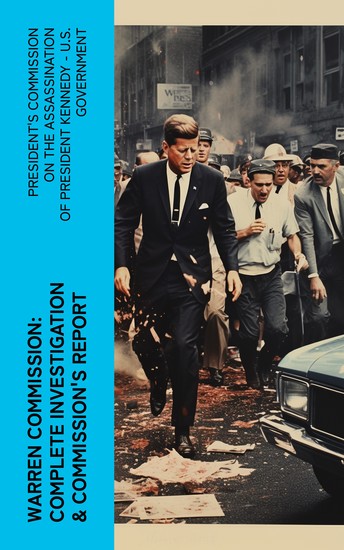
Warren Commission: Complete Investigation & Commission's Report - 552 Testimonies Regarding All the Circumstances of JFK's Assassination - cover

Warren Commission: Complete Investigation & Commission's Report - 552 Testimonies Regarding All the Circumstances of JFK's Assassination

President's Commission on the Assassination of President Kennedy U.S. Government

Maison d'édition: e-artnow

  • 0
  • 0
  • 0

Synopsis

The President's Commission on the Assassination of President Kennedy, known unofficially as the Warren Commission, was established by President Lyndon B. Johnson through Executive Order 11130 on November 29, 1963 to investigate the assassination of United States President John F. Kennedy that had taken place on November 22, 1963.  This book includes the Commission's report, which was based on the investigation, as well as all the supporting documents collected during the investigation, and the testimony or depositions of 552 witnesses.
Disponible depuis: 20/11/2023.
Longueur d'impression: 10367 pages.

D'autres livres qui pourraient vous intéresser

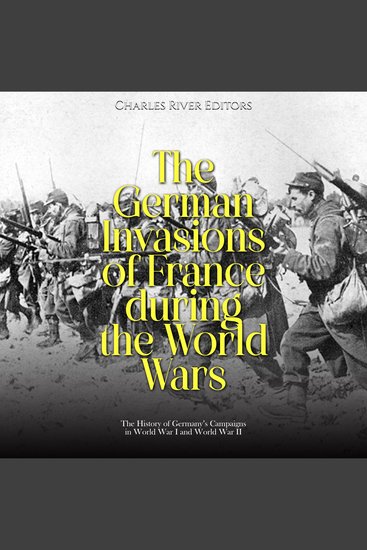
  • German Invasions of France during the World Wars The: The History of Germany’s Campaigns in World War I and World War II - cover

    German Invasions of France...

    Editors Charles River

    • 0
    • 0
    • 0
    If trench warfare was an inevitability during the war, it is only because the events leading up to the First Battle of the Marne were quite different. The armies at the beginning of the war moved quickly through the land, but the First Battle of the Marne devolved into a bloody pitched battle that led to the construction of trenches after the Germans retreated, blocked in their pursuit of Paris. When the aftermath disintegrated into a war between trenches, some Germans thought they had the upper hand since they were occupying French territory, but with fewer soldiers than the combined Allied nations and fewer resources and supplies, it was possibly only a matter of time before they were ultimately defeated. The commander of the German armies, General Helmuth von Moltke, allegedly said to Kaiser Wilhelm II immediately after the First Battle of the Marne, "Your Majesty, we have lost the war." 
    One of the most famous people in the world came to tour the city of Paris for the first time on June 28, 1940. Over the next three hours, he rode through the city’s streets, stopping to tour L’Opéra Paris. He rode down the Champs-Élysées toward the Trocadero and the Eiffel Tower, where he had his picture taken. After passing through the Arc de Triomphe, he toured the Pantheon and old medieval churches, though he did not manage to see the Louvre or the Palace of Justice. Heading back to the airport, he told his staff, “It was the dream of my life to be permitted to see Paris. I cannot say how happy I am to have that dream fulfilled today.” Four years after his tour, Adolf Hitler would order the city’s garrison commander, General Dietrich von Choltitz, to destroy Paris, warning his subordinate that the city "must not fall into the enemy's hand except lying in complete debris." 
    Voir livre
  • Rise Above - Surviving Depression and Living a Better Life - cover

    Rise Above - Surviving...

    John Melnick

    • 0
    • 0
    • 0
    This book is about an award-winning entrepreneur who suffered from bouts of depression. One day, he attempted to suicide by walking into a river — fully dressed in a business suit. At the last minute, he decided to save himself and swam back to shore. "Rise Above" details John Melnick’s difficult childhood with a controlling mother, his business rise, his bouts with depression, his attempted suicide, his recovery in hospital, and his ongoing strategies to stay mentally healthy. Here is what professionals in the field are saying about this book: 
    "Rise Above" is courageous, inspiring, and heartwarming. John boldly takes readers through the experience of his downward trajectory, attempting suicide, and then finding the supports, tools and insights for recovering. This book is highly recommended for people experiencing depression and for those who love them. (Kathleen Thompson, PhD, MSW, RSW)
    Voir livre
  • No Second Chances - The Inside Story of the Campaign for a Second EU Referendum - cover

    No Second Chances - The Inside...

    Morgan Jones

    • 0
    • 0
    • 0
    Between 2016 and 2019, a unique coalition assembled within British politics. Combining Corbynite campaigners and Conservative Cabinet ministers, celebrities and grassroots activists, seasoned political veterans and novice political amateurs, this disparate assemblage of forces was brought together by one aim: stopping Brexit. What began as the unfocused, often deeply emotional belief that Britain must not leave the EU morphed, fleetingly, into a mass movement: the People's Vote campaign, a mess of organisations united by the call for a second referendum on Europe.
    From the stunts of youth campaigners and the online antics of new pro-EU influencers to the million-person marches of 2019 and the launch of new centrist parties, many people, serious and unserious alike, dedicated themselves to securing a new vote. A campaign premised on telling the nation that they had gotten it catastrophically wrong was always going to be hard, and it was only made more so by parliamentary maths that never seemed to quite add up. Based on interviews with the people who were there, No Second Chances tells the dramatic, bizarre, and (at times) embarrassing story of one of recent British history's most feted roads not taken.
    Voir livre
  • Presidents - Richard Nixon Ronald Reagan and John F Kennedy - cover

    Presidents - Richard Nixon...

    Kelly Mass

    • 0
    • 0
    • 0
    This book contains information about the following US presidents: 
    1 - Richard Milhous Nixon was the United States' 37th president, serving from 1969 to 1974. Nixon, a Republican politician, formerly worked as the 36th Vice President from 1953 to 1961, after rising to country prominence as a California agent and senator. Following the Watergate occurrence, he ended up being the only president to leave from office after 5 years in the White Home that observed the end of the Vietnam War, détente with the Soviet Union and China, the first manned moon landings, and the starting of the Epa. 
    2 - Ronald Wilson Reagan was the 40th President of the U.S.A. of America, serving from 1981 to 1989. He was the Republican politician Party's 33rd ruler of California from 1967 to 1975, following a profession as a Hollywood star and labor organizer. Reagan was born in Tampico, Illinois, to a low-income family. In the year 1932, he finished from Eureka College and went to work in Iowa as a radio sports analyst. Reagan transferred to Californian the year 1937 to chase after a profession as a star. He appeared in certain noteworthy productions. 
    3 - JFK, or John Fitzgerald Kennedy, was an American political leader who functioned as the 35th President of the US from 1961 till his assassination to the conclusion of his 3rd year in office. Kennedy was president throughout the height of the Cold War, and the majority of his time in office was spent handling the Soviet Union and Cuba. Prior to his presidency, Kennedy acted as a Democrat in both homes of Congress, representing Massachusetts.
    Voir livre
  • Social Theory - Key Ideas and Concepts Shaping Sociological Thought - cover

    Social Theory - Key Ideas and...

    Fred Grandsen

    • 0
    • 0
    • 0
    Social theory provides a framework for understanding how societies function, how individuals interact, and how social structures shape human behavior. It encompasses a wide range of perspectives that seek to explain social order, change, and the relationships between individuals and institutions. By analyzing patterns in human behavior, power dynamics, and cultural influences, social theory helps us interpret the complexities of the modern world. Sociologists use these theories to examine issues such as inequality, globalization, identity, and technological change, offering insights that inform public policy, activism, and everyday life. 
    The origins of social theory can be traced back to early philosophical inquiries about society, morality, and governance. Thinkers such as Plato, Aristotle, and Confucius considered questions about justice, social order, and the ideal state. However, modern social theory emerged during the 19th and early 20th centuries in response to major social transformations such as industrialization, urbanization, and political revolutions. Pioneering sociologists, including Karl Marx, Emile Durkheim, and Max Weber, developed foundational theories to explain the impact of these changes on social life. Their work laid the groundwork for various theoretical traditions that continue to shape sociological inquiry today. 
    Social theories can be broadly categorized into macro and micro perspectives. Macro-level theories, such as structural functionalism and conflict theory, focus on large-scale social structures and institutions. These perspectives analyze how societies maintain stability, how power is distributed, and how systemic inequalities emerge. Micro-level theories, such as symbolic interactionism, examine individual interactions and the meanings people attach to their experiences. These approaches emphasize the role of language, symbols, and everyday social interactions in shaping identity and behavior.
    Voir livre

  • Puerto Rico - A History of Economic Shifts - cover

    Puerto Rico - A History of...

    Anya Solace

    • 0
    • 0
    • 0
    Puerto Rico’s economic history is a complex narrative shaped by its geography, colonial past, and evolving relationship with the United States. As an island strategically positioned in the Caribbean, Puerto Rico has long been a crossroads of trade and cultural exchange. Its economic transformations have been influenced by global markets, shifting policies, and the resilience of its people. From the early days of indigenous trade and Spanish colonial rule to its modern struggles with debt and recovery, the island’s economy has undergone dramatic shifts that reflect broader historical forces.  
    Before European contact, Puerto Rico’s indigenous Taíno population lived in a society largely based on subsistence farming, fishing, and trade with neighboring islands. The arrival of Spanish colonizers in 1493 fundamentally altered the island’s economic structure, introducing mercantilist policies that prioritized resource extraction for the benefit of Spain. The encomienda system, which forced indigenous labor into agricultural production and mining, marked the beginning of Puerto Rico’s long history of external economic control. As sugarcane, coffee, and tobacco plantations expanded, the island became increasingly dependent on these cash crops, with African slaves and, later, poor laborers fueling the agricultural economy.  
    In 1898, Puerto Rico’s economic trajectory changed abruptly when the United States took control following the Spanish-American War. The transition from Spanish to American rule reshaped trade networks, introducing new economic policies that favored U.S. business interests. The Foraker Act of 1900 established a civilian government but left Puerto Rico politically and economically subordinate to the United States. The shift from a Spanish mercantile system to an American capitalist framework brought opportunities but also deep inequalities.
    Voir livre