Rejoignez-nous pour un voyage dans le monde des livres!
Ajouter ce livre à l'électronique
Grey
Ecrivez un nouveau commentaire Default profile 50px
Grey
Abonnez-vous pour lire le livre complet ou lisez les premières pages gratuitement!
All characters reduced
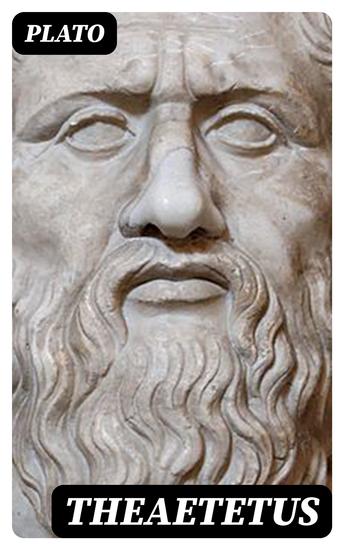
Theaetetus - cover

Theaetetus

Plato

Traducteur Benjamin Jowett

Maison d'édition: DigiCat

  • 0
  • 0
  • 0

Synopsis

Plato's "Theaetetus" is a profound dialogue that delves into the nature of knowledge, probing the question, "What is knowledge?" Through an engaging conversation between Socrates and the young mathematician Theaetetus, Plato presents a captivating exploration of epistemology, offering three notable definitions of knowledge: perception, true belief, and justified true belief. The narrative is marked by its Socratic method, characterized by dialectical reasoning and critical interrogation, which invites readers into the philosophical inquiry that remains relevant in contemporary discussions of knowledge and belief. Plato, a pivotal figure in Western philosophy, deeply influenced by Socratic dialogues and the intellectual currents of Ancient Greece, penned "Theaetetus" during a period of rich philosophical discourse in Athens. His background as a student of Socrates and his engagement with mathematics and metaphysics shaped his exploration of knowledge, revealing the tensions between perception and reality. Plato's philosophical ambitions aimed not only to define knowledge but also to encourage readers to critically examine their own epistemic foundations. "Theaetetus" is an essential read for anyone intrigued by the philosophical pursuits of understanding knowledge in its multifaceted dimensions. Scholars, students, and casual readers alike will find value in Plato's rigorous examination of epistemology, which resonates across millennia, bridging ancient philosophy with modern thought. This dialogue is not merely a historical artifact; it is a vital text that continues to challenge and inspire philosophical inquiry.
Disponible depuis: 15/09/2022.
Longueur d'impression: 162 pages.

D'autres livres qui pourraient vous intéresser

  • Myths and Legends - Legends and Myths Revisited (5 in 1) - cover

    Myths and Legends - Legends and...

    John Harpoon

    • 0
    • 0
    • 0
    This book consists of five titles. It's a discounted bundle. Enjoy the following books: 
    - Davy Jones' Metropolis: Exploring the Submerged Haven of Lost Corsairs 
    - Metropolises in Myth: Resurrecting Nine Fabled Urban Centers from Antiquity's Shadows 
    - The Kraken: Myth or Reality? Investigating the Legend of the Sea Monster 
    - The Swift Conquest: Unraveling Hitler's Rapid Domination of Europe 
    - The Great Escape from the Inescapable Prison: The Astonishing True Tale of Courage and Cunning
    Voir livre
  • Redesigning Education: A New Paradigm for Success - cover

    Redesigning Education: A New...

    Frank “Bud” O’Lery

    • 0
    • 0
    • 0
    In "Redesigning Education: A New Paradigm for Success," author Frank "Bud" O'Lery presents a compelling exploration of the challenges facing humanity in the modern era. Drawing parallels to the metaphorical "Four Horsemen of Apocalypse," O'Lery delves into the pressing issues of overcrowding, authoritarianism, greed, and environmental crises. Urging immediate action, he proposes the establishment of Educational Oases as safe havens for humanity, fostering critical thinking, knowledge, and interpersonal skills. The book envisions these Oases as fortresses of enlightenment, safeguarding arts, knowledge, and the best of human values. O'Lery contends that survival in the face of global challenges necessitates a commitment to logic, evidence, and the sanctity of life. Drawing inspiration from the concept of "the shining city on the hill," the author advocates for a new educational paradigm that addresses societal flaws and cultivates a foundation for future generations. "Redesigning Education" serves as both a discussion and a plan of action, providing a roadmap for navigating troubled times and reshaping the future of humanity.
    Voir livre
  • Twilight's Last Gleaming - Can America Be Saved? - cover

    Twilight's Last Gleaming - Can...

    Todd Starnes

    • 0
    • 0
    • 0
    "Todd Starnes is a fierce defender of freedom and a great patriot. He has seen, and understands, what is happening to our country like few others—his book is absolutely terrific, a must read!" —President Trump 


    President Biden ushered in a dark winter of malaise across our great nation. He snuffed out Lady Liberty's bright beacon of hope and brought despair to the land. And now we stand at a time of great choosing. Do we choose the path that leads to freedom or the path that leads to tyranny? 


    We face difficult days, but not hopeless days. Together, we can restore the Republic and reclaim our standing in the world. But first, we must remember our roots and return to the values that made our nation great. A deep and abiding desire for freedom and liberty, girded by faith in God, is the essence of who we are. Those are the precepts that must be reaffirmed if America is to be saved.
    Voir livre
  • Ownership - The Evangelical Legacy of Slavery in Edwards Wesley and Whitefield - cover

    Ownership - The Evangelical...

    Sean McGever, Vincent E. Bacote

    • 0
    • 0
    • 0
    The latest book from the author of Evangelism: For the Care of Souls.
    Voir livre
  • MEDITATIONS: Marcus Aurelius - LIFE OF THE STOICS | Adapted for the contemporary reader - cover

    MEDITATIONS: Marcus Aurelius -...

    Marcus Aurelius, Katherine...

    • 0
    • 0
    • 0
    MEDITATIONS OF MARCUS AURELIUS: a timeless work now adapted and translated into contemporary language, accessible and clear for today's reader. This classic book of Stoic philosophy, written by the emperor and thinker Marcus Aurelius, IS AN ESSENTIAL GUIDE FOR THOSE SEEKING INNER PEACE, SELF-CONTROL, AND MENTAL STRENGTH IN TIMES OF DIFFICULTY. Through profound reflections on life, duty, and self-knowledge, Meditations invites us to examine our own actions and thoughts, and to live with integrity and purpose.   
    Have you ever felt overwhelmed by the stress and uncertainty of today's world? Are you looking for a way to remain calm and resilient in the face of challenges? With the pace of modern life, it's easy to lose sight of our core values and mental balance.   
    In this revamped version of Meditations, you will discover PRACTICAL AND IN-DEPTH TEACHINGS THAT WILL HELP YOU CULTURE THE SERENITY, WISDOM, AND FOCUS NECESSARY TO FACE ANY DIFFICULTY.    
    By reading this book, you will experience PERSONAL TRANSFORMATION AND UNPRECEDENTED MENTAL CLARITY. Marcus Aurelius' wisdom will help you become more aware of your thoughts and emotions, empowering you against distractions and external pressures.   
    Make these millenary teachings your daily guide! BUY THIS BOOK NOW and start transforming the way you live, true freedom is just a Click away! 
    Voir livre
  • History of Machu Picchu - The Greatest Symbol of the Inca Empire - cover

    History of Machu Picchu - The...

    Kelly Mass

    • 0
    • 0
    • 0
    Machu Picchu, one of the most iconic symbols of Inca civilization, is a 15th-century fortress perched high on a mountain crest in southern Peru's Eastern Cordillera. Sitting at an altitude of 2,430 meters (7,970 feet), it is located 80 kilometers (50 miles) northwest of Cusco, within the Machupicchu District of Urubamba Province. The fortress overlooks the Sacred Valley, and the Urubamba River winds through the valley below, cutting through the Cordillera and forming a tropical mountain canyon. This stunning geographical setting has made Machu Picchu one of the most visited and revered archaeological sites in the world. 
    Unlike the Mayans, the Incas had no written language, and thus, no records of the site existed during its operation. The first Europeans to visit Machu Picchu did so only in the 19th century, and as a result, much of its history remained shrouded in mystery. Modern archaeologists, relying on tangible evidence such as graves and structural remains, have attributed names and proposed functions for the buildings, but much of the site’s exact purpose remains speculative. 
    Most contemporary archaeologists believe that Machu Picchu was built as a royal estate for the Inca emperor Pachacuti, who ruled from 1438 to 1472. Constructed in 1450, the site functioned as a private residence for the emperor and his court. Over time, Machu Picchu became the most well-known image of Inca civilization and is often referred to as the "Lost City of the Incas." However, the estate was abandoned in the early 16th century, following the Spanish conquest of the Inca Empire. Recent radiocarbon dating indicates that the site was occupied from around 1420 to 1532.
    Voir livre