Begleiten Sie uns auf eine literarische Weltreise!
Buch zum Bücherregal hinzufügen
Grey
Einen neuen Kommentar schreiben Default profile 50px
Grey
Jetzt das ganze Buch im Abo oder die ersten Seiten gratis lesen!
All characters reduced
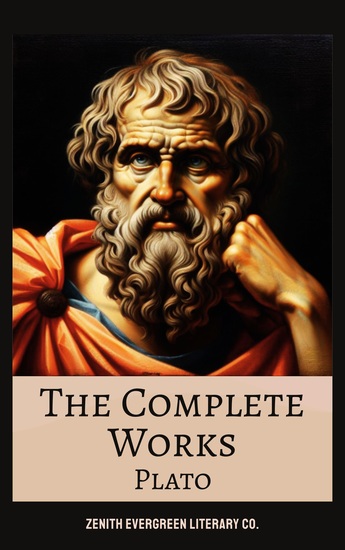
The Complete Works of Plato - Dialogues Republic and Philosophical Classics from the Father of Western Thought - cover

The Complete Works of Plato - Dialogues Republic and Philosophical Classics from the Father of Western Thought

Plato, Zenith Evergreen Literary Co.

Verlag: Zenith Evergreen Literary Co.

  • 0
  • 0
  • 0

Beschreibung

Explore the foundational texts of Western philosophy with the complete works of Plato—scholar, teacher, and eternal seeker of truth.

This definitive digital edition gathers all of Plato's surviving works, including his most famous dialogues like The Republic, Symposium, Phaedrus, and Apology. From metaphysics and politics to ethics and aesthetics, Plato's writing laid the groundwork for philosophical inquiry that continues to shape modern thought.

Whether you're a student of philosophy or a curious reader seeking wisdom, this collection offers powerful insights into justice, the soul, knowledge, and the ideal state.

📘 Includes all essential works:
✔ The Republic
✔ The Symposium
✔ Phaedo, Apology, Meno, Gorgias, and more
✔ Letters and lesser-known dialogues
✔ Fully formatted with an interactive table of contents

💬 What Readers Say:
"A cornerstone of any intellectual library."
"Plato's ideas are timeless—and so relevant to our age."
"This edition is clear, complete, and perfect for both beginners and scholars."

Perfect for lovers of Stoicism, logic, politics, and classical wisdom, this collection is the essential guide to Plato's enduring legacy.

📥 Download The Complete Works of Plato today and begin your journey through the origins of Western philosophy.
Verfügbar seit: 02.05.2025.
Drucklänge: 4085 Seiten.

Weitere Bücher, die Sie mögen werden

  • Ejaculate Responsibly - A Whole New Way to Think About Abortion - cover

    Ejaculate Responsibly - A Whole...

    Gabrielle Stanley Blair

    • 0
    • 0
    • 0
    In Ejaculate Responsibly, Gabrielle Blair offers a provocative reframing of the abortion issue in post-Roe America. In a series of 28 brief arguments, she deftly makes the case for moving the abortion debate away from controlling and legislating women’s bodies and instead directs the focus on men’s lack of accountability in preventing unwanted pregnancies.  Highly readable, accessible, funny, and unflinching, Blair builds her argument by walking readers through the basics of fertility (men are 50 times more fertile than women), the unfair burden placed on women when it comes to preventing pregnancy (90% of the birth control market is for women), the wrongheaded stigmas around birth control for men (condoms make sex less pleasurable, vasectomies are scary and emasculating), and the counterintuitive reality that men, who are fertile 100% of the time, take little to no responsibility for preventing pregnancy.  The result is a compelling and convincing case for placing the responsibility—and burden—of preventing unwanted pregnancies away from women and onto men.
    Zum Buch
  • We Wanted Workers - Unraveling the Immigration Narrative - cover

    We Wanted Workers - Unraveling...

    George J. Borjas

    • 0
    • 0
    • 0
    We are a nation of immigrants, and we have always been concerned about immigration. As early as 1645, the Massachusetts Bay Colony began to prohibit the entry of "paupers." Today, however, the notion that immigration is universally beneficial has become pervasive. To many modern economists, immigrants are a trove of much-needed workers who can fill predetermined slots along the proverbial assembly line. 


    But this view of immigration's impact is overly simplified, explains George J. Borjas, a Cuban American, Harvard labor economist. Immigrants are more than just workers—they're people who have lives outside of the factory gates and who may or may not fit the ideal of the country to which they've come to live and work. Like the rest of us, they're protected by social insurance programs, and the choices they make are affected by their social environments. 


    In We Wanted Workers, Borjas shows that, in the grand scheme, immigration has not affected the average American all that much. But it has created winners and losers. The losers tend to be nonmigrant workers who compete for the same jobs as immigrants. And somebody's lower wage is somebody else's higher profit, so those who employ immigrants benefit handsomely. In the end, immigration is mainly just another government redistribution program.
    Zum Buch
  • Echoes of Eternity - Myth Ritual and the Persistence of the Sacred - cover

    Echoes of Eternity - Myth Ritual...

    Christian Felix

    • 0
    • 0
    • 0
    "Echoes of Eternity: Myth, Ritual, and the Persistence of the Sacred" by Christian Felix offers a captivating exploration of religious experience worldwide. Felix delves into the dichotomy between the sacred and the profane, revealing how rituals, myths, and symbols bridge the gap between the mundane and the transcendent. Through meticulous analysis and comparative study, he unveils the significance of sacred spaces, times, and the myth of eternal recurrence. Felix's interdisciplinary approach sheds light on the universal aspects of religious phenomena, making this book essential reading for scholars and seekers alike, inviting readers to ponder the mysteries of the sacred in human life.
    Zum Buch
  • Libertarian Policies - cover

    Libertarian Policies

    Arlo Holders

    • 0
    • 0
    • 0
    Libertarianism is a political philosophy centered on the belief that individuals should have the maximum possible freedom to pursue their own lives, with minimal interference from the government. Rooted in the principles of classical liberalism, libertarianism advocates for a limited government whose primary role is to protect individual rights and maintain peace. It emphasizes personal responsibility, free markets, and the belief that voluntary exchange is the foundation of a prosperous society. At its core, libertarianism seeks to protect the rights of individuals to live as they see fit, free from the coercive power of the state. 
    The history of libertarian thought can be traced back to influential philosophers such as John Locke, who argued for the natural rights of individuals to life, liberty, and property. His ideas formed the intellectual groundwork for the concept of limited government, which would later be expanded by thinkers like Adam Smith, who promoted the idea of free markets. The Enlightenment era, with its focus on reason, individualism, and skepticism of authority, provided a fertile ground for the development of libertarian ideas. In the 20th century, libertarianism gained further prominence through the works of economists such as Friedrich Hayek and Milton Friedman, who critiqued the expansion of government power and emphasized the importance of individual liberty in economic affairs. 
    Libertarianism's role in modern politics is to challenge the prevailing trend toward ever-expanding government intervention in people's lives. Libertarians argue that many of society’s problems are caused by government overreach, and that solutions should instead focus on allowing individuals to make their own decisions, free from state-imposed constraints.
    Zum Buch
  • The Weight-Inclusive CBT Workbook for Eating Disorders - Tools to Reject Diet Culture Heal Body Shame and Promote Recovery - cover

    The Weight-Inclusive CBT...

    PhD Shannon Patterson, PhD...

    • 0
    • 0
    • 0
    If you have an eating disorder, such as anorexia nervosa, bulimia, binge eating, or emotional eating, you may also struggle with negative body image that's made worse by diet culture, television, magazines, movies, and social media. And, despite popular belief, not all people who struggle with eating disorders are tiny or thin. Eating disorders can affect people of all genders, ethnicities, and ages—as well as all shapes and sizes. That's why you need a weight-inclusive approach—one that prioritizes your mental and physical health without perpetuating weight stigma. 
     
    Written by three clinical psychologists who specialize in eating disorders, this workbook offers a powerful new approach grounded in cognitive behavioral therapy (CBT) called CBT-Weight Inclusive (CBT-WI), to help you heal from body shame, reject diet culture, and find lasting recovery. You will never be asked to weigh yourself, compute your BMI, or restrict your eating. Instead, you will discover insights to help you better understand your eating disorder, and find proven-effective tools and strategies to cultivate radical body acceptance. This workbook will help you overcome the negative, internalized messages about weight that are perpetuated by diet culture, so you can feel at home in your body, improve your mental and physical health, and make positive changes in all aspects of your life.
    Zum Buch
  • Avars The: The History and Legacy of the Eurasian Nomads in Central Europe during the Middle Ages - cover

    Avars The: The History and...

    Editors Charles River

    • 0
    • 0
    • 0
    During the period after the collapse of the Roman Empire and the establishment of medieval Europe, which was once commonly referred to as the Dark Ages, many different tribes migrated across Europe, feeding on what was left of Rome and attempting to establish new kingdoms in the vacuum. Most of these tribes were Germanic in ethnicity and language and shared the same goals of either entering Roman territory to become Roman citizens or tearing down Rome completely. These tribes caused havoc on the edge of Roman territory in Europe, and Rome’s cultural and political power gradually transferred to Constantinople, which became the seat of the Byzantine Empire.  
    	The Germanic tribes eventually coalesced into kingdoms and laid the foundation for the Middle Ages in Western Europe, while the Byzantine Empire carried on many Roman traditions and extended its influence into Eastern Europe. The road to the Middle Ages, though, was uneven and often quite violent. Many peoples and kingdoms collapsed at the hands of groups in their earliest stages of development, one of which was the Avars. 
    	The Avars entered Eastern Europe from the Central Asian steppes in the 6th century, and like the Huns before them and the Cumans and Magyars after them, the Avars were raiders and warriors who lived on their horses. The Avars’ impact on Europe was immediately felt, and from the Byzantine Empire to the Merovingian Kingdom in Gaul, some of Europe’s strongest powers had to learn how to deal with these new people through a combination of diplomacy and warfare. Eventually, the Avars established themselves in what is today Hungary and played an important role in the development of European history during its transitional period by earning a reputation as a fearsome and sometimes avaricious group. The medieval sources described the Avars as efficient and brutal horseback warriors who could devastate entire kingdoms in a matter of days and leave just as quickly.
    Zum Buch