Symposium
Plato Plato
Maison d'édition: Project Gutenberg
Synopsis
The Symposium (Ancient Greek: Συμπόσιον) is a philosophical text by Plato dated c. 385–380 BCE. It concerns itself at one level with the genesis, purpose and nature of love.
Maison d'édition: Project Gutenberg
The Symposium (Ancient Greek: Συμπόσιον) is a philosophical text by Plato dated c. 385–380 BCE. It concerns itself at one level with the genesis, purpose and nature of love.
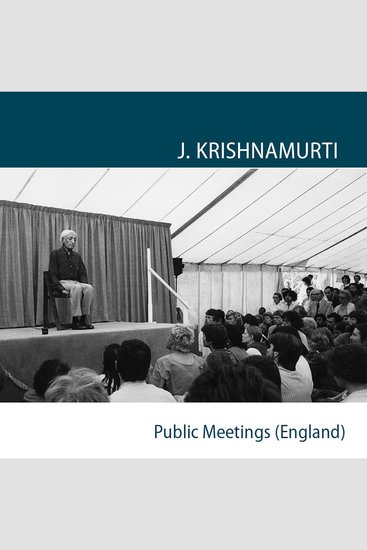
In this penetrating public talk, J. Krishnamurti explores the many pressures that shape and burden the human mind: fear, ambition, authority, tradition, conflict and the constant demand to become something other than we are. He asks whether the brain can ever be completely free from psychological pressure—not through escape, discipline or belief, but through a clear understanding of thought itself. With characteristic insight, Krishnamurti invites the listener to observe how conditioning operates and to discover whether true freedom can arise through direct perception. A profound enquiry into the nature of consciousness, inner conflict and the possibility of living with clarity, intelligence and freedom.Voir livre
What separates people who consistently deliver results from those who remain perpetually busy yet never quite get there? In The Effectiveness Code, behavioral psychologist and bestselling author Dr. Henry Montrevia argues that the answer is not a better productivity system, a smarter strategy, or a sharper set of skills. It is something more fundamental: a set of deeply interwoven patterns that begin with character and radiate outward into every dimension of professional and personal life. Drawing on decades of research in behavioral psychology, economics, organizational science, and philosophy, Dr. Montrevia builds a comprehensive, evidence-based framework for understanding why some people thrive over the long term while others plateau or collapse. Beginning with the foundational claim that character is not a moral luxury but the bedrock of all durable achievement, the book moves outward through perception, will, personal principles, weekly architecture, trust, listening, cooperation, creative conflict, and renewal—each chapter building on the last in a tightly interlocking system. Readers will discover why even deeply principled people cave under situational pressure, as the famous Good Samaritan experiment reveals; why intelligence and drive are dangerous amplifiers without integrity, as Enron so catastrophically demonstrated; and why the framing of a problem—not the facts themselves—often determines the decision that follows. They will learn why willpower is a fragile and overrated resource, and why building environments that make better choices easier is more powerful than trying to be stronger. They will explore how to write a personal constitution that makes values durable enough to survive stress, confusion, and the erosion of time. Beyond the inner life, The Effectiveness Code turns to relationships. Trust, the book argues, is the most undervalued asset in human interaction—built slowly through consistent small behavior and destroyed quickly through inconsistency. Genuine listening is revealed as not a passive courtesy but the mechanism through which trust deepens, better information surfaces, and real influence becomes possible. The mathematics of mutual gain—grounded in game theory, Elinor Ostrom's commons research, and Axelrod's cooperation tournaments—shows why cooperation is not naive but strategically superior over time. And creative collision, the well-managed friction between different perspectives, is shown to be the engine of breakthrough thinking. The book also addresses the concrete challenges of modern life: the distraction economy, remote work, burnout, digital saturation, and the application of leadership principles within families. It closes with case studies of ordinary people who changed their trajectories not through heroic moments but through honest perception, supportive structures, and patient practice—and with a vision of effectiveness not as a destination but as a lifelong upward spiral of deliberate return. Rich with research, honest about complexity, and deeply practical in its recommendations, The Effectiveness Code is a rare synthesis: a book that takes seriously both the science of human behavior and the wisdom of lived experience, and uses both to answer the question that underlies all genuine achievement—not just how to perform better, but what kind of person one is becoming in the process.Voir livre
It has long been a trope of Civil War history that Gettysburg was an accidental battlefield. Troy D. Harman argues for a new interpretation: once Lee invaded Pennsylvania and the Union army pursued, a battle at Gettysburg was entirely predictable, perhaps inevitable. Most Civil War battles took place along major roads, railroads, and waterways. And yet this perspective hasn't been fully explored when it comes to Gettysburg. Moreover, once the battle started, Harman argues, the blue and gray fought tactically for the two creeks that mark the battlefield in the east and the west as well as for the roadways that led to Gettysburg from all points of the compass. This is a perspective often overlooked in many accounts of the battle, which focus on the high ground—the Round Tops, Cemetery Hill—as key tactical objectives. Gettysburg Ranger and historian Troy Harman draws on a lifetime of researching the Civil War and more than thirty years of studying the terrain of Gettysburg and south-central Pennsylvania and northern Maryland to reframe the story of the Battle of Gettysburg. In the process he shows there's still much to say about one of history's most written-about battles.Voir livre
Embark on a transformative journey with *The Path of Resilience*, the groundbreaking first volume in the new 11:11 Magazine Conscious Living Series. This life enhancement and personal growth digest invites you to rediscover your innate strength, guiding you through the cycles of challenge and renewal that shape the human experience. Within these pages, you’ll explore the sacred blueprint you brought into this world-a version of yourself brimming with divine capacities, gifts, and awe-inspiring potential. *The Path of Resilience* reveals how true spiritual resilience is cultivated: not by avoiding discomfort or adversity, but by courageously leaning into resistance, witnessing your own evolution, and embracing both the light and shadow of life. Through rich wisdom 'devoted to the journey of your soul' -you will learn to: - Unravel the illusions that limit your growth and reweave a life of authenticity and purpose. - Transform resistance into a source of inner communion and strength. - Ground yourself in spiritual discernment, acting from love, clarity, and inner authority. - Navigate life’s cycles-birth, death, rebirth-with grace and self-awareness. - Cultivate resilience as a sacred practice, empowering your journey toward your most authentic, radiant Self. Whether you are facing personal challenges, seeking deeper meaning, or longing to awaken your highest potential, *The Path of Resilience* offers a profound invitation: each moment of resistance is a doorway to transformation. Step through, and discover the enduring power within you. Each new 'conscious living' digest intimately guides your path of focused internal growth for an empowered and expanding external experience. You are never alone, and always held. You are Energy, Growth, Truth, and Wisdom -Living sacred geometry... Being light, sound, color... Knowing humanity, and divinity. Welcome to 11:11's Gateway for Conscious Living!Voir livre
If you’ve been hoping to write a book your whole life, this will help you finally get your words out. The Busy Woman’s Guide to Writing a World-Changing Book is what you’ve been looking for to take the confusion and uncertainty out of getting your ideas into book form. Writing a book is a bucket list item for many people. But it’s tough to know where to start and how to gather the focus required to do the work. The Busy Woman’s Guide to Writing a World-Changing Book offers a path to finally get the book that’s been inside you for so long out of your head and onto the page. Most books about writing are long on inspiration and short on action, or they’re too prescriptive, assuming every writer has the same needs. The Busy Woman’s Guide to Writing a World-Changing Book gives you the insight and advice you need to craft your book, your way. For twenty-five years, Cynthia Morris has been coaching people to establish solid practices to help them write anything, anytime. She put everything she knows about writing a non-fiction book into this so you can write your book more easily and quickly. This book gives you a map to help you design, enjoy and thrive in your own writing practice. With this in place, you will be able to write your book, and others, with joy and ease. The chapters are short and sweet. Reading them will be like having Cynthia as your coach on call. You will be able to pick up The Busy Woman’s Guide to Writing a World-Changing Book, find an answer to your question and get to writing. No long-winded stories or research. Just straight-talking support for you to get your words out, your way. If writing a book is on your list, it’s time to make it a priority.Voir livre
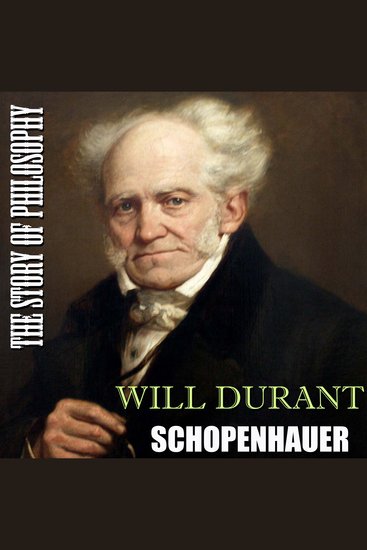
In "The Story of Philosophy. Schopenhauer" Will Durant delves into the life and ideas of Arthur Schopenhauer, a prominent 19th-century German philosopher. Schopenhauer's philosophy is characterized by his profound pessimism and the notion that the essence of reality is an irrational will. Durant explores Schopenhauer's influences, including Eastern philosophies and Immanuel Kant, and examines how his metaphysical and ethical views shaped his bleak outlook on human existence. Schopenhauer's seminal work, "The World as Will and Representation," is central to Durant's discussion. This work posits that the will is the driving force behind all phenomena, leading to a perpetual state of dissatisfaction and suffering. Despite his pessimism, Schopenhauer's thoughts on aesthetics and compassion reveal a complex thinker who saw art and empathy as temporary escapes from the harshness of reality. Durant's narrative not only provides a thorough analysis of Schopenhauer's philosophy but also situates it within the broader historical and intellectual context. By doing so, he highlights Schopenhauer's lasting impact on both contemporary and later philosophical thought, including existentialism and psychoanalysis. This segment of "The Story of Philosophy" serves as an accessible introduction to Schopenhauer's challenging ideas, offering readers insight into one of philosophy's most intriguing and influential figures.Voir livre