Junte-se a nós em uma viagem ao mundo dos livros!
Adicionar este livro à prateleira
Grey
Deixe um novo comentário Default profile 50px
Grey
Assine para ler o livro completo ou leia as primeiras páginas de graça!
All characters reduced
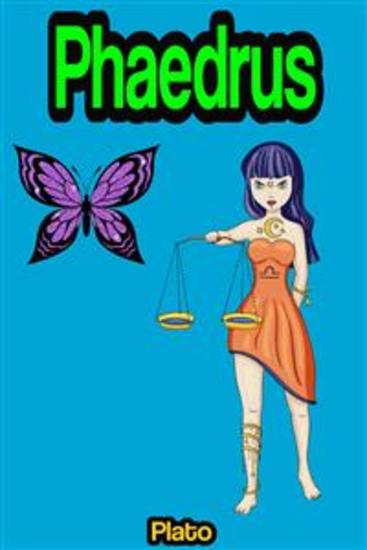
Phaedrus - cover
LER

Phaedrus

Plato Plato

Editora: Memorable Classics eBooks

  • 0
  • 0
  • 0

Sinopse

Phaedrus by Plato written by Plato, is a dialogue between Plato's protagonist, Socrates, and Phaedrus, an interlocutor in several dialogues. The Phaedrus was presumably composed around 370 BCE, about the same time as Plato's Republic and Symposium. Although ostensibly about the topic of love, the discussion in the dialogue revolves around the art of rhetoric and how it should be practiced, and dwells on subjects as diverse as metempsychosis (the Greek tradition of reincarnation) and erotic love.

One of the dialogue's central passages is the famous Chariot Allegory, which presents the human soul as composed of a charioteer, a good horse tending upward to the divine, and a bad horse tending downward to material embodiment.

The dialogue consists of a series of three speeches on the topic of love that serves as the subject to construct a discussion on the proper use of rhetoric. They encompass discussions of the soul, madness, divine inspiration, and the practice and mastery of an art.

As they walk out into the countryside, Socrates tries to convince Phaedrus to repeat the speech of Lysias which he has just heard. Phaedrus makes several excuses, but Socrates suspects strongly that Phaedrus has a copy of the speech with him.

Saying that while Lysias is present, he would never allow himself to be used as a training partner for Phaedrus to practice his own speech-making on, he asks Phaedrus to expose what he is holding under his cloak. Phaedrus gives in and agrees to perform Lysias' speech.
Disponível desde: 02/06/2022.

Outros livros que poderiam interessá-lo

  • The Perennials - The Megatrends Creating a Postgenerational Society - cover

    The Perennials - The Megatrends...

    Mauro F. Guillén

    • 0
    • 0
    • 0
    Get the best from accelerating social change with the new audiobook from the bestselling author of 2030 and “acclaimed thought leader” (Kirkus), Mauro Guillén. Adam Grant praises how the book "invites us to rethink our careers, our families, and our future plans.” Find out why business leaders and bestselling authors around the world are calling it "sharply relevant and necessary" (William P. Lauder), "insightful and deeply researched" (Richard Florida), and "a must read" (Mohammed A. El-Erian). In today’s world, the acceleration of megatrends – increasing longevity and the explosion of technology among many others – are transforming life as we now know it.In The Perennials, bestselling author of 2030 Mauro Guillén unpacks a sweeping societal shift triggered by demographic and technological transformation. Guillén argues that outmoded terms like Boomers, Gen X, Millennials, and Gen Z have long been used to pigeonhole us into rigid categories and life stages, artificially preventing people from reaching their full potential. A new postgenerational workforce known as “perennials” – individuals who are not pitted against each other either by their age or experience – makes it possible to liberate scores of people from the constraints of the sequential model of life and level the playing field so that everyone has a chance at living a rewarding life. Guillén unveils how this generational revolution will impact young people just entering the workforce as well as those who are living and working longer. This multigenerational revolution is already happening and Mauro Guillén identifies the specific cultural, organizational and policy changes that need to be made in order to switch to a new template and usher in a new era of innovation powered by the perennials.A Macmillan Audio production from St. Martin’s Press.
    Ver livro
  • The Winter's Tale - cover

    The Winter's Tale

    William Shakespeare

    • 0
    • 0
    • 0
    The Winter's Tale is a play by William Shakespeare, originally published in the First Folio of 1623. Although it was grouped among the comedies, some modern editors have relabelled the play as one of Shakespeare's late romances. Some critics consider it to be one of Shakespeare's "problem plays", because the first three acts are filled with intense psychological drama, while the last two acts are comedic and supply a happy ending. The play has been intermittently popular, revived in productions in various forms and adaptations by some of the leading theatre practitioners in Shakespearean performance history, beginning after a long interval with David Garrick in his adaptation called Florizel and Perdita (first performed in 1754 and published in 1756).    The Winter's Tale was revived again in the 19th century, when the third "pastoral" act was widely popular. In the second half of the 20th century The Winter's Tale in its entirety, and drawn largely from the First Folio text, was often performed, with varying degrees of success. Short Summary of the Tale: John Fawcett as Autolycus in "The Winter's Tale" (1828) by Thomas Charles Wageman. Following a brief setup scene the play begins with the appearance of two childhood friends: Leontes, King of Sicilia, and Polixenes, the King of Bohemia. Polixenes is visiting the kingdom of Sicilia, and is enjoying catching up with his old friend. However, after nine months, Polixenes yearns to return to his own kingdom to tend to affairs and see his son. Leontes desperately attempts to get Polixenes to stay longer, but is unsuccessful. Leontes then decides to send his wife, Queen Hermione, to try to convince Polixenes. Hermione agrees and with three short speeches is successful. Leontes is puzzled as to how Hermione convinced Polixenes so easily, and Leontes suddenly goes insane and suspects that his pregnant wife has been having an affair with Polixenes and that the child is a bastard. Leontes orders Camillo, a Sicilian Lord, to poison Polixenes. Camillo instead warns Polixenes and they both flee to Bohemia.    Furious at their escape, Leontes now publicly accuses his wife of infidelity, and declares that the child she is bearing must be illegitimate. He throws her in prison, over the protests of his nobles, and sends two of his lords, Cleomenes and Dion, to the Oracle at Delphi for what he is sure will be confirmation of his suspicions. Meanwhile, the queen gives birth to a girl, and her loyal friend Paulina takes the baby to the king, in the hopes that the sight of the child will soften his heart. He grows angrier, however, and orders Paulina's husband, Lord Antigonus, to take the child and abandon it in a desolate place. Cleomenes and Dion return from Delphi with word from the Oracle and find Hermione publicly and humiliatingly put on trial before the king. She asserts her innocence, and asks for the word of the Oracle to be read before the court. The Oracle states categorically that Hermione and Polixenes are innocent, Camillo an honest man, and that Leontes will have no heir until his lost daughter is found. Leontes shuns the news, refusing to believe it as the truth. As this news is revealed, word comes that Leontes' son, Mamillius, has died of a wasting sickness brought on by the accusations against his mother. Hermione, meanwhile, falls in a swoon, and is carried away by Paulina, who subsequently reports the queen's death to her heartbroken and repentant husband. Leontes vows to spend the rest of his days atoning for the loss of his son and his queen.
    Ver livro
  • Plan on Living - cover

    Plan on Living

    Scott M. Peterson

    • 0
    • 0
    • 0
    The pension plans that previous generations relied upon for monthly retirement income are vanishing and being replaced by self-funding programs such as 401(k)s. Today's retirees are now responsible for creating their own stream of income from their investments-and this income may need to last for more than three decades. So, the singular question every retiree needs to ask is:Am I going to outlive my money, or is my money going to outlive me?Plan on Living: The Retiree's Guide to Lasting Income and Enduring Wealth addresses this question and many more about the management of retirement assets. The concepts taught within the pages of this book will demonstrate how a retirement income plan should be constructed and monitored to enable the retiree to transition a career's worth of accumulations into a lifetime's worth of income. With such a plan for living in place, retirees can truly plan on living the abundant retirement they dream of.Visit petersonwealth.com to learn more about Peterson Wealth Advisors.
    Ver livro
  • God-like: a 500-Year History of Artificial Intelligence in Myths Machines Monsters - cover

    God-like: a 500-Year History of...

    Kester Brewin

    • 0
    • 0
    • 0
    In the year 1600, a monk is burned at the stake for claiming to have built a device that will allow him to know all things. 
    350 years later, having witnessed 'Trinity' - the first test of the atomic bomb - America's leading scientist outlines a memory machine that will help end war on earth. 
    25 years in the making, an ex-soldier finally unveils this 'machine for augmenting human intellect', dazzling as he stands 'Zeus-like, dealing lightning with both hands'. 
    In this profound and urgent new book, leading thinker on technology Kester Brewin shows how AI is both stunningly new and rooted in the most ancient human desires. Hailed by the UK government's own lead on AI as 'god-like', as we finally welcome this stunning technology amongst us - with Frankenstein and Faustus, from the ceiling of the Sistine Chapel to the underbelly of Silicon Valley - Brewin skillfully leads us through the myths, machines and monsters that have influenced the development of our greatest and most longed-for invention, and how we can learn to live alongside it.
    Ver livro
  • Dragonslayers - Six Presidents and Their War with the Swamp - cover

    Dragonslayers - Six Presidents...

    Larry Schweikart

    • 0
    • 0
    • 0
    The Swamp has been around for over 150 years, and six major presidents have tried to drain it with varying degrees of success. 
     
    Donald Trump promised to “Drain the Swamp,” by which he originally meant lobbyists. When he got in, he found an entirely different Swamp—a Deep State that had grown, layer upon layer, within the government. But he wasn’t the first to encounter entrenched Swamp opposition. Abraham Lincoln had to battle the  
    “Slave Power Conspiracy”; Grover Cleveland was the most successful of three presidents to fight the spoils Swamp. Theodore Roosevelt found a new iteration of the Swamp awaiting him: Trusts. After World War II, John F. Kennedy discovered that he had little control over the Central Intelligence Agency, and even found he  
    needed the CIA for his own purposes. Despite promising to shrink the bureaucracy Swamp, Ronald Reagan found himself helpless to even make a dent in it. And Trump soon learned that the Deep State could ensure no one ever brought any of its own to justice. Dragonslayers explains why these Swamps exist, and why they were—and remain—so hard to defeat.
    Ver livro
  • Ӕthelflӕd - The Lady of the Mercians - cover

    Ӕthelflӕd - The Lady of the...

    Tim Clarkson

    • 0
    • 0
    • 0
    This Dark Ages biography chronicles the life of one of the period's most famous women: the ruler of Mercia who took England back from the Vikings. 


    At the end of the ninth century, a large part of what is now England was controlled by the Vikings—warlike Scandinavians who had been attacking the British Isles for more than a hundred years. Alfred the Great, king of Wessex, was determined to regain the conquered lands. But when he died in 899 A.D., the task passed to his son Edward. In the early 900s, Edward led a great fight against the Viking armies, assisted by the English rulers of Mercia: Lord Æthelred and his wife Æthelflæd, who was also Edward's sister. 


    After her husband's death, Æthelflæd ruled Mercia on her own, leading the army to war and working with her brother to achieve their father's aims. Known to history as the Lady of the Mercians, she earned a reputation as a capable general who was feared by her enemies. In this authoritative biography, Tim Clarkson tells her remarkable life story from childhood to her vital role in saving England from the Vikings.
    Ver livro