Rejoignez-nous pour un voyage dans le monde des livres!
Ajouter ce livre à l'électronique
Grey
Ecrivez un nouveau commentaire Default profile 50px
Grey
Abonnez-vous pour lire le livre complet ou lisez les premières pages gratuitement!
All characters reduced
Icons 11th - 18th centuries - cover

Icons 11th - 18th centuries

Philip Zweig

Maison d'édition: Parkstone International

  • 0
  • 0
  • 0

Synopsis

Icon painting has reached its zenith in Ukraine between the 11th and 18th centuries. This art is appealing because of its great openness to other influences — the obedience to the rules of Orthodox Christianity in its early stages, the borrowing from Roman heritage or later to the Western breakthroughs — combined with a never compromised assertion of a distinctly Slavic soul and identity. This book presents a handpicked and representative selection of works from the 11th century to the late Baroque period.
Disponible depuis: 27/07/2024.
Longueur d'impression: 47 pages.

D'autres livres qui pourraient vous intéresser

  • Necessary Death - What Horror Movies Teach Us About Navigating the Human Experience - cover

    Necessary Death - What Horror...

    Chris Grosso, Preston Fassel

    • 0
    • 0
    • 0
    Based on very real and practical commentary, life experience, and occasionally, tongue-in-cheek-misfortunes of horror legends, Necessary Death explores how the horror genre offers individuals a unique opportunity for insight and understanding of their own lives. 


    Using some of the most quintessential movies in the genre, Chris Grosso and Preston Fassel invite listeners to an in-depth examination of the human condition—its fears, anxieties, hopes, joys, sorrows, and everything in-between—and how it's all grist for our personal and collective evolutionary mill. A hallmark of the genre is how horror films force their characters to find some semblance of inner strength and wherewithal in order to stand up to the monster, ghost, or villain that is trying to take their lives. Through fascinating discussion of this and other elements, Fassel and Grosso relate these films' dark subject matter and characters to real world issues people face every day. This sharp analysis is complemented by exercises that prompt listeners to consider gratitude, forgiveness, determination, and bravery in the face of adversity. 


    An unusual mix of film study and self-help, Necessary Death might surprise or even shock listeners, but it will also enlighten, educate, and most importantly hearten those looking for an unexpected source of inspiration.
    Voir livre
  • Sameh Al Tawil - The Monograph - A critical and analytical study (Monograph) of his artistic journey over a quarter of a century - cover

    Sameh Al Tawil - The Monograph -...

    Fatma Ali

    • 0
    • 0
    • 0
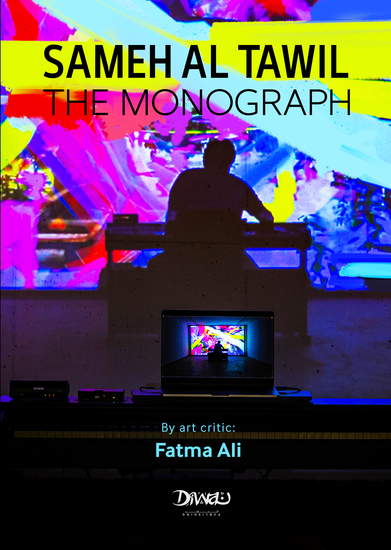
    Immerse yourself in the groundbreaking artistic vision of Sameh AL Tawil, the renowned Egyptian-German multimedia artist whose work transcends conventional boundaries of medium and expression. Written by distinguished art critic Fatma Ali, with a foreword by celebrated artist Khaled Hafez, this comprehensive monograph offers an unprecedented exploration of AL Tawil's remarkable 25-year artistic evolution.
    
    "Sameh Al Tawil : The Monograph" takes readers on a fascinating journey through AL Tawil's development from his early paintings and sculptural works in Egypt to his complex digital installations incorporating machine learning and artificial intelligence in Germany and around the world. As an artist who defies categorization, AL Tawil creates art that provokes profound questions about identity, migration, Neo slavery, technology, and human dignity through painting, photography, live performance, conceptual music, text, and sound.
    
    This definitive volume meticulously analyzes AL Tawil's most significant projects, including "Cupboard", "Slavery Documents," "Clockwise," "Chaos," and "Ready to Go," revealing how his transmedia approach challenges our understanding of reality itself. Ali's insightful critique illuminates how AL Tawil's work embodies philosophical concepts from thinkers like Baudrillard, gille deleuze, jacques derrida, among others, while remaining deeply personal and emotionally resonant.
    
    Readers will discover how AL Tawil's unique position as an artist navigating between Egyptian and German cultures has shaped his artistic vision, allowing him to create work that speaks to universal human experiences while addressing pressing contemporary issues. His innovative integration of music, performance, and digital technology creates immersive experiences that transform how we perceive and interact with art.
    
    "Sameh Al Tawil : The Monograph" is essential reading for art historians, collectors, students, and anyone interested in the evolution of contemporary art at the intersection of traditional practice and cutting-edge technology. This definitive study not only documents AL Tawil's significant contribution to the global art landscape but also provides a framework for understanding the future of multimedia artistic expression in our increasingly digital world.
    Voir livre

  • The Written World - Essays & Reviews - cover

    The Written World - Essays &...

    Kevin Power

    • 0
    • 0
    • 0
    Art honours the world, and criticism honours art, even – perhaps especially – when the critic sets out to destroy. The bad review is hardly ever written out of mere spite. In most cases, the motivation is disappointed idealism. Critics are people who love art and who hate to see it traduced. Hence the critic's sempiternal cry: You're doing it wrong. What the critic wants is for you to do it better.
    Since 2008, acclaimed novelist Kevin Power has reviewed almost three hundred and fifty books. Power declares, 'Even now, cracking open a brand-new hardback with my pencil in my hand, I feel the same pleasure, and the same hope. That's the great secret: every critic is an optimist at heart.'
    Art that thinks and feels at the same time – 'good art' – requires explication. The writing of criticism in response to such art is an activity that has taken place since Aristotle first sat down to figure out what made tragedy work. It is in the pursuit of this question – what makes good art 'good' – that Kevin Power found his vocation. During a ten-year stint as a regular freelance reviewer for the Sunday Business Post, Power fell in love with the writing of criticism, and with the reading of it, too, particularly by talented novelists who review books on the side. His conclusion is that criticism is absolutely an art. But it is never more so than when practiced by an actual artist.
    These pieces, ranging from reviews of Susan Sontag to the meaning of Greta Thunberg, apocalyptic politics, and literary theory, represent a decade's worth of thinking about books; a record of the author's attempts to honour art, and through art, the world. In The Written World, Power explains how he became a critic and what he thinks criticism is. It begins and ends with a long personal essays, 'The Lost Decade', written especially for this collection, about his mental and writing block after publishing Bad Day in Blackrock and his decade-long journey to White City. The pieces gathered by Power are connected by a theme – this is a book about writing, seen from various positions, and about growth as an artist and a critic.
    Voir livre
  • Bond James Bond - Exploring the Shaken and Stirred History of Ian Fleming's 007 - cover

    Bond James Bond - Exploring the...

    Brad Gilmore, Mike Kalinowski

    • 0
    • 0
    • 0
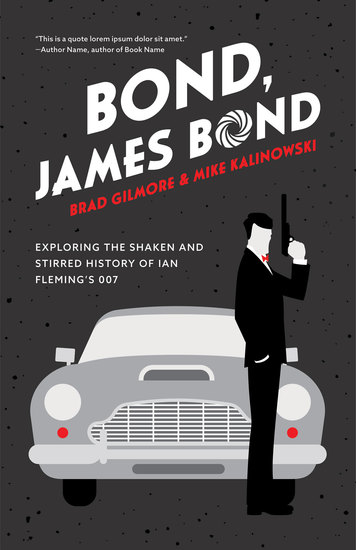
    Breaking Down Six Decades of James Bond Movies#1 New Release in Action & Adventure Movies & Video, and Movie ReferenceHosts Mike Kalinowski and Brad Gilmore team up in this comprehensive examination of the longest running film series in the history of cinema. In Bond, James Bond, they explore the cinematic history of the James Bond collection to celebrate everything it got right and reflect on everything it got wrong.The complete cinematic biographies of James Bond. Since his initial portrayal by Sean Connery, James Bond has become a timeless icon worldwide. Now, comes the first-ever era-by-era breakdown of the much loved international spy—on and off the silver screen. Following the men who portrayed James Bond—Daniel Craig, Pierce Brosnan, Timothy Dalton, Roger Moore, and Sean Connery—readers will discover the characteristics that made him resonate, as well as the less glamorous relics that made him evolve.For fans of the Ian Fleming James Bond novels and movies. Cinephiles and fans can finally unscramble some of the best action movies of all time. Covering everything from cars to court cases, Bond, James Bond looks at the evolution of the 007 movies from all angles.Featuring bonus chapters on Bond women and musical scores, inside, you’ll also find:The origins of 007 in the early James Bond booksOff-screen politics, drama, and movements that shifted the series trajectoryThe “other” James Bond, comic books, and animated seriesIf you’re looking for Father’s Day gifts, gifts for men, or James Bond gifts—and enjoyed books like Some Kind of Hero, Nobody Does it Better, or Shaken—then you’ll love Bond, James Bond.
    Voir livre
  • The Italian City-States - Birthplaces of the Renaissance - cover

    The Italian City-States -...

    Harris Ropes

    • 0
    • 0
    • 0
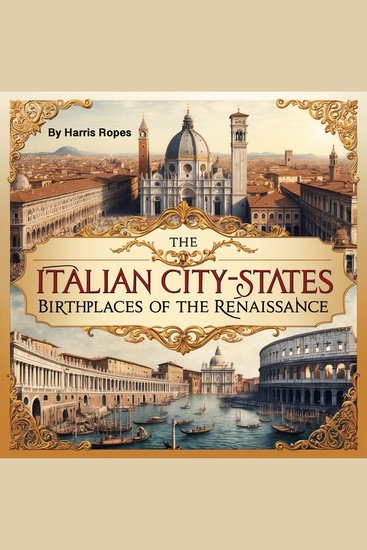
    The Italian city-states emerged as powerful economic, political, and cultural centers during the late Middle Ages and early Renaissance. Unlike the feudal kingdoms of northern Europe, Italy developed a unique system of independent cities, each governed by its own political structure. These city-states, including Florence, Venice, Milan, and Genoa, thrived due to their strategic locations, economic prosperity, and the weakening of feudalism. Their rise laid the foundation for the Renaissance, a period of unprecedented artistic and intellectual achievement. 
    One of the key factors behind the growth of the Italian city-states was the decline of feudalism. In much of Europe, feudal lords controlled vast territories, but in Italy, urban centers gained power as trade and commerce flourished. The weakening of the Holy Roman Empire’s authority in the region allowed cities to assert their independence. Many city-states established their own governments, often ruled by merchant families or oligarchies rather than hereditary monarchs. This shift created a political climate that encouraged innovation, diplomacy, and economic expansion. 
    Geography also played a crucial role in the rise of these city-states. Italy’s position in the Mediterranean made it a central hub for trade between Europe, Asia, and North Africa. Cities like Venice and Genoa developed extensive maritime trade networks, importing luxury goods such as silk and spices while exporting textiles and banking services. The wealth generated from commerce enabled these cities to fund artistic and architectural projects, further elevating their cultural status.
    Voir livre
  • Fitness for Dancers - Building Strength and Flexibility - cover

    Fitness for Dancers - Building...

    Zane Ryder

    • 0
    • 0
    • 0
    Understanding the dancer's body is fundamental to achieving both peak performance and long-term physical health. A dancer's body is an intricate system, requiring a blend of strength, flexibility, balance, and endurance. Recognizing how these components work together is the first step toward unlocking potential and preventing injuries. 
    Anatomy plays a vital role in dance. Knowing the basic functions of muscles, joints, and bones can help dancers identify how their movements are executed. For instance, the core muscles provide stability and support, allowing for controlled motions and preventing strain on the back. Similarly, understanding the alignment of the spine and the role of the pelvic muscles can enhance posture, a critical aspect of nearly all dance forms. 
    Equally important is recognizing the challenges unique to dancers. Repetitive movements, high-impact landings, and the intense physical demands of practice and performance can lead to overuse injuries if not managed carefully. Awareness of common issues such as shin splints, tendonitis, and ligament sprains empowers dancers to address them proactively.
    Voir livre