¡Acompáñanos a viajar por el mundo de los libros!
Añadir este libro a la estantería
Grey
Escribe un nuevo comentario Default profile 50px
Grey
Suscríbete para leer el libro completo o lee las primeras páginas gratis.
All characters reduced
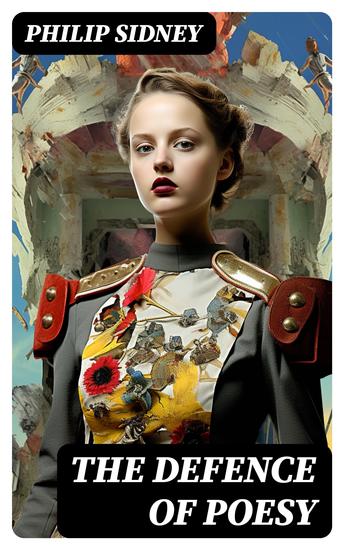
The Defence of Poesy - cover

The Defence of Poesy

Philip Sidney

Editorial: DigiCat

  • 0
  • 0
  • 0

Sinopsis

In "The Defence of Poesy," Philip Sidney eloquently articulates the role of poetry in society, positioning it as both a moral and artistic endeavor. Written in the late 16th century, amidst the flourishing of the English Renaissance, Sidney adopts a sophisticated blend of prose and verse to advocate for poetry's capacity to inspire virtue and foster emotional truths. The text engages with classical and contemporary philosophical thought, countering prevailing criticisms against poets with intellectual rigor. Through his deft use of rhetorical devices and vivid imagery, Sidney seeks to defend the poet's imaginative faculties, asserting that poetry surpasses mere entertainment by elevating the human experience. Philip Sidney was a prominent Elizabethan courtier, soldier, and poet whose life was marked by a dedication to literature and ideals of chivalry. As a member of a noble family and a contemporary of other literary giants, like Edmund Spenser and William Shakespeare, Sidney's insights reflect the cultural and intellectual currents of his time. His experiences in court and war enriched his understanding of human nature, contributing to the depth and passion evident in his defense of poetry. For readers seeking a deeper understanding of the power of poetic expression, Sidney's "The Defence of Poesy" is an essential text that illuminates the intersection of art and ethics. This work not only defends the craft of poetry but also invites readers to explore their own emotional and moral compass through the lens of literature. It is a compelling read for anyone interested in the enduring significance of poetry in shaping thought and society.
Disponible desde: 18/11/2023.
Longitud de impresión: 49 páginas.

Otros libros que te pueden interesar

  • Shaheedi Saka Bhai Taru Singh Ji - Bhai Taru Singh Ji Da Upkari Jeewan - cover

    Shaheedi Saka Bhai Taru Singh Ji...

    Swarn Singh

    • 0
    • 0
    • 0
    Shaheedi Saka Bhai Taru Singh Ji by Swaran Singh 
    In this book, the author gives a detailed account of Bhai Taru Singh Ji's martyrdom. It also talks about two important phases of his life before his sacrifice. These phases show his deep devotion to God, his selfless and helpful nature as a Khalsa, and his dedication to serving the Sikh community. 
    Before becoming a martyr, Bhai Taru Singh was known for his spiritual practices, including prayer and meditation. He was a brave, fearless warrior who cared about the well-being of others. The book explains how these qualities of courage and sacrifice emerged, especially in the fight for the freedom of the country and religion. Understanding these earlier parts of his life helps to better understand the significance of his martyrdom. 
    You can order it from Sikh Siyasat and get it delivered anywhere in the world.
    Ver libro
  • The Real Moby Dick - The True Story behind the Legendary White Whale - cover

    The Real Moby Dick - The True...

    John Harpoon

    • 0
    • 0
    • 0
    For more than a century, Moby-Dick has captivated readers with its epic tale of obsession, revenge, and the relentless pursuit of an almost mythical white whale. Herman Melville’s novel, often considered one of the greatest works of American literature, is filled with symbolism and philosophical depth. Yet, behind this work of fiction lies a true story—one of survival, maritime danger, and an extraordinary encounter with a real-life white whale that terrorized whalers in the early 19th century. The legend of Moby Dick is more than just fiction; it is rooted in historical events, shaped by firsthand accounts, and woven into the fabric of seafaring lore.  
      
    The inspiration for Melville’s famous novel came from two key sources: the Essex tragedy and the real-life white whale known as Mocha Dick. The Essex, a whaling ship from Nantucket, was attacked and sunk by a massive sperm whale in 1820, leaving its crew stranded in the open ocean. Their harrowing tale of survival, including desperate decisions that pushed them to the limits of human endurance, became one of the most infamous maritime disasters of the era. Meanwhile, whalers of the Pacific frequently told stories of an unusually large and aggressive albino whale that had survived multiple harpoon attacks. This whale, named Mocha Dick after the Chilean island where he was often seen, was known to fight back with remarkable intelligence and force. These real events formed the foundation for Melville’s fictional masterpiece, blending reality with myth in a way that continues to spark curiosity and debate. 
    Ver libro
  • KGB History: 100 Years Of Soviet Terror - The Secret Police Of Russia: Cheka GPU OGPU NKVD KGB FSK & FSB - cover

    KGB History: 100 Years Of Soviet...

    HISTORY FOREVER

    • 0
    • 0
    • 0
    ★ Did you know that the first KGB was called Cheka and formed in 1917? ★ 
    ★ Did you know that the KGB once was the largest secret police and foreign-intelligence organization in the world? ★ 
      
    ★ BUY THIS BOOK NOW AND LEARN ABOUT THE LARGEST SECRET POLICE TODAY! ★ 
    In this book you will discover; 
    ·       Why KGB is so feared 
    ·       The Early Years of KGB - Cheka 
    ·       The Early Years of KGB - GPU 
    ·       The Early Years of KGB - OGPU 
    ·       OGPU & The Soviet State 
    ·       The NKVD and the Forming of KGB 
    ·       The new KGB: FSK & FSB 
    ·       How Stalin's NKVD Spies Took Down Trotsky       
    ·       The end of a superpower - The collapse of the Soviet Union 
    ·       How Novichok used as Political Instrument 
    ★ BUY THIS BOOK NOW AND LEARN ABOUT THE LARGEST SECRET POLICE TODAY! ★
    Ver libro
  • Black Power and the American Myth - 50th Anniversary Edition - cover

    Black Power and the American...

    C.T. Vivian

    • 0
    • 0
    • 0
    In 1970, C. T. Vivian, a close colleague of Martin Luther King, Jr. and a member of his executive staff, sat down to take stock of the civil rights movement and the progress it had made. His assessment was that it failed, and that the blame lay in the existence of myths about America. 


    As prophetic today as it was fifty years ago, Vivian's voice rings out as a critique and a call to action for a society in deep need of justice and peace. 


    The civil rights struggle that began when Rosa Parks, a seamstress in Montgomery, Alabama, decided to sit in the front of a bus has deeply altered American society and the American conscience. Yet from several perspectives, that movement has resulted in failure. The Black struggle for independence is more of an uphill climb than ever. Why? C. T. Vivian asserts that the civil rights movement failed because it was built on certain myths about America: 


    ● the myth that Americans will do what is right as soon as they know what is right. 


    ● the myth that legislation leads to justice. 


    ● the myth that America is an open society where any minority group can advance. 


    ● the myth that an ethic of love forms the core of the American conscience.
    Ver libro
  • Drawing the Line - What to Do with the Work of Immoral Artists from Museums to the Movies - cover

    Drawing the Line - What to Do...

    Erich Hatala Matthes

    • 0
    • 0
    • 0
    Recent years have proven rife with revelations about the misdeeds, objectional views, and, in some instances, crimes of popular artists. Given more access than ever thanks to social media and the internet in general, the public has turned an alert and critical eye upon the once-hidden lives of previously cherished entertainers. But what should we members of the public do, think, and feel in response to these artists' actions or statements? It's a predicament that many of us face: whether it's possible to disentangle the deeply unsettled feelings we have toward an artist from how we respond to the art they produced. As consumers of art, and especially as fans, we have a host of tricky moral question to navigate: do the moral lives of artists affect the aesthetic quality of their work? Is it morally permissible for us to engage with or enjoy that work? Can we separate an artist from their art? 


    In Drawing the Line, Erich Hatala Matthes offers insight and clarity to the ethical questions that dog us. He argues that it doesn't matter whether we can separate the art from the artist, because we shouldn't. Matthes argues both that the lives of artists can play an important role in shaping our moral and aesthetic relationship to the artworks that we love and that these same artworks offer us powerful resources for grappling with the immorality of their creators.
    Ver libro
  • Rome Reborn - cover

    Rome Reborn

    Santiago Machain

    • 0
    • 0
    • 0
    In the aftermath of Rome's collapse, a forgotten boy emperor returns not to reclaim the throne—but to reinvent what it means to rule. 
    Rome Reborn follows the extraordinary transformation of Romulus II, a discarded figure in the shadow of empire, who dares to rebuild the West not through legions, but through law, unity, and reform. As warlords claim kingdoms and old cities decay, Romulus breathes life into a fragile republic formed from shattered provinces and weary citizens. 
    From forging an accord with the Goths to reuniting East and West through diplomacy, and reviving Latin as a living tongue, Romulus steers a new kind of Roman state—one built on pluralism, merit, and civil resilience. But the past is never far behind. With Odoacer watching, power consolidating in Italy, and threats looming from all sides, the republic survives not through conquest, but through radical vision and political courage. 
    This first volume in the Twilight Reshaped series tells the alternate story of a Rome that didn't fall completely—but reshaped itself at the edge of the world.
    Ver libro