Begleiten Sie uns auf eine literarische Weltreise!
Buch zum Bücherregal hinzufügen
Grey
Einen neuen Kommentar schreiben Default profile 50px
Grey
Jetzt das ganze Buch im Abo oder die ersten Seiten gratis lesen!
All characters reduced
Light in Darkness - cover

Light in Darkness

Peter B. Kyne

Verlag: DigiCat

  • 0
  • 0
  • 0

Beschreibung

In "Light in Darkness," Peter B. Kyne crafts a poignant narrative that explores themes of hope, redemption, and the resilience of the human spirit in the face of adversity. Set against a backdrop enriched by Kyne's signature blend of realism and introspection, the novel unfolds through a series of interconnected vignettes that trace the lives of individuals grappling with personal and societal challenges. The literary style is characterized by lyrical prose and vivid imagery, drawing readers into a world where light—symbolic of hope—illuminates the darkest corners of existence. Kyne's command of dialect and local color adds depth to his characters, grounding them in the beliefs and conflicts of their times. Peter B. Kyne, an influential American author born in the late 19th century, is best known for his works that depict the lives of ordinary Americans facing extraordinary challenges. His experiences in journalism and his keen understanding of the human condition inform his storytelling, as he deftly weaves personal histories into larger social narratives. Kyne's own struggles and triumphs undoubtedly served as inspiration for "Light in Darkness," allowing him to convey the complexities of hope amidst despair with authenticity. This evocative work is highly recommended for readers seeking a meaningful exploration of human resilience. Kyne's ability to intertwine personal hardship with broader social themes creates a rich tapestry that resonates deeply within contemporary discourse. "Light in Darkness" not only captivates with its storytelling but also inspires reflection, making it an essential read for anyone interested in the intersection of personal narratives with the greater human experience.
Verfügbar seit: 03.06.2022.
Drucklänge: 24 Seiten.
Weitere Bücher, die Sie mögen werden

  • Yell Sam If You Still Can - Le Tiers Temps - cover

    Yell Sam If You Still Can - Le...

    Maylis Besserie

    • 0
    • 0
    • 0
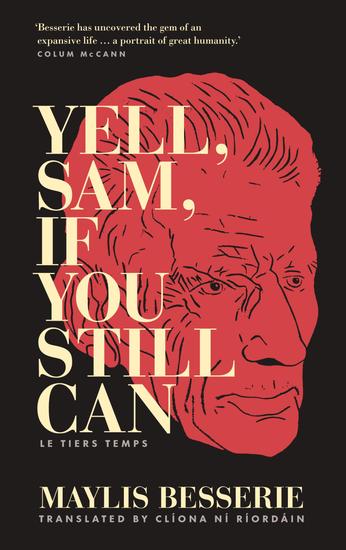
    This novel by Maylis Besserie, the first of her Irish trilogy, shows us Samuel Beckett at the end of his life in 1989, living in Le Tiers-Temps retirement home. It is as if Beckett has come to live in one of his own stage productions, peopled with strange, unhinged individuals, waiting for the end of days.
    Yell, Sam, If You Still Can is filled with voices. From diary notes to clinical reports to daily menus, cool medical voices provide a counterpoint to Beckett himself, who reflects on his increasingly fragile existence. He remains playful, rueful, and aware of the dramatic irony that has brought him to live in the room next door to Winnie, surrounded by grotesques like Hamm or Lucky, abandoned by his wife Suzanne who died before him.
    Besserie delights in Beckett's bilingualism and plays back and forth between the francophone and anglophone properties of language, summoning James Joyce as Beckett reminisces about evenings the two spent together singing, talking and drinking. Largely written in the library of the Centre Culturel Irlandais, Besserie has kept the hum of Irish voices throughout this work.
    Yell, Sam, If You Still Can won the "Goncourt du premier roman", the prestigious French literary prize for first time novelists, just before the country went into lockdown. Besserie is now planning a further two novels that will explore the links between Ireland and France and is touted as the new star of the French literary world.
    
    Financial Times Book of the Year 2022
    Zum Buch
  • Kingmaker - cover

    Kingmaker

    Griff Hosker

    • 0
    • 0
    • 0
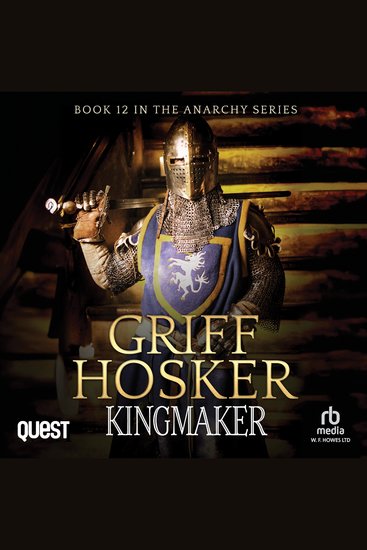
    When the Earl of Gloucester suddenly dies and the Empress Matilda is forced to return to Normandy it seems that the civil war is about to end and Stephen of Blois will have succeeded in winning his crown. The Warlord of the North takes the fledgling Prince Henry under his wing and begins to train him to become king. When others try to take advantage of the Warlord's position he and his warriors have to dig deep to defeat their enemies. Gradually Henry becomes a man and shows that he has the potential to become a king.
    Zum Buch
  • Sugar Land - cover

    Sugar Land

    Tammy Lynne Stoner

    • 0
    • 1
    • 0
    A novel of a lesbian coming of age in Depression-era small-town Texas: “The love child of Fannie Flagg and Rita Mae Brown . . . [a] ravishing debut.” —Kirkus Reviews (starred review)   It's 1923 in Midland, Texas, and Miss Dara falls in love with her best friend―who also happens to be a girl. Terrified, Miss Dara takes a job at the Imperial State Prison Farm for men. Once there, she befriends inmate and soon-to-be legendary blues singer Lead Belly, who sings his way out (true story)―but only after he makes her promise to free herself from her own prison…   “The story takes many delightful twists and turns, always described succinctly and colorfully by this narrator, who is irresistible even on days when she's ‘retaining enough water to grow rice in Arizona’ . . . A postcard of small-town Texas life from Prohibition through civil rights, tracing the treatment and awareness of gay people through these decades.” —Kirkus Reviews (starred review)   “How can you not adore a novel about love, food, and how working in a prison can help you discover who you really are? Every page has a beating heart; every character is so alive, you swear you hear them breathing. Stoner is an original and this debut is just fantastic.” —Caroline Leavitt, New York Times–bestselling author of With or Without You
    Zum Buch
  • Forgotten Authors The - Men - Volume 1 - J Y Ackerman to Edward Bulwer-Lytton - cover

    Forgotten Authors The - Men -...

    Juhani Aho, A J lan, Grant...

    • 0
    • 0
    • 0
    Throughout the long centuries of human history is the want, and the need, to share information, to exchange ideas and for that knowledge and experience, for curiosity and learning, to be the basis of a civil society. 
    In literature the ambition is much narrower.  In order to be known, to be popular, you had to be published.  And for that people had to know you existed and your ideas worth reading.  Obviously for most of humanity’s time people couldn’t read and texts couldn’t be published in any great number. 
    In the 15th Century Gutenberg’s printing press began the revolution to address the second and by the 19th century had gathered pace with startling speed and mass distribution.  Education for the many was brought in to help people understand more of their world and, with new skills, how to have a better place within it.  Now, if the powers that owned the presses and means of distribution agreed an audience would now be able to avail themselves of your ideas, your printed words.  
    Sadly, in the thirst for the new, the recent and the past fell from sight, relegated to dark corners and dusty shelves.   
    But the printed word is rarely without someone, somewhere busying themselves through piles of papers and books rediscovering what a good story is, whatever its age. 
    In this volume we offer up a small selection of those talents whose time has now come again.
    Zum Buch
  • The Sword of Cnut - Danelaw Saga Book 5 - cover

    The Sword of Cnut - Danelaw Saga...

    Griff Hosker

    • 0
    • 0
    • 0
    Sven Saxon Sword was now a lord. He ruled a small village on the river. He thought that his service toking Cnut, now that he had helped him to gain the crown, was over. He was wrong. Not only does he have to deal with Norse raiders but he is also summoned to serve in a war against the Swedes. The Oathsword is called upon again to save, not only King Cnut and his ambitions, but also his home.
    Zum Buch
  • The Philistine - A touching story of an childs selfless actions despite tragedy striking him - cover

    The Philistine - A touching...

    E M Delafield

    • 0
    • 0
    • 0
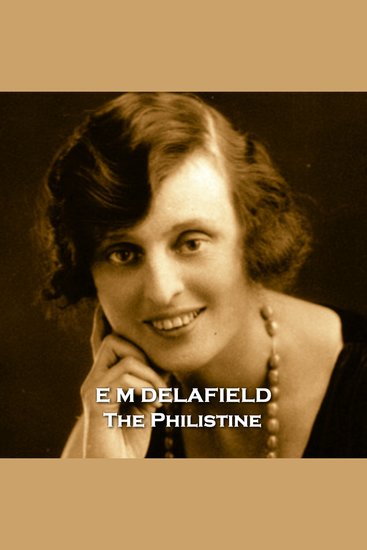
    Edmée Elizabeth Monica Dashwood, née de la Pasture, and more commonly known as E M Delafield, was born in Steyning, Sussex on 9th June 1890.   
     
    Raised in the fading years of the Victorian era with its Empire and strict moral codes Delafield, not yet married at twenty-one, joined a French religious order, in Belgium, but soon decided that this was a totally wrong choice for her.   
     
    Her next challenge was her work during the horror of the First World War.  Delafield decided to take up a position as a nurse in a Voluntary Aid Detachment in Exeter.  It was whilst here that she managed to write her first novel, ‘Zella Sees Herself’.   
     
    With the end of the war new opportunities were sought and she now took up a position for the South-West Region of the Ministry of National Service in Bristol.  With it came enough time to write two more novels: ‘The War Workers’ (1918) and ‘The Pelicans’ (1918).   
     
    On 17th July 1919, she married Colonel Arthur Paul Dashwood, OBE, an engineer responsible for building the massive docks at Hong Kong Harbour.  The marriage produced two children; Lionel and Rosamund.  That same year her fourth novel, ‘Consequences’, was published.   
     
    The couple spent their early years in Malaya but returned to England to live in Croyle, an old house in Kentisbeare, Devon.  Delafield continued to collect responsibilities and organise whatever she could.  At the initial meeting of the Kentisbeare Women's Institute, Delafield was unanimously elected president, and also became a Justice of the Peace, raised the children and, of course, continued to write her best-selling novels.   
     
    Her greatest work is undoubtedly the largely autobiographical ‘Diary of a Provincial Lady’, which is a simply structured journal of the life of an upper-middle class Englishwoman, living mostly in a Devon village of the 1930s.  It spawned several best-selling sequels.  Her works also includes stage and radio plays, film scripts and short stories.  
     
    After the death of her son in 1940, her health began to markedly decline.    
     
    E M Delafield died on 2nd December 1943 after collapsing whilst giving a lecture in Oxford.  She was 53.
    Zum Buch