Rejoignez-nous pour un voyage dans le monde des livres!
Ajouter ce livre à l'électronique
Grey
Ecrivez un nouveau commentaire Default profile 50px
Grey
Abonnez-vous pour lire le livre complet ou lisez les premières pages gratuitement!
All characters reduced
Writing the Wisdom - Creative writing as healing from childhood trauma - cover

Writing the Wisdom - Creative writing as healing from childhood trauma

Penny Johnson, Barbara Glasson

Maison d'édition: Sacristy Press

  • 0
  • 3
  • 0

Synopsis

Writing the Wisdom explores the effects and emotional impact that trauma and abuse have on a person's life whilst also bringing together religious, spiritual, pastoral and therapeutic understandings. In a partnership between a church minister and an accredited counsellor, Barbara Glasson and Penny Johnson have used “creative writing for wellbeing” with women survivors of childhood trauma, including organized ritual abuse, a subject that still remains largely hidden from our society.


The poetry and prose that have been produced during these creative writing workshops may help those who have lived through such devastation to feel less isolated, by giving them the opportunity to read about others' experiences.

 
Writing the Wisdom also explores church practices that are unhelpful for those who have experienced abuse. Language and litany, listening and witnessing, healing, forgiveness and wisdom are all discussed, in the hope of enabling faith communities to look more closely and honestly at our way of life and to be mindful of the difficulties that some survivors of childhood abuse face.
Disponible depuis: 15/04/2022.
Longueur d'impression: 141 pages.
D'autres livres qui pourraient vous intéresser

  • Citizenship Without Illusions - A Christian Guide to Political Engagement - cover

    Citizenship Without Illusions -...

    David T. Koyzis

    • 0
    • 0
    • 0
    Christianity Today Book Awards Finalist—Politics and Public Life
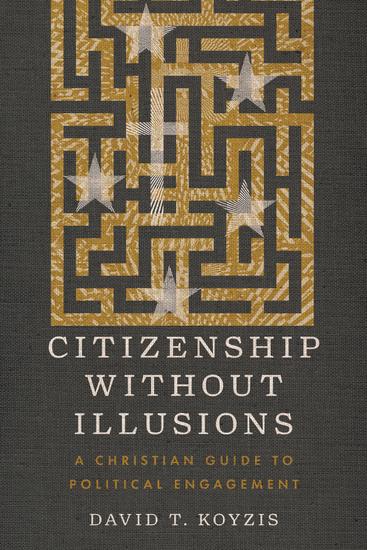
    How can Christians live as citizens of God's kingdom while also fulfilling their responsibilities as citizens of political communities? David Koyzis, author of Political Visions and Illusions, offers a brief, practical guide on political engagement and citizenship.
    During numerous conversations with students and readers of his books in Canada, the United States, Brazil, Chile, the United Kingdom, and elsewhere, Koyzis has heard the same questions repeated. Can Christians participate in the public square without buying in to political illusions—ideologies that become idolatrous? Is it better to avoid politics than risk ethical compromise or division among believers? In Citizenship Without Illusions, Koyzis presents a case for political engagement as a way to love our neighbors that doesn't require our full devotion to parties or ideologies. He explores key topics such as:
    
    - the responsibilities of citizens
    - how to vote
    - mobilizing for political action
    - citizenship under less-than-ideal circumstances
    - the importance of both local and global engagement
    - the role of the church in society
    Using examples from various eras and places, Koyzis guides readers to make the best of their own political situations, make thoughtful decisions, and promote societal diversity while respecting those who disagree. With clear understanding and confidence in their ultimate allegiance, Christians can employ their citizenship for the greater good.
    Voir livre
  • Maladies of Empire - How Colonialism Slavery and War Transformed Medicine - cover

    Maladies of Empire - How...

    Jim Downs

    • 0
    • 0
    • 0
    Most stories of medical progress come with ready-made heroes. John Snow traced the origins of London's 1854 cholera outbreak to a water pump, leading to the birth of epidemiology. Florence Nightingale's contributions to the care of soldiers in the Crimean War transformed hospitals from crucibles of infection to sanctuaries of recuperation. Yet histories of individual innovators ignore many key sources of medical knowledge. 


    Reexamining the foundations of modern medicine, Jim Downs shows that the study of infectious disease depended crucially on the unrecognized contributions of nonconsenting subjects—conscripted soldiers, enslaved people, and subjects of empire. Plantations, slave ships, and battlefields were the laboratories in which physicians came to understand the spread of disease. Military doctors learned about the importance of air quality by monitoring Africans confined to the bottom of slave ships. Statisticians charted cholera outbreaks by surveilling Muslims in British-dominated territories returning from their annual pilgrimage. 


    The scientific knowledge derived from discarding and exploiting human life is now the basis of our ability to protect humanity from epidemics. Boldly argued and eye-opening, Maladies of Empire gives a full account of the true price of medical progress.
    Voir livre
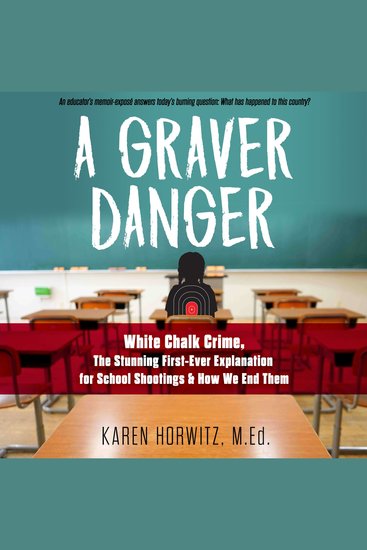
  • A Graver Danger - White Chalk Crime The Stunning First-Ever Explanation for School Shootings & How We End Them - cover

    A Graver Danger - White Chalk...

    Karen Horwitz M.Ed

    • 0
    • 0
    • 0
    You will be thrilled to find a book that answers what happened to America so you can help heal our beloved country. In 1995, Karen Horwitz, aka the CHANGE EVERYTHING TEACHER, discovered our schools suffered from the 'Harvey Weinstein syndrome'—the powerful get their way no matter how wicked until someone finds the courage to expose them. She wrote a memoir to do to those running our schools what that brave actress who testified against Weinstein did — expose and end wrongdoing of a different kind. Readers will learn why we have school shootings and how to end them and restore democracy.She names the corruption that transformed our schools from revered institutions to mere shells White Chalk Crime™ and reveals how it dismantled democracy. The sheer audacity and disbelief of this corruption prompted her to write a book so that citizens could comprehend its extent. She warns, "There are consequences for a society that allows evil an honored home. One is school shootings, which are the tip of the democracy-destroying iceberg, taking our country down Titanic-style. Abraham Lincoln warned, 'The philosophy of the schoolroom in one generation will be the philosophy of government in the next.'  When I taught, it was as if  Trump ran our schools."She reveals that those in power secretly thwart school reform and presents an 'idea invention' that will revolutionize education as Jeff Bezos did to marketing and Steve Jobs to computers. It includes a blueprint for top-notch schools that ensures a home for great teachers and tells about a grassroots movement for change.This book is a beacon of hope, showing that change is within reach. It inspires the reader to feel optimistic about the future of education and democracy. This engaging and insightful book on education takes those who cherish democracy and fear autocracy on a journey deep inside our schools, where the root of many of this nation's challenges lies. It will change a whole lot. PDFs at WhiteChalkCrime.com/audio
    Voir livre
  • Should We Fall To Ruin - cover

    Should We Fall To Ruin

    Harrison Christian

    • 0
    • 0
    • 0
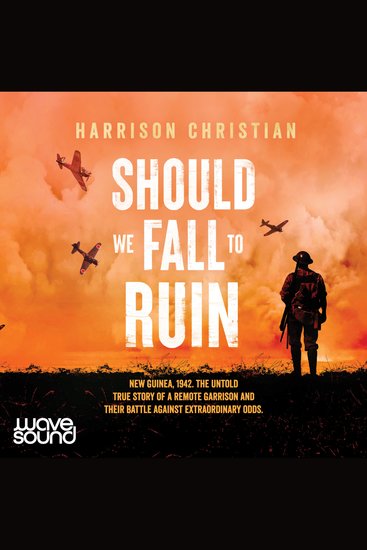
    This is the untold story of a remote garrison of Allied soldiers on New Guinea during WWII who stood up to the Japanese invasion despite insurmountable odds. 
    When the Japanese invade in 1942, the Australian men and women stationed at the New Guinea port of Rabaul flee into the jungle. Written off by their government as ‘hostages to fortune’, the little-known garrison on Australia’s tropic frontier has been left with no modern equipment, no lifeline to the outside, and no means of escape. Most are captured and killed in the sinking of the prison ship Montevideo Maru, which remains Australia’s worst sea disaster. But the surviving soldiers and nurses carry on, to fight the Japanese on other fronts, or to witness the collapse of the Japanese Empire from the inside. Having borne the brunt of defeat, their letters and diaries also record the turning point of the war and the march to victory. 
    Rich in detail drawn from first person accounts, Should We Fall To Ruin illuminates this untold period in military history. It is a compelling tale of bravery and resilience in the face of a seemingly unstoppable enemy.
    Voir livre
  • Digital Mavericks - A Guide to Web3 NFTS and Becoming the Main Character of the Next Internet Revolution - cover

    Digital Mavericks - A Guide to...

    Debbie Soon

    • 0
    • 0
    • 0
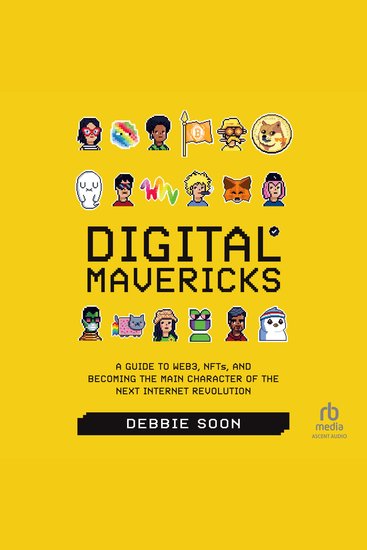
    In Digital Mavericks, founder, NFT collector, and tech entrepreneur Debbie Soon delivers an exciting and eye-opening exploration of the seismic changes and tremendous opportunities that can be found at the intersection of creativity and technology. You'll learn about how blockchain technology and non-fungible tokens (NFTs) are challenging the way we think about our careers and discover inspirational stories behind the personal triumphs and challenges experienced by successful artists, entrepreneurs, and technologists. 


    This book is a career guide for the new age of the Internet, a world being reshaped by blockchain technology. Despite the countless fortunes Web3 has already created, it remains a space subject to both criticism and skepticism. Digital Mavericks is an easy-to-follow roadmap for those eager to play a part in shaping the future of our increasingly digital world. You’ll also find in-depth interviews and stories from movers and shakers in the space; an explanation of the evolution of the Internet, the basics of how Web3 works and is being used today, and its historical significance at this moment in time; A step-by-step guide on how best to enter and navigate the Web3 space; and predictions for the future and how we can best prepare ourselves for the impact of regulatory changes and generative AI on blockchain adoption.
    Voir livre
  • Romantic Things - A Tree A Rock A Cloud - cover

    Romantic Things - A Tree A Rock...

    Mary Jacobus

    • 1
    • 1
    • 0
    Our thoughts are shaped as much by what things make of us as by what we make of them. Lyric poetry is especially concerned with things and their relationship to thought, sense, and understanding. In Romantic Things, Mary Jacobus explores the world of objects and phenomena in nature as expressed in Romantic poetry alongside the theme of sentience and sensory deprivation in literature and art. Jacobus discusses objects and attributes that test our perceptions and preoccupy both Romantic poetry and modern philosophy. John Clare, John Constable, Rainer Maria Rilke, W. G. Sebald, and Gerhard Richter make appearances around the central figure of William Wordsworth as Jacobus explores trees, rocks, clouds, breath, sleep, deafness, and blindness in their work. While she thinks through these things, she is assisted by the writings of Maurice Merleau-Ponty, Jacques Derrida, and Jean-Luc Nancy. Helping us think more deeply about things that are at once visible and invisible, seen and unseen, felt and unfeeling, Romantic Things opens our eyes to what has been previously overlooked in lyric and Romantic poetry.
    Voir livre