Rejoignez-nous pour un voyage dans le monde des livres!
Ajouter ce livre à l'électronique
Grey
Ecrivez un nouveau commentaire Default profile 50px
Grey
Abonnez-vous pour lire le livre complet ou lisez les premières pages gratuitement!
All characters reduced
Terra Australis Incognita - cover

Terra Australis Incognita

Pedro Fernandes de Queirós

Maison d'édition: Cervantes Digital

  • 0
  • 0
  • 0

Synopsis

"Terra Australis Incognita" by Pedro Fernandes de Queirós takes readers on an extraordinary journey into the mysterious Southern Hemisphere during the Age of Exploration. Inspired by the spirit of discovery, Queirós embarks on a quest to find the elusive southern continent, believed to be a land of immense riches and wonders. The narrative unfolds against the backdrop of the 16th century, weaving together elements of historical exploration, maritime adventure, and the relentless pursuit of the unknown.

Queirós, a Portuguese navigator, captures the imagination with vivid descriptions of uncharted territories, encounters with indigenous peoples, and the challenges faced by his expedition. The narrative explores not only the physical landscapes but also the depths of human curiosity and the insatiable desire to unveil the secrets of the world. As readers traverse unexplored seas and navigate through the uncertainties of discovery, they are immersed in a tale that resonates with the daring spirit of exploration and the quest for Terra Australis Incognita, the mythical southern land.

This captivating book invites readers to join Queirós on his seafaring odyssey, filled with intrigue, ambition, and the allure of the unknown. "Terra Australis Incognita" is a compelling blend of historical chronicle and maritime adventure, offering a glimpse into the age when the boundaries of the known world were pushed to reveal new realms of possibility. Embark on a literary voyage that transcends time and borders, exploring the uncharted territories of history and the human spirit.
Disponible depuis: 27/01/2024.
D'autres livres qui pourraient vous intéresser

  • Spanish Empire in the Americas The: The History of Spain’s Colonization across Central America and South America - cover

    Spanish Empire in the Americas...

    Editors Charles River

    • 0
    • 0
    • 0
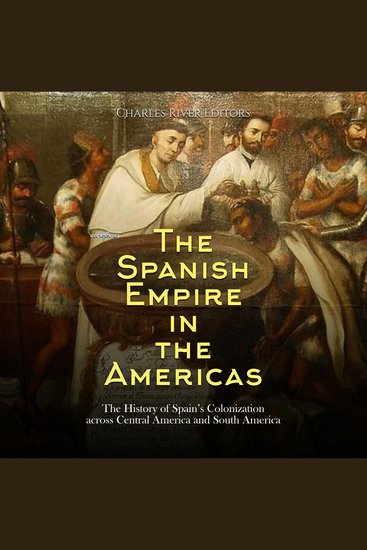
    By the time Christopher Columbus started setting east from the New World, he had explored San Salvador in the Bahamas (which he thought was Japan), Cuba (which he thought was China), and Hispaniola, the source of gold. As the common story goes, Columbus, en route back to Spain from his first journey, called in at Lisbon as a courtesy to brief the Portuguese King John II of his discovery of the New World. King John subsequently protested that according to the 1479 Treaty of Alcáçovas, which divided the Atlantic Ocean between Spanish and Portuguese spheres of influence, the newly discovered lands rightly belonged to Portugal. To make clear the point, a Portuguese fleet was authorized and dispatched west from the Tagus to lay claim to the “Indies,” which prompted a flurry of diplomatic activity in the court of Ferdinand and Isabella. At the time, Spain lacked the naval power to prevent Portugal from acting on this threat, and the result was the hugely influential 1494 Treaty of Tordesillas. 
    The Treaty of Tordesillas was one of the most important documents of its kind of the age, for it established the essential parameters of the two competing empires, the first of the major European imperial entities. The Treaty of Tordesillas drew an imaginary line from pole to pole, running 100 leagues west of the westernmost islands of the Azores. According to the terms of a supporting papal bull, all the lands to the west of that belonged to Spain, and all of those to the east belonged to Portugal. What this meant in practical terms was that Portugal was given Africa and the Indian Ocean while Spain was granted all the lands to the west, including the Americas and the Caribbean, all collectively known as the “Indies,” or the New World. 
    Perhaps inevitably, a regional rivalry had developed as the Portuguese began to establish a colony in Brazil and push its boundaries southwards. 
    Voir livre
  • Swapped for the Beast - Gender Swap - cover

    Swapped for the Beast - Gender Swap

    Kinky Press

    • 0
    • 0
    • 0
    Young Prince Thomas is a spoilt brat.  
      
    As punishment for his behavior he is sold to the cruel Earl to cook and clean and be his loyal servant. 
      
    But to remain anonymous—and teach him a lesson—he is cursed... he must endure servitude as the beautiful, petite and buxom Belle. She finds out the Earl has gained his ravenous reputation because he has been cursed as well—turned into a half-beast of a man. 
      
    What you’ve heard is a myth. It isn’t true love’s kiss which breaks curses—it takes something much more powerful. Like some good, hard thrusting. 
      
    But will Belle want to be “cured”?
    Voir livre
  • Choosing Well - The Good the Bad and the Trivial - cover

    Choosing Well - The Good the Bad...

    Chrisoula Andreou

    • 0
    • 0
    • 0
    Self-defeating behavior and the damage it can cause constitute a rich and intriguing area of philosophical inquiry. Choosing Well explores the challenges associated with effective choice over time from both theoretical and practical perspectives. Andreou focuses on the challenges raised by cyclic preferences and incomplete preferences, both of which interfere with our ability to neatly order our options and thus make us susceptible to self-defeating patterns of choice which in turn create unacceptable results. 


    What are we to do if we find ourselves with cyclic preferences or with incomplete preferences? Do such preferences make us irrational? Andreou argues that rationality does not invariably prohibit disorderly preferences but does prompt us to proceed with caution when preferences are disorderly. Theories of rational choice often dismiss or abstract away from the sorts of disorderly preferences that Andreou focuses on, since they assume that rational agents can and should have neat preferences over their options. Instead, Andreou suggests, rationality can validate certain disorderly preference structures while also protecting us from self-defeating patterns of choice.
    Voir livre
  • D-Day Exposed: Secrets of the Most Pivotal WWII Battle - "Master the story of D-Day! Engage with immersive audio lessons that unveil WWII's most crucial moments" - cover

    D-Day Exposed: Secrets of the...

    Sullivan Bexley

    • 0
    • 0
    • 0
    D-Day Exposed: Secrets of the Most Pivotal WWII Battle 
    ⭐⭐ Simplified Guide & Explanations Included ⭐⭐ 
    Are you eager to deepen your understanding of D-Day and uncover the secrets of this monumental WWII battle? 
    Looking for a thorough guide that encapsulates all the essential elements related to the bravery and strategies of D-Day? 
    Your quest ends here! 
    This guide serves as your ultimate companion for enhancing your knowledge, sharpening your skills, and engaging in practical exercises. With this resource, you're set to thrive. 
    Updated for the Latest Insights on D-Day's Historical Impact. 
    Key features of this comprehensive guide: 
    - In-depth insights about D-Day and its crucial role in WWII 
    - Thorough explanations of the strategies and heroics involved in the battle 
    - Effective strategies for understanding the complexities and significance of the event 
    Our guide stands out through its extensive coverage, which is vital for your success in grasping the intricacies of D-Day. Concepts aren’t just briefly touched upon; they are explored in detail with clarity. 
    Crafted with a clear structure and straightforward language, our D-Day Exposed guide ensures smooth transitions between topics. Say farewell to complicated jargon and welcome concise, accurate, and engaging content. 
    So, why wait? Click the BUY NOW button, secure your guide, and embark on your journey to uncover the untold bravery and strategy of D-Day! 
    "D-Day Exposed: Secrets of the Most Pivotal WWII Battle" invites you to experience history like never before.
    Voir livre
  • The Uses of Delusion - Why It's Not Always Rational to Be Rational - cover

    The Uses of Delusion - Why It's...

    Stuart Vyse

    • 0
    • 0
    • 0
    Although reason and rationality are our friends in almost all contexts, in some cases people are better off putting reason aside. In a number of very important situations, we benefit by not seeing the world as it is, and by not behaving like logic-driven machines. 


    The Uses of Delusion is about aspects of human nature that are not altogether rational but, nonetheless, help us achieve our social and personal goals. Psychologist Stuart Vyse presents a lively, accessible exploration of the psychological concepts behind "useful delusions," fleshing out how delusional thinking may play a role in love and relationships, illness and loss, and personality and behavior. Along the way Vyse draws on the work of William James, Daniel Kahneman, and Joan Didion—who wrote about her compelling belief that her husband, though deceased, would soon return to her. 


    Throughout, Vyse strives to answer the question: why would some of our most illogical beliefs be as helpful as they are? The concluding chapter offers an explanation grounded in natural selection—the ability to fool ourselves, Vyse argues, has actually helped us to survive. In the last section of The Uses of Delusion, Vyse offers suggestions for determining when reason should rule and when intuition and emotion should be allowed to take over.
    Voir livre
  • Unchained Privacy: Blockchain Security and the Fight for Civil Liberties - cover

    Unchained Privacy: Blockchain...

    BLOCKCHAINS BLUEPRINT

    • 0
    • 0
    • 0
    This audiobook explores the crucial intersection of privacy, security, and civil liberties in the digital age. It discusses how increasing data collection and surveillance threaten individual autonomy and free expression. Blockchain technology is presented as a potential solution, offering decentralized and secure methods for managing personal data and financial transactions. The text examines the benefits of blockchain, like empowering individuals and enhancing financial inclusion, but it also acknowledges challenges such as regulatory hurdles and potential for misuse. Ultimately, it champions the need to balance privacy with security and to promote responsible development of blockchain technologies to safeguard fundamental freedoms.
    Voir livre