Begleiten Sie uns auf eine literarische Weltreise!
Buch zum Bücherregal hinzufügen
Grey
Einen neuen Kommentar schreiben Default profile 50px
Grey
Jetzt das ganze Buch im Abo oder die ersten Seiten gratis lesen!
All characters reduced
Captain Paul Watson Interview - "You can't destroy a movement"" - cover

Captain Paul Watson Interview - "You can't destroy a movement""

Paul Watson, Sarah Schuster, Michele Scuirba

Verlag: Edition Faust

  • 0
  • 1
  • 0

Beschreibung

"You can take down an individual, you can take down an organization, but you can't destroy a movement." Paul Watson 

Captain Paul Watson, honored with the Jules Verne Award for his environmental activism in 2012, is a fighter with a clear mission: to protect the world's oceans from illegal exploitation and environmental destruction.
"If the oceans die, we die." For decades, Paul Watson has risked his life for the conservation and well-being of marine life. At the age of 27, he founded the Sea Shepherd Conservation Society. In 1978, the Sea Shepherd became the first ship of the now world-famous fleet with the Jolly Roger flag, modified with a trident and shepherd's crook. In a new expanded edition, including a second interview and numerous extraordinary images from the Sea Shepherd archives, Watson vividly recounts the exciting stages of his unique life, opening up an exclusive insight into his highly politicized arrest in Frankfurt in 2012 and his adventurous escape that sent him on a nerve-wracking journey filled with storms and obstacles.
Verfügbar seit: 09.12.2021.

Weitere Bücher, die Sie mögen werden

  • Hans-Ulrich Rudel: The Life and Legacy of the Luftwaffe’s Deadliest Stuka Pilot - cover

    Hans-Ulrich Rudel: The Life and...

    Editors Charles River

    • 0
    • 0
    • 0
    Few people personified the advancements, abilities, and tactical adeptness of the Luftwaffe like Hans-Ulrich Rudel, the most successful dive bomber in the history of warfare. Like hundreds of millions of others born in the early 20th century, his life was shaped by the Second World War, which started when he was just 23. He was born into and shaped by one of the most brutal and infamous regimes in history, and once indoctrinated, he fought determinedly and with real commitment in support of that regime. He flew over 2,500 combat missions, reportedly destroying over 500 Soviet tanks, 170 artillery pieces, 800 other vehicles, and a battleship on the way to becoming the highest-decorated Nazi soldier of World War II, receiving the Knight’s Cross with Golden Oak Leaves, Swords, and Diamonds. He was shot down, or crash landed, multiple times, and even after having reportedly been told by Hitler to stop flying on several occasions, he insisted on returning to the front to fight with his comrades. He lost a leg to gunfire in early 1945 but carried on with his combat missions despite the pain and the practical difficulties of flying with one leg. There is no denying his bravery, however unpleasant the cause for which he fought. 
    Hans-Ulrich Rudel is therefore a challenging character to analyze. His autobiography, Stuka Pilot, was originally entitled Trotzdem (“In spite of everything”), pointing strongly to his continuing support, post-war, for the Nazi ideology. But his book remains a detailed, fascinating, largely credible (and mostly ideology-free) account of his wartime experiences, even as his final pages include references to his proud insistence on performing the Nazi salute in front of the American soldiers who had taken him prisoner and who were providing medical care to his amputated stump.
    Zum Buch
  • Ibn Battuta: A short biography - 5 Minutes: Short on time – long on info! - cover

    Ibn Battuta: A short biography -...

    5 Minutes, 5 Minute Biographies,...

    • 0
    • 0
    • 0
    Ibn Battuta, first Arabic explorer from the middle ages: Life and work in a short biography! Everything you need to know, brief and concise. Infotainment, education and entertainment at its best!
    Zum Buch
  • Pancho Villa - The Bandit That Fought in the Mexican Revolution - cover

    Pancho Villa - The Bandit That...

    Kelly Mass

    • 0
    • 0
    • 0
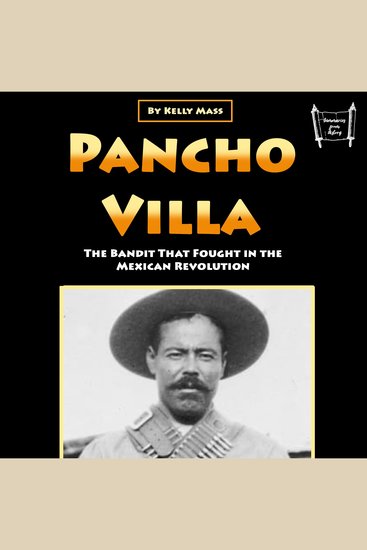
    Francisco Villa, better known as Pancho Villa, was a key figure in the Mexican Revolution, known for his transformation from a bandit to one of the revolution’s most influential commanders. Villa’s rise to prominence in the early 20th century marked him as a central player in the violent upheavals that reshaped Mexico’s political landscape. In 1911, Villa became a significant actor in the revolutionary violence that led to the overthrow of President Porfirio Díaz, ushering in Francisco I. Madero’s government. Villa, initially a leader of outlaw groups, aligned himself with Madero’s revolutionary cause, contributing to the instability that culminated in the fall of Díaz’s long-standing dictatorship. 
    The power dynamics in the revolution shifted again when General Victoriano Huerta attempted a right-wing coup in February 1913. As Madero’s government crumbled under Huerta’s forces, Madero led anti-Huerta soldiers in the Constitutionalist Army from 1913 to 1914. The civilian governor of Coahuila, Venustiano Carranza, became the leader of this anti-Huerta coalition. After Huerta’s eventual defeat and exile in July 1914, Villa and Carranza began to diverge politically. Villa, alongside other revolutionary leaders, assembled a gathering of generals in a bid to form a new government, but the resulting coalition was weak and inefficient. Though Villa and Emiliano Zapata, another revolutionary leader, were formally allied during this period, their partnership was largely theoretical. Both men supported land reform, but Villa’s reforms remained unrealized during his tenure of influence.
    Zum Buch
  • Nightstalkers - The Wright Project and the 868th Bomb Squadron in World War II - cover

    Nightstalkers - The Wright...

    Richard Phillip Lawless

    • 0
    • 0
    • 0
    “Takes the reader into the Pacific war and offers a front-row seat to the exploits of the Wright Project and their highly innovative technology.” —War History Network 
     
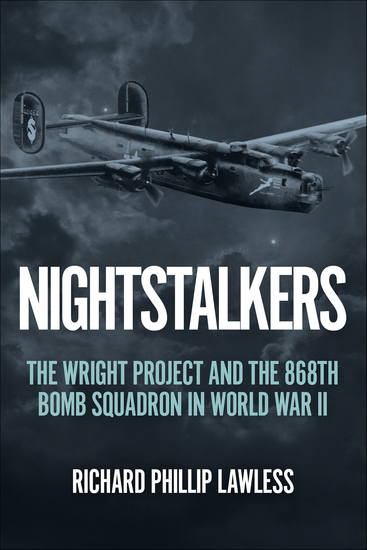
    In August 1943, a highly classified US Army Air Force unit, code-named the “Wright Project,” departed Langley Field for Guadalcanal in the South Pacific to join the fight against the Empire of Japan. Operating independently, under sealed orders drafted at the highest levels of Army Air Force, the Wright Project was unique, both in terms of the war-fighting capabilities provided by classified systems the ten B-24 Liberators of this small group of airmen brought to the war, and in the success these “crash-built” technologies allowed. The Wright airmen would fly only at night, usually as lone hunters of enemy ships. In so doing they would pave the way for the United States to enter and dominate a new dimension of war in the air for generations to come.  
     
    This is their story, from humble beginnings at MIT’s Radiation Lab and hunting U-boats off America’s eastern shore, through to the campaigns of the war in the Pacific in their two-year march toward Tokyo. The Wright Project would prove itself to be a combat leader many times over and an outstanding technology innovator, evolving to become the 868th Bomb Squadron.  
     
    Comprehensive and highly personal, this story can now be revealed for the very first time, based on official sources, and interviews with the young men who flew into the night. 
     
    “A limber romp across the world of electronics and into the history of World War II.” —ARGunners.com
    Zum Buch
  • What We Don't Do - Inaction in the Face of Suffering and the Drive to Do More - cover

    What We Don't Do - Inaction in...

    Nick Cooney

    • 0
    • 0
    • 0
    When we think about whether we are good people leading a good life, we usually think about actions. Bad people do bad things that hurt others. Good people do good things that help others, and they avoid doing bad things. Simple. 


    But while our actions certainly have consequences, today our inactions have far greater and far graver consequences. Bad actions can result in the suffering of a few or several dozen others; inaction can result in the extreme misery of thousands. 


    For nearly our entire history as a species, we lived in small groups with minimal resources, leaving our ability to help others limited. Thanks to massive global populations, huge wealth disparities, and modern technologies, the average person now has more power to improve the lives of others than nearly anyone who has ever lived. But the flip side of that great power is the dizzyingly high cost of inaction, in which lives can hang in the balance with each dollar and hour of time we spend. 


    This is a book about what we don't do. It's about our failures to act and the suffering others endure as a result. It's also about the incredible good that can be achieved when we cultivate an internal drive to do more.
    Zum Buch
  • Basic Income - A Short Guide - cover

    Basic Income - A Short Guide

    Anne Miller

    • 0
    • 0
    • 0
    This innovative book provides a new perspective on Basic Income - a regular, unconditional payment to every citizen of the country. This comprehensive book has been rigorously researched and thus will appeal to academics, policy-makers, and the general reader concerned about the current state of social security in the UK. Basic Income in practice, A Basic Income includes details of real Basic Income Schemes.
    Zum Buch