Rejoignez-nous pour un voyage dans le monde des livres!
Ajouter ce livre à l'électronique
Grey
Ecrivez un nouveau commentaire Default profile 50px
Grey
Abonnez-vous pour lire le livre complet ou lisez les premières pages gratuitement!
All characters reduced
The Right to Be Lazy and Other Studies - Enriched edition - cover

The Right to Be Lazy and Other Studies - Enriched edition

Paul Lafargue

Traducteur Charles H. Kerr

Maison d'édition: DigiCat

  • 0
  • 0
  • 0

Synopsis

In "The Right to Be Lazy, and Other Studies," Paul Lafargue presents a provocative examination of labor, leisure, and the meaning of work within a capitalist society. Written in a spirited yet analytical style, Lafargue's book critiques the bourgeois work ethic that valorizes constant toil and subjugates the human spirit. Drawing upon Marxist principles, he argues for the inherent value of idleness as a critical form of self-liberation, positioning laziness not as a vice but as a legitimate right in reclaiming individual happiness. As an early socialist thinker, Lafargue's perspective is steeped in the socio-political context of 19th-century Europe, where the burgeoning industrial revolution catalyzed debates on labor and leisure's relationship to human fulfillment. Paul Lafargue, a French Marxist and the son-in-law of Karl Marx, imbues this work with personal and ideological insights that stem from his upbringing and intellectual milieu. His experiences as a radical in a rapidly industrializing society, coupled with a deep commitment to socialist ideals, inform his critique of the oppressive nature of relentless labor. Lafargue's philosophical legacy is cemented by this passion for advocating the revolutionary potential of leisure, contextualizing his arguments within broader Marxist discourse. For those intrigued by labor theory or seeking a deeper understanding of the interplay between work and well-being, Lafargue's argument is a must-read. "The Right to Be Lazy" challenges prevailing notions of productivity while advocating for a radical re-evaluation of our relationship with work. This essential text invites readers to reconsider what it means to live a fulfilled life free from the shackles of perpetual labor.

In this enriched edition, we have carefully created added value for your reading experience:
- A comprehensive Introduction outlines these selected works' unifying features, themes, or stylistic evolutions.
- A Historical Context section situates the works in their broader era—social currents, cultural trends, and key events that underpin their creation.
- A concise Synopsis (Selection) offers an accessible overview of the included texts, helping readers navigate plotlines and main ideas without revealing critical twists.
- A unified Analysis examines recurring motifs and stylistic hallmarks across the collection, tying the stories together while spotlighting the different work's strengths.
- Reflection questions inspire deeper contemplation of the author's overarching message, inviting readers to draw connections among different texts and relate them to modern contexts.
- Lastly, our hand‐picked Memorable Quotes distill pivotal lines and turning points, serving as touchstones for the collection's central themes.
Disponible depuis: 28/05/2022.
Longueur d'impression: 89 pages.


D'autres livres qui pourraient vous intéresser

  • A Continuous State of War - Empire Building and Race Making in the Civil War–Era Gulf South - cover

    A Continuous State of War -...

    Maria Angela Diaz

    • 0
    • 0
    • 0
    From 1845 to 1865 the Gulf of Mexico was at the center of American expansion and southern imperialism. A Continuous State of War tells the story of several communities as well as countries such as Mexico and Cuba, to uncover the way that wars within the upper rim of the Gulf of Mexico facilitated American and southern attempts to conquer Latin American nations. In the push for westward expansion that preceded the Civil War, white southerners along with other Americans engaged in violent conquest in Latin America and the American West. Through the wars that are chronicled here, white southern concepts of race became more rigidly fixed. 


    Maria Angela Diaz covers several conflicts leading up to the Civil War with Mexicans, Cubans, and Native Americans. She places the Civil War within this framework and follows the trajectory of relations with Latin America through the end of the Civil War and ex-Confederates' attempts to emigrate abroad. Gulf Coast communities facilitated both the physical efforts to seize territory and the construction of the highly racialized imperialist ideas that reimagined Latin America as a region that could secure the South's future. Yet the pursuit of that territory created a fluctuating and uncertain situation that shaped the choices of the diverse peoples who lived along the upper rim of the Gulf of Mexico in ways they did not expect.
    Voir livre
  • When Science Meets Power - 1st Edition - cover

    When Science Meets Power - 1st...

    Geoff Mulgan

    • 0
    • 0
    • 0
    Science and politics have collaborated throughout human history and science is repeatedly invoked today in political debates, from pandemic management to climate change. 


    Leading policy analyst Geoff Mulgan here calls attention to the growing frictions caused by the expanding—and unsolicited—authority being heaped upon science. As science increasingly competes with politics, a defined plan of cooperation is urgently needed. 


    Mulgan outlines science and politics as two distinct, imperfect forms of collective intelligence. Whereas science is ordered around what we know and what is, politics engages what we feel and what matters. Politics functions because it recognizes the limits of power, the need for delegation and expert advice. The intellectual logic of science, on the other hand, focuses on detail and depth, struggling to place its knowledge in wider contexts. The crux of the matter, Mulgan argues, is how can we ensure that crucial decisions taken in democracies are both well informed and legitimate? 


    Rooted in understanding that science and politics are not just fields of ideas but also fields of action, this book proposes ways to ensure that the two work effectively together.
    Voir livre
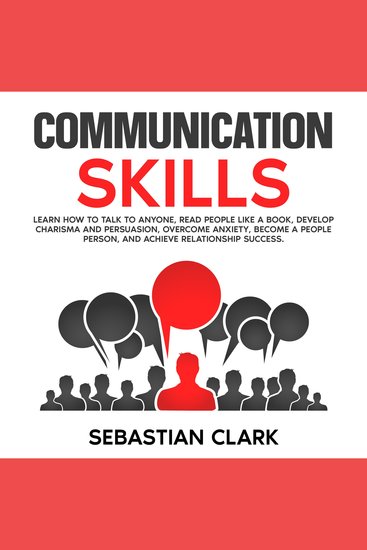
  • Communication Skills: Learn How to Talk to Anyone Read People Like a Book Develop Charisma and Persuasion Overcome Anxiety Become a People Person and Achieve Relationship Success - cover

    Communication Skills: Learn How...

    Sebastian Clark

    • 0
    • 0
    • 0
    Become the charismatic person you’ve always wanted to be! 
    Do you want to be more successful in your relationships? 
    It all starts with communication. 
    But, it's not always easy to do. It can be tough to know what to say, how to say it, and when. You might feel like you're always saying the wrong thing or that you're just not cut out for social interaction. 
    Communication Skills will teach you everything you need to know about communication — from body language and effective listening skills, to verbal and nonverbal cues. 
    You'll learn how to read people like a book, develop charisma and persuasion, overcome anxiety, become a people person, and achieve relationship success. 
    In this audiobook, you’ll discover:The principles of communication: Understand what goes into effective communication and become the person that anyone can open up to!How to master the art of listening: Know that sometimes, silence is the best answer. Not every interaction needs to be double-sided.Strategies to understand unspoken words: Decipher non-verbal communication like body language and be able to read anyone like an open book!How to grab anyone’s attention: Become an expert storyteller with these tips and tricks and never worry about losing someone’s attention again.And more! 
    By mastering the art of communication, you can open up a world of opportunities. And with enough practice, these skills will become second nature to you. 
    These skills will help you overcome anxiety and become a people person – someone who is confident and able to achieve success in any relationship.Scroll up, get the audiobook, and start listening!
    Voir livre
  • Ecce Homo - cover

    Ecce Homo

    Friedrich Nietzsche

    • 0
    • 0
    • 0
    Ecce Homo is a philosophical autobiography written by Friedrich Nietzsche towards the end of his life. In this work, Nietzsche reflects on his life, his philosophical views, and his legacy. The title, which means "behold the man" in Latin, is taken from Pontius Pilate's words when he presents Jesus to the crowd before his crucifixion. Nietzsche uses this phrase to present himself as a kind of messiah of a new philosophy, proclaiming the birth of a new era of thought. Ecce Homo is a complex and challenging work that has been interpreted in many different ways. Some readers see it as a celebration of Nietzsche's life and ideas, while others view it as a cautionary tale about the dangers of radical individualism. Regardless of how it is interpreted, however, Ecce Homo remains an important and influential work in the history of philosophy. Read in English, unabridged.
    Voir livre
  • Dark Psychology 10 - Master the Secrets Science of Silent Domination Subconscious Influence and Unseen Behavioral Control Techniques - cover

    Dark Psychology 10 - Master the...

    Halbert Ward

    • 0
    • 0
    • 0
    Peek Behind the Curtain:  
    Uncover and Harness Dark Psychology 101! 
    Hey there, have you heard about Dark Psychology?  
    Has anyone ever broached the subject with you?  
    Chances are, most people haven't, which is typical. In the gloomy recesses of consciousness, ideas echo and feelings swirl, this is the domain of Dark Psychology, an underappreciated subfield of psychology. Because of the associated taboos, people avoid talking about this subject. In addition to illuminating the forces, "Dark Psychology 1.0" will teach you how to harness or fight against their power.  
    Come explore the uncharted territory of subconscious influence with Halbert Ward, where your thoughts are both your weapon and your strategy. Prepare to be swept away into the shadowy realm of Dark Psychology as he grants you access to the hidden playbook of the human mind. 
    Beyond being just a book, "Dark Psychology 1.0" is your ticket to deciphering the unseen influences that mold our emotions, ideas, and deeds. Ward encourages you to think about the moral quandaries that come with Dark Psychology and to use psychological knowledge responsibly by posing ethical questions. 
    Fasten your seatbelts for a mind-bending voyage that will reveal secrets and test your perceptions. 
    Are you brave enough to flip the page? 
    Get Your Copy Now!
    Voir livre
  • First Nation - History and Facts about Eskimo Sioux and Pawnee Tribes - cover

    First Nation - History and Facts...

    Kelly Mass

    • 0
    • 0
    • 0
    The following 3 books are contained in this audiobook: 
    1: The Inuit (consisting of Alaskan Iupiat, Greenlandic Inuit, and Canadian Inuit) and the Yupik (or Yuit) of eastern Siberia and Alaska are described as Eskimo or Eskimos. The Aleut, who live on the Aleutian Islands, are a comparable 3rd group that's usually omitted from the categorization of Eskimo. The 3 groups have a current typical forefather and speak Eskimo-- Aleut languages, which relate. 
    The development of Europeans marks the start of Alaskan Indians' contemporary history. Russians cruising from Siberia in the eighteenth century were the first to make contact, which was uncommon for The USA and Canada. Traders from the east, mainly from The U.S.A. and Canada's eastern towns, didn't come in the area till the 19th century. Christian missionaries were not active in Alaska till the 20th century in some circumstances. 
    2: The Pawnee are a Central Plains Indian people that used to live in Nebraska and Kansas, yet now call Oklahoma home. They are now called the Pawnee Country of Oklahoma, and its head offices are at Pawnee, Oklahoma. Their Pawnee language belongs to the Caddoan family, and they're called Chatiks si chatiks, or "Men of Men." 
    The Pawnee used to live in earth lodge towns near the Loup, Republican Politician, and South Platte rivers. Throughout the year, the Pawnee people economy turned between producing crops and buffalo searching. 
    3: The Sioux, also called the Oceti Sakowin are a North American people of Native American tribe and First Countries tribes. The contemporary Sioux are split into 2 significant groups based upon language: Dakota and Lakota; they're called together as the Ohéthi akówi ("7 Council Fires"). The term "Sioux" is an exonym stemmed from a French transliteration of the Ojibwe term "Nadouessioux," and can apply to any ethnic group or language dialect within the Great Sioux Country.
    Voir livre