Rejoignez-nous pour un voyage dans le monde des livres!
Ajouter ce livre à l'électronique
Grey
Ecrivez un nouveau commentaire Default profile 50px
Grey
Abonnez-vous pour lire le livre complet ou lisez les premières pages gratuitement!
All characters reduced
The mistery of Tesla and the pyramids - cover

The mistery of Tesla and the pyramids

Patrizia Luraschi

Maison d'édition: NOWO

  • 0
  • 0
  • 0

Synopsis

The Egyptian pyramid is one of the most mysterious structures we have on Earth. Many times we will have wondered, seeing the pyramid of Khufu live or in the figure, how it could is been built, chi l'ha messa lì in quel luogo, e quando; ma soprattutto per quale ragione? Consisting of two million three hundred thousand stones, and weighing six millions tons, a mass of stones perfectly embedded like a laser, carried even from distant areas, and weighing eight tons each. When they were new, the pyramids could be compared to jewels, magnificent structures, which time has hardly scratched. But the most frequent question that comes to mind about them is: who built them? And were human beings able at that time to build something so huge and perfect? Or did they accept some outside help? And why was it so important to put them there? What was the purpose of putting them there? Now we will try to explain this great mystery, which shocked even Nicola Tesla, who was almost close to replicating them, creating free energy for the whol
Disponible depuis: 20/05/2023.
Longueur d'impression: 7 pages.

D'autres livres qui pourraient vous intéresser

  • Navigating Life with Multiple Sclerosis - cover

    Navigating Life with Multiple...

    MD Ben W. Thrower, MS ANP-BC...

    • 0
    • 0
    • 0
    Navigating Life with Multiple Sclerosis will serve as a practical guide for meeting the challenges of this life-long disease. MS may cause a myriad of symptoms and varies greatly from person to person. The authors demystify MS and offer practical solutions and guidance based upon their extensive combined clinical and research experience. The book tackles many of the common symptoms experienced by the person with MS and looks into the future to explore where research is headed. If you are newly diagnosed or have been living with MS for years, this book is an invaluable guide.
    Voir livre
  • NeuroZoology - Minds Networks and the Evolution of Cognition Across the Tree of Life - A Comprehensive Survey of Intelligence Behavior and Consciousness of Life on Earth - cover

    NeuroZoology - Minds Networks...

    Dr. Nick Coman, I. A.I.

    • 0
    • 0
    • 0
    A 48-Lecture Odyssey Through the Architecture of Thought in Animals, Fungi, and Swarms 
    From octopus arms that think for themselves to slime molds that solve mazes without neurons, NeuroZoology takes listeners on an astonishing journey through the minds of creatures great and small—and some without brains at all. 
    Spanning 48 richly narrated lectures optimized for audiobook format, this course redefines what it means to think, feel, decide, and remember in the animal kingdom. With the rigor of neuroscience and the wonder of natural history, it explores the evolutionary inventions that gave rise to cognition: mycelial signaling networks, insect mushroom bodies, echolocation in bats and whales, grid cells in birds and rats, mirror neurons in apes and parrots, and the tools and cultures of corvids, cephalopods, and primates. 
    Structured as a tour through deep time and neurodiverse lifeforms, NeuroZoology challenges anthropocentric models of intelligence and introduces a radically ecological view of the mind. You’ll meet brains that regenerate themselves, brains that operate without a cortex, and collective intelligences where no individual is in charge—but the group computes nonetheless. 
    Whether you’re a neuroscientist, ethologist, educator, or simply someone who wonders what it’s like to be a squid—or a bee, or a bird—this course will change how you think about thinking. 
    It is not just a study of nervous systems. It’s a meditation on what minds are, where they reside, and how many ways nature has solved the problem of cognition.
    Voir livre
  • Augmented Reality and Virtual Reality - Exploring Digital Worlds - cover

    Augmented Reality and Virtual...

    Craig Dames

    • 0
    • 0
    • 0
    Augmented Reality (AR) and Virtual Reality (VR) have transformed the way we interact with digital environments, offering immersive experiences that blend the real and virtual worlds. While both technologies enhance perception, they do so in fundamentally different ways. AR overlays digital elements onto the real world, enriching reality with interactive, computer-generated enhancements. VR, on the other hand, creates fully immersive digital environments, transporting users into a completely virtual space where physical surroundings disappear. 
    The evolution of AR and VR has been a fascinating journey, driven by advancements in computing power, graphics rendering, and sensor technology. Early experiments in virtual reality can be traced back to the 1960s, with devices like the Sensorama and the first head-mounted displays. However, it wasn’t until the 2010s that VR technology became widely accessible, thanks to companies like Oculus, HTC, and Sony. AR’s development followed a different trajectory, gaining mainstream attention with mobile applications like Pokémon GO and smart glasses designed for enterprise use. 
    One of the key distinctions between AR and VR is their method of user interaction. AR enhances real-world experiences without replacing them, allowing users to see both physical and digital elements simultaneously. This has led to widespread adoption in fields such as retail, education, and healthcare. VR, in contrast, immerses users in entirely synthetic environments, making it ideal for gaming, training simulations, and remote collaboration. The level of immersion is influenced by factors such as display resolution, field of view, motion tracking, and haptic feedback, all of which contribute to a sense of presence within a virtual space.
    Voir livre
  • On Time Causality and the Block Universe  - Scientific answers to our deepest questions - cover

    On Time Causality and the Block...

    Anthony C Proctor

    • 0
    • 0
    • 0
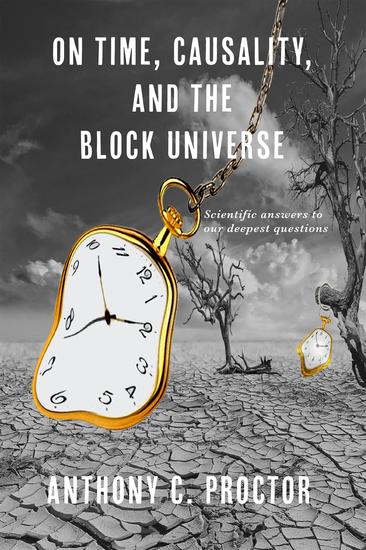
    May of us harbour deep questions on subjects such as the origin of the universe, the concepts of time and causality, the nature of consciousness and free will, the mind-body problems of philosophy, the relationship between mathematics and physics, and more. Conventional answers will usually be from fundamental physics (often deeply mathematical) or philosophy (often very abstract). This work takes a different view of reality by substituting mathematical determinism for causal determinism, thereby making it clear why mathematics so adequately describes our observations and measurements. It then deconstructs many aspects of experience - all of which taint our supposedly objective study of the universe - to see how they emerge from a timeless block universe. Subjects such as quantum theory, change, choice, probability, thermodynamics, and consciousness all have to be disassembled. The conclusion is consistent with both mathematics and experience, provides an answer that is immune from the question of 'first cause', and yet does not lead to further questions, albeit in an unexpected way.
    Voir livre
  • Workbook: What Happened to You? - Conversations on Trauma Resilience and Healing - cover

    Workbook: What Happened to You?...

    Liam Daniels, Alice Moore

    • 0
    • 0
    • 0
    Note: This audiobook is included (for free) inside its respective print and e-book versions. 
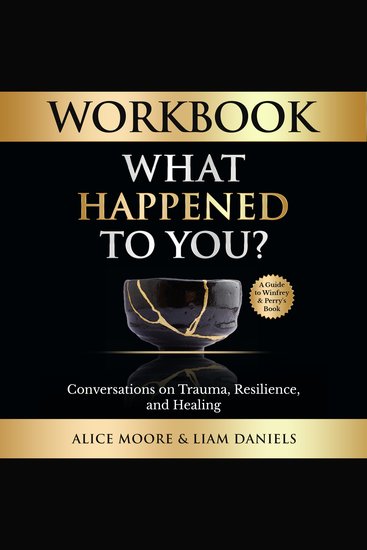
    Workbook: What Happened to You? (Oprah Winfrey and Bruce Perry) 
    In a powerful and compelling conversation, Oprah and Dr. Perry discuss the importance of our past in shaping us and why asking “What’s wrong with you?” might be an unhelpful and misguided question. They propose shifting the focus to “What happened to you?” instead. This may seem simple, but it has been groundbreaking in changing the way we understand and think about trauma, which in turn has offered a significantly more optimistic approach to recovery. But this is just one of the core messages of Oprah and Dr. Perry’s book. Want to know what the other core messages are? 
    “Workbook: What Happened to You?” not only provides all the powerful ideas, practices, and concepts that Oprah and Dr. Perry discuss in their original book in a clear and concise format, but it also offers interactive exercises, reflective and thought-provoking questions, tools, resources for healing, and supplementary information; all designed to enrich your understanding and help you apply what you’ve read. 
    You will get:A powerful combination of storytelling and the latest research on neuroscience and traumatology.Shocking facts about trauma, information on different methods of treatment, and much more!An immersive experience that will bridge the gap between the book's teachings and your own life. 
    While it is beneficial to have read their original work, it’s not compulsory, as this workbook will provide you with all the information you need to engage with the topic and exercises. Don't miss out on the combined wisdom of these two giants. 
    Disclaimer: This is an unofficial, third-party workbook for Oprah Winfrey and Bruce Perry’s book “What Happened to You?”
    Voir livre
  • Columbia Disaster The: The History of the Last Space Shuttle to Be Lost During a Mission - cover

    Columbia Disaster The: The...

    Editors Charles River

    • 0
    • 0
    • 0
    On February 1, the Columbia was due to land at the Kennedy Space Center in Florida at 09:16. Only a few members of the press were present to watch the landing - this was, after all, supposed to be a routine return from a routine mission, the 113th for the shuttle program and the 28th for Columbia, one of the oldest Space Shuttles. 
    Reentry into the Earth’s atmosphere is always the most dangerous part of any space mission. The intense heat generated as a spacecraft enters the thin upper atmosphere at immense speed can be potentially lethal, but the shuttle was designed to deal with this heat, and Columbia had successfully done it 27 times in the past. For the five men and two women on board and the members of the press present, everything seemed normal, but there was a measure of concern among those in the ground control team. The team was aware that Columbia had possibly suffered damage to the thermal tiles forming the heat shield on one wing soon after liftoff, but no one knew how extensive the damage was or even if it existed at all. There was also some disagreement about how serious it might be - some on the ground were concerned this might compromise the shuttle wing’s ability to resist the heat of reentry, while others were sure it was a minor issue that would have no serious impact on the mission. Videos of the launch had been exhaustively reviewed by engineers on the ground, but it was impossible to be certain of the precise level of damage to the heat shielding on the underside and leading edge of the wing.  
    There was no agreement on what should or could be done, so one thing was universally agreed upon: the crew would not be informed of the problem. There was nothing they could do to make repairs and no way to avoid reentry. 
    Voir livre