Rejoignez-nous pour un voyage dans le monde des livres!
Ajouter ce livre à l'électronique
Grey
Ecrivez un nouveau commentaire Default profile 50px
Grey
Abonnez-vous pour lire le livre complet ou lisez les premières pages gratuitement!
All characters reduced
Wonders Beyond the Veils of Patriarchy - cover

Wonders Beyond the Veils of Patriarchy

Pasquale De Marco

Maison d'édition: Publishdrive

  • 0
  • 0
  • 0

Synopsis

In a world shaped by patriarchal norms and structures, this book embarks on a transformative journey to unravel the intricate tapestry of gender inequality and oppression. Through a comprehensive exploration of patriarchy's historical roots, cultural manifestations, and psychological impact, readers are invited to question and challenge the pervasive forces that perpetuate injustice.

With thought-provoking insights and a wealth of research, the book delves into the complex interplay between patriarchy and various forms of oppression, recognizing the unique challenges faced by marginalized individuals who experience multiple layers of discrimination. It sheds light on the systemic barriers that hinder equality and opportunity, unveiling the insidious ways in which patriarchy perpetuates itself in institutions and societal structures.

More than just an analysis of the problem, this book offers a path forward, empowering readers with knowledge, empathy, and inspiration to dismantle patriarchal structures and create a more just and equitable world. It advocates for intersectional approaches to social justice, recognizing the interconnectedness of various forms of oppression and the need for collective action to address them effectively.

Through a blend of scholarly analysis, personal narratives, and practical strategies, the book empowers individuals to challenge gender stereotypes, promote inclusive spaces, and build solidarity across diverse communities. It calls for a fundamental shift in societal attitudes and behaviors, urging readers to cultivate empathy, compassion, and care for all, regardless of gender, race, class, ability, or sexual orientation.

Unveiling the hidden truths that perpetuate gender inequality, this book ignites a spark of change, inspiring readers to become agents of transformation. It is a call to action, a clarion call for a world where patriarchy is relegated to the annals of history, and all individuals are free to live with dignity, equality, and boundless opportunities.


If you like this book, write a review!
Disponible depuis: 02/06/2025.
Longueur d'impression: 164 pages.


D'autres livres qui pourraient vous intéresser

  • The Secrets of Dark Psychology and Body Language - How to Protect Yourself From Manipulation Detect Lies and Analyze Other People 7 Rules of Influence and Power - cover

    The Secrets of Dark Psychology...

    Ronald Gill

    • 0
    • 0
    • 0
    Unveil The Forgotten Secrets of Dark Psychology, Manipulation, Body Language, and Mind Control! 
    Listen up, my friend. If you're here, I know you're ready to dive deep into the hidden depths of human psychology. You want to peel back the curtain and expose the truths of the dark triad. And let me tell you. It's about time you armed yourself with the essential self-protection techniques to keep those who wish you harm at bay. 
    Written by true experts in the field, this comprehensive guide will blow your mind wide open. We're talking about unraveling the mysteries of manipulation, exposing the dark underbelly of narcissism, deception, gaslighting, and so much more! 
    This ain't the run-of-the-mill book you'll put up on your bookshelf to collect dust. This is the one you can't afford to miss.  
    This book will be your ultimate guide to understanding and defending against manipulation. And listen, even if you've got absolutely zero experience in this field, fear not. I got your back.  
    It's time to unleash the power of influence, protect yourself from negative impact, and create meaningful relationships with unshakeable confidence. 
    So, what are you waiting for? Don't waste another moment. Get Your Copy Today!
    Voir livre
  • Ancient Egyptian Festivals - Celebrations of Deity and Life - cover

    Ancient Egyptian Festivals -...

    Omar Khalil

    • 0
    • 0
    • 0
    Festivals played a central role in the cultural and religious life of ancient Egypt. These grand celebrations were not just an occasion for communal enjoyment but were deeply tied to the spiritual and societal fabric of the civilization. They served as a means of honoring gods and goddesses, ensuring the prosperity of the land, and reinforcing the divine order, which was vital for the Egyptians. The festivals helped to maintain cosmic balance and provided a way for the people to connect with the divine. 
    The ancient Egyptians viewed the natural and spiritual worlds as intricately linked. Their gods were believed to control all aspects of life, from the annual flooding of the Nile to the harvests and the afterlife. Therefore, festivals were seen as essential in securing divine favor and maintaining order. These events allowed the people to express their devotion, offering prayers, sacrifices, and rituals to appease the gods. For instance, the Festival of Opet, one of the most significant, symbolized the renewal of the king’s power and his bond with the gods. It was an opportunity for the people to reassert their allegiance to the pharaoh, who was seen as the living deity on earth. 
    In addition to reinforcing the divine relationship, festivals also played a key role in community cohesion. The ancient Egyptians, despite the challenges of life, were brought together by shared rituals and celebrations. This unity was expressed in grand processions, feasts, music, and dance, where the people could experience a sense of collective identity. These events transcended social status and served as a reminder of the interconnectedness of all people under the divine. Festivals were not just for the elite but were a part of the communal life, extending to all citizens, from farmers to nobles.
    Voir livre
  • Women Of Nazi Propaganda - cover

    Women Of Nazi Propaganda

    Jim Colajuta

    • 0
    • 0
    • 0
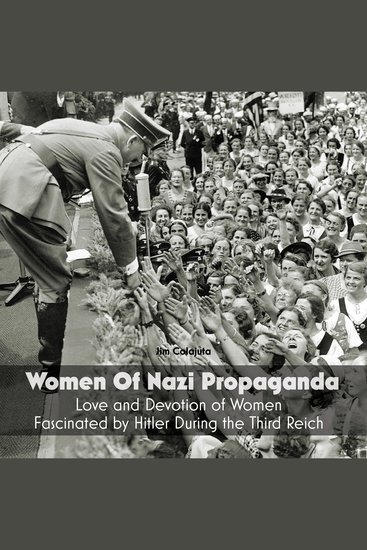
    German women played an essential role in the Nazi movement that outweighed the Nazi Party's propaganda that a woman's position was solely in the home as mothers and child-bearers. Thirteen million of the projected forty million German women in the Reich were active in Nazi Party organizations that promoted the regime's goals of racial purity, imperial conquest, and global war. The Nazi party was about as male-centered as any political party in history. Its ideas on women and women's rightful responsibilities in society were novel and, at best, radical. Despite this, the Party received widespread and active support among women in Germany at the time.This book investigates Magda Goebbels, Leni Riefenstahl, and Winifried Wagner and how they became enchanted by Hitler and obliged [his] Nazi philosophy. These three ladies were not ordinary Germans. Magda was hitched to Joseph Goebbels, the Reich Minister of Enlightenment and Propaganda and perhaps the most influential man of the Third Reich. An entertainer and famous movie chief, Leni was liable for a key publicity film. Winifred was hitched to author Richard Wagner's child and assumed responsibility for Wagner's inheritance. Hitler was captivated by every one of the women and used them to add his longing to reestablish Germany to its past brilliance. The women concurred with Hitler's longing to renew Germany's significance and perceived that once he became Chancellor, they would benefit enormously. These women didn't act as indicated by the standards of the times. They got out of the endorsed jobs relegated to ladies.
    Voir livre
  • No Children It Makes Sense! - Survey on the Phenomenon of Non-Parents - cover

    No Children It Makes Sense! -...

    Nathalie Six

    • 0
    • 0
    • 0
    “Kids are great. It’s a unique process that everyone should experience.” Except that today, 1 in 20 French people refuse to have children. What are the reasons for this “voluntary infertility?”
    Do we really know why we have children? Isn’t having children an obstacle to personal and professional development? In an overpopulated and polluted world, isn’t it selfish to take up too much space by having a family? Don’t children cost too much to individuals and to society?
    The author investigates with dozens of women and men for whom the “duty to procreate” rings hollow. Among these “non-parents” are exclusive lovers, artists, careerists, religious people, traumatized children, eternal teenagers, environmentalists, convinced Malthusians, as well as feminist activists who have made their refusal to give birth a standard, in order to assert themselves in a society that praises all mothers and family values.
    Voir livre
  • Pakistan's ISI - A Concise History of the Inter-Services Intelligence Directorate - cover

    Pakistan's ISI - A Concise...

    Julian Richards

    • 0
    • 0
    • 0
    Forged during the tumultuous aftermath of Partition in 1947, the Inter-Services Intelligence Directorate (ISI) has grown to become the preeminent intelligence service in Pakistan. Its capabilities are comprehensive, its remit covers both foreign and domestic intelligence, and it is one of the most feared and respected agencies of the Global South. 


    Pakistan's ISI provides an up-to-date and detailed introduction to the ISI and its historical evolution. The narrative is rooted in a deep and wide-ranging contextualization of the state of Pakistan and its security environment. The story is one of an agency that grew from humble beginnings into an extremely capable and robust force at the heart of power in the state. The ISI utilizes broad human intelligence networks and employs covert action and support for militants, particularly in its rivalry with India. As a crucial intelligence partner for the West during the Cold War and into the contemporary era, the ISI has been both an essential ally and problematic partner. The shadow of this agency continues to loom over Pakistan's democratic institutions. 


    This book will appeal to students, scholars, and general listeners interested in intelligence and the politics and history of South Asia.
    Voir livre
  • Fighting in Flanders Fields The: The History of the Major Battles across the Region during World War I - cover

    Fighting in Flanders Fields The:...

    Charles River Editors

    • 0
    • 0
    • 0
    After an initial period of relatively rapid maneuver during which the German forces pushing through Belgium and the French and British forces attempting to stymie them made an endless series of abortive flanking movements that extended the lines to the sea, a stalemate naturally tended to develop. The infamous trench lines soon snaked across the French and Belgian countryside, creating an essentially futile static slaughterhouse whose sinister memory remains to this day. 
    	Until the war of maneuver returned in 1918 and led to a decisive outcome for the war, the nexus of this horror lay in the rainy, sodden levels and low ridges of Flanders, near the medieval town of Ypres. In this tiny fragment of Europe, half a million men died over the course of three major battles and the times of attrition between, perishing in a squelching pit of mud, blood-tinged water, and rotting human flesh. In fact, with the exception of a few hours on Christmas Day 1914, the shelling, sniping, raids, and bloodshed in Flanders never ceased from the moment of first contact between the British Expeditionary Force (BEF) and the Imperial German army.  
    	The Ypres salient bulged a few miles forward into Belgium, representing the only part of that nation the Germans had not occupied. Held by a mix of British, French, Canadian, Belgian, and colonial troops, this thorn in the Germans’ side had held off massive but clumsily handled attacks by barely-trained German volunteers and conscripts in late 1914 at the First Battle of Ypres. Each side had attempted to launch a major offensive through Ypres at the same time, leading to a blood-soaked encounter battle that, after weeks of futile butchery amid the small farms, hedgerows, canals, and tracts of woodland, devolved into a grim stalemate. Lines of trenches faced each other and sniping, artillery bombardment, and small actions led to an ongoing stream of casualties.
    Voir livre