Join us on a literary world trip!
Add this book to bookshelf
Grey
Write a new comment Default profile 50px
Grey
Subscribe to read the full book or read the first pages for free!
All characters reduced
Winds That Carry - cover

Winds That Carry

Pasquale De Marco

Publisher: Publishdrive

  • 0
  • 0
  • 0

Summary

In the heart of the Pacific Northwest, where towering mountains meet pristine rivers and lush forests, lies a land of unparalleled beauty and intrigue. This is the setting for **Winds That Carry**, a captivating journey through the history, culture, and natural wonders of this extraordinary region.

From the earliest Native American settlements to the arrival of European explorers and settlers, the Pacific Northwest has been a land of opportunity and challenge. In this book, we will meet the people who have shaped the region, from the pioneers who braved the unknown to the immigrants who came seeking a better life.

We will explore the region's rich history, from the fur trade and the gold rush to the rise of the timber industry and the modern era. We will learn about the challenges facing the Pacific Northwest, from climate change and economic decline to the ongoing struggle for social justice.

But above all, we will celebrate the beauty and resilience of the Pacific Northwest. We will journey through its stunning landscapes, from the snow-capped peaks of the Cascade Range to the rugged coastline of the Pacific Ocean. We will meet the people who call this region home, and we will learn about their lives, their traditions, and their hopes for the future.

**Winds That Carry** is a must-read for anyone who loves the Pacific Northwest, or for anyone who is interested in the history, culture, and natural beauty of this unique and unforgettable region.


If you like this book, write a review!
Available since: 06/02/2025.
Print length: 167 pages.


Other books that might interest you

  • Mr Vic’s X-Rated Television: “Miss Fisher Mysteries!” “Lesbian Loving For Miss Fisher and Dot!” Book two - cover

    Mr Vic’s X-Rated Television:...

    VIC VITALE

    • 0
    • 0
    • 0
    “A Lesbian Cums-A-Calling!” 
    “Under a Doctor’s Care and Body!”“ 
    “Alone Time For Phryne and Dot!” 
    "Hi! I'm Kitty Forman! I know I shouldn't be here, but I just have to see you." 
    Mac pauses before letting the woman who raped her inside her home. She is having mixed feelings, but truth be told, she's very glad to see this Kitty Forman. "I don't know? You forced yourself on me. Why should I want to see you?" 
     
    Show book
  • Walk Away How to Recognize Narcissistic and Emotional Abuse - Before it's Too Late - cover

    Walk Away How to Recognize...

    Yolanda Dian

    • 0
    • 0
    • 0
    A Survivors Testimony after the gaslighting and emotional abuse! Learning to recognize narcissists and toxic people early is a game changer! 
    I am happy to say that I am no longer a victim, but a true survivor of narcissistic, and emotional abuse. Let me start by saying that walking away from my toxic 30-year relationship with my now ex-husband was one of the hardest things I had to do. The result of walking away turned out to be the best thing I've ever done. I wish there had been a book like this that told me "How to recognize narcissists and emotional abusers" back when I met my ex-husband thirty years ago. What I know now about toxic people and emotional abuse may have saved my life. I hope to help as many people as I possibly can with ways to recognize toxic people before it is too late. In my experience learning to take notes and journal was truly helpful in my recovery process.
    Show book
  • Rus’ The: The History and Legacy of the Group that Established a Russian State in the Middle Ages - cover

    Rus’ The: The History and Legacy...

    Editors Charles River

    • 0
    • 0
    • 0
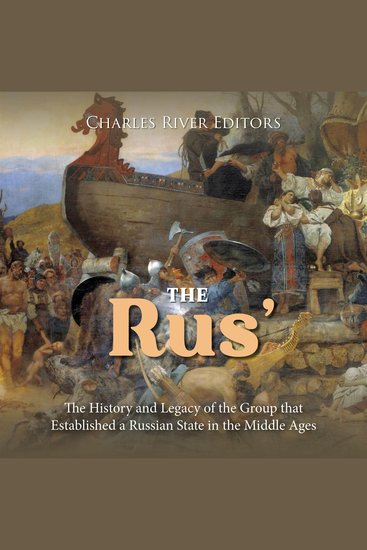
    For many, the Rus might be synonyms for Russia or Russians, perhaps an early form of the civilization that later became Russia. This is partly true. Modern-day Russia lays claim as a successor to the Rus, particularly the Kievan Rus empire that dominated, with oscillating borders, the area around today’s Kiev and Ukraine between the 8th and 11th centuries. Crucially, the Rus had roots in the Nordic region. Initially, they would travel into modern-day Russia, Ukraine, and beyond to trade. Only later would they start to settle in the region and then become known as the Rus. 
    As with many other groups, the origins of the Rus are tied to the dominance of the Vikings over Western Europe in the early part of the Dark Ages or Medieval Era. Their Scandinavian brethren also traveled eastwards, behaving in similar ways but ultimately settling and assimilating in the region in an idiosyncratic manner. The Rus focused on several trade routes. The most important of these was the “eastern” route towards the Caspian Sea and stretching as far as Baghdad in the Middle East. This then gave way to the “western” route leading through Kiev to the Black Sea and Byzantine capital city Constantinople. The Rus also developed other trade routes, including to Western Europe. 
    Eventually, the Rus began to establish permanent settlements, firstly in Novgorod and then south to Kiev. This will be accompanied by the exploration of growing Rus dominance of this region, particularly through historical figures in the Rurikid dynasty such as Rurik, Oleg, Igor, Olga, Svyatoslav, Vladimir, and Yaroslav. During this time, the Kievan Rus empire was established and rose steadily to become a major regional power, even challenging the dominant Byzantines.
    Show book
  • Leibniz’s Monads - Because Particles with Feelings Totally Make Sense - cover

    Leibniz’s Monads - Because...

    Sophia Blackwell

    • 0
    • 0
    • 0
    Ever wondered what reality is made of? If you're thinking atoms, molecules, or maybe regret and caffeine, think again. According to Gottfried Wilhelm Leibniz—17th-century genius, calculus co-inventor, and metaphysical madlad—the universe is made of tiny, windowless soul-particles called monads. They don’t touch, don’t talk, and yet still manage to reflect the entire cosmos like cosmic disco balls of divine insight. 
    In Leibniz’s Monads: Because Particles with Feelings Totally Make Sense, Sophia Blackwell (author of Kant You Not) returns with another brutally honest, laugh-out-loud, actually-informative tour through one of philosophy’s weirdest, most ambitious systems. From the problem of evil to quantum physics, ecology to ethics, this book unpacks Leibniz’s windowless wonders and shows how his soul-marbles still haunt modern science, spirituality, and your existential crisis at 2am. 
    Perfect for students, armchair philosophers, or anyone who wants to understand metaphysics without crying in German. 
    Inside, you’ll learn: 
    What monads are (and why they’re basically metaphysical Tamagotchis) 
    Why your soul is pre-synced with the universe like a divine group project 
    How this is somehow the best possible world (yes, even with all of… this) 
    What quantum physics, computer science, and modern consciousness studies owe to a guy who never left Leipzig 
    And why Leibniz remains philosophy’s most lovable, logic-obsessed optimist 
    If you like philosophy that doesn’t take itself too seriously—but still takes ideas seriously—this book is for you. 
    Warning: May cause sudden belief in soul-particles. Or at least very polite existential confusion.
    Show book
  • Technology and Social Change - How Digital Innovations Transform Society - cover

    Technology and Social Change -...

    Fred Grandsen

    • 0
    • 0
    • 0
    Technology has always played a fundamental role in shaping human societies, influencing how people communicate, work, and interact with the world around them. Social change, in turn, refers to the transformation of cultural, economic, and political structures over time. The relationship between technology and social change is deeply intertwined, as technological innovations can drive profound shifts in society, while social needs and challenges often inspire new technological developments. 
    Throughout history, technological advancements have acted as catalysts for change, altering the way people live and interact. The agricultural revolution, for example, enabled the transition from nomadic lifestyles to settled civilizations, fostering population growth and social organization. The industrial revolution transformed economies by introducing mechanization, mass production, and urbanization, dramatically reshaping labor markets and social structures. More recently, the digital revolution has revolutionized communication, education, and business through the rise of computers, the internet, and artificial intelligence. 
    One key aspect of understanding technology and social change is recognizing that technological progress is not inherently neutral.
    Show book
  • A Rare Recording of Franklin Delano Roosevelt - cover

    A Rare Recording of Franklin...

    Franklin Delano Roosevelt

    • 0
    • 0
    • 0
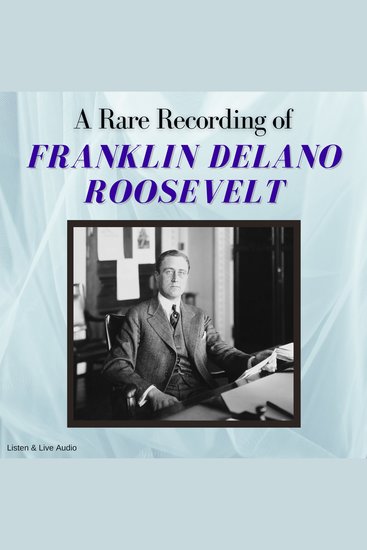
    The following is Roosevelt's Infamy Speech to a joint session of Congress on December 8, 1941, one day after the Japanese bombed Pearl Harbor. Franklin Delano Roosevelt (January 30, 1882 - April 12, 1945), was an American politician and lawyer who served as the 32nd president of the United States from 1933 until his death in 1945. As the leader of the Democrat Party, Roosevelt won a record four presidential elections, directing the federal government during most of the Great Depression, implementing his New Deal domestic agenda, which would define modern liberalism in the United States throughout the middle third of the 20th century. His third and fourth terms were dominated by World War II, which ended in victory shortly after he died in office.
    Show book