Begleiten Sie uns auf eine literarische Weltreise!
Buch zum Bücherregal hinzufügen
Grey
Einen neuen Kommentar schreiben Default profile 50px
Grey
Jetzt das ganze Buch im Abo oder die ersten Seiten gratis lesen!
All characters reduced
Warriors of the Great Plains - Legends and Legacies - cover

Warriors of the Great Plains - Legends and Legacies

Pasquale De Marco

Verlag: Publishdrive

  • 0
  • 0
  • 0

Beschreibung

In the heart of the Great Plains, where legends are whispered by the wind, two iconic figures emerged, leaving an indelible mark on American history. Crazy Horse, the Oglala Lakota warrior, and General George Armstrong Custer, the flamboyant cavalry commander, are forever etched in the annals of time.This captivating book delves into the parallel lives of these extraordinary men, exploring the forces that shaped their destinies and the tumultuous events that brought them together at the fateful Battle of Little Bighorn. Through a gripping narrative, we witness their triumphs and tribulations, their unwavering devotion to their people, and their profound connection to the land they called home.Crazy Horse, a visionary leader and skilled warrior, fought tirelessly to preserve the traditional way of life for his Lakota people. His spiritual beliefs and deep connection to the land guided his every action, inspiring his people to resist the encroachment of white settlers and the U.S. government.Custer, a charismatic and ambitious military commander, sought glory and recognition on the frontier. His aggressive tactics and controversial methods earned him both admiration and scorn. As he led his troops into the heart of Lakota territory, he underestimated the strength and determination of his adversaries.The Battle of Little Bighorn, a clash of cultures and ideologies, forever changed the course of history for both Crazy Horse and Custer. The outcome of this pivotal battle left a lasting legacy of pain and sorrow, yet it also serves as a poignant reminder of the resilience and determination of the human spirit.This book offers a comprehensive and nuanced portrayal of two complex and fascinating historical figures. It sheds light on the complex forces that shaped the American West and the enduring impact of their legacies on the nation's identity. Their stories continue to resonate today, reminding us of the importance of reconciliation, the pursuit of justice, and the enduring power of the human spirit.If you like this book, write a review!
Verfügbar seit: 02.06.2025.
Drucklänge: 157 Seiten.

Weitere Bücher, die Sie mögen werden

  • Indian Creek Massacre and Captivity of Hall Girls - Complete History of the Massacre of 16 Whites on Indian Creek near Ottawa IL and Sylvia and Rachel Hall as Captives in Illinois & Wisconsin during The Black Hawn War 1832 - cover

    Indian Creek Massacre and...

    Charles M. Scanlan

    • 0
    • 0
    • 0
    Indian Creek Massacre and Captivity of Hall Girls was written by Charles Martin Scanlan in 1915. The Indian Creek Massacre arose in 1832 at LaSalle County, Illinois, after a dispute about a settler-constructed dam that blocked fish from reaching a Native American village downstream. It’s a unique historical snapshot of early America centered around Sylvia and Rachel Hall, sisters who were the only survivors of the massacre and were abducted, as well as the story of Chief Shabona who was a member of the Ottowa and Potawatomi. 
    This audiobook is narrated by Sylvia’s great-great-great-granddaughter, Rebecca Cook, with help from her sister Gwendelyn Gilchrist. The written book itself is in public domain and can be downloaded with photos for free from Project Gutenberg at gutenberg.com. 
    Zum Buch
  • We Agnostics: How William James Father of American Psychology Advanced A Spiritual Solution to Addiction: How a Venerated Harvard Doctor Inspired the 12 Step Movement - cover

    We Agnostics: How William James...

    Paul Schulte

    • 0
    • 0
    • 0
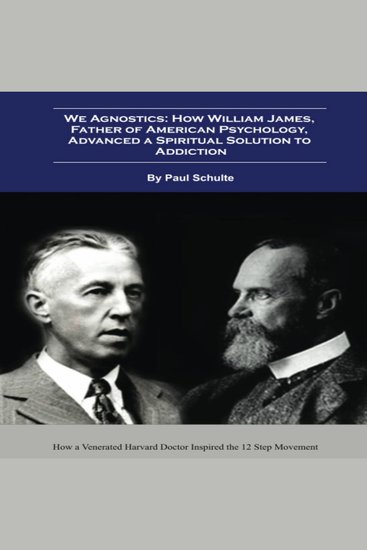
    Bill Wilson was a washed up Wall Street analyst after the Great Crash of 1929 who was dying of alcoholism and decided to clean up. He read “Varieties off Religious Experience” by eminent Harvard Professor William James (whose own brother had died of alcoholism). The rest, as they say, is history and the result was what Aldous Huxley called the most Important social movement of the 20th century. This book weaves together brief excerpts from James’ book (which had radical ideas about spirituality being an end to itself and mostly separate from religion) with the writings of Bill Wilson to show how the two men’s thinking interacted to create the 12 Step movement. It sheds light on the profound influence James had on early 20th Century Agnosticism. It is solid analysis of James’ important contribution to American Spiritualism. Most of all, though, it is a reflection on the 12 Steps of AA & a meditation on what ‘Higher Power’ means. It is a soothing hot soak in the great writing of two men who developed a way out of the soul sickness that is addiction. They both saw spirituality as separate from religion which arises from the basic human need for some private higher power during moments of self-despair. The relief that comes makes life larger, allows us (finally) to belong and offers dignity — for alcoholics or those who live with alcoholics. It works. It really does. Read a sentence or a page per day. This book is a journey of reflection and meditation.
    Zum Buch
  • The Magic Train - cover

    The Magic Train

    Susan McClanahan French

    • 0
    • 0
    • 0
    Fun sound-effects and whimsical music help tell the sweet tale of “The Magic Train.” The little train looked like an ordinary toy train, but it was not. Every night Magic Train's job was to gather up the forgotten toys that were left by girls and boys. He would load the toys up and bring them to children that needed them. One night, Magic Train decides to bring toys to Little Tommy because he is sick. Follow along on Magic Train's journey and find out what toys he brings Little Tommy. A happy ending adds interest to this adorable story and encourages a lifelong love of great storytelling.
    Zum Buch
  • A Tale of Two Fronts - A German Soldier's Journey through World War I - cover

    A Tale of Two Fronts - A German...

    Hans Schiller

    • 0
    • 0
    • 0
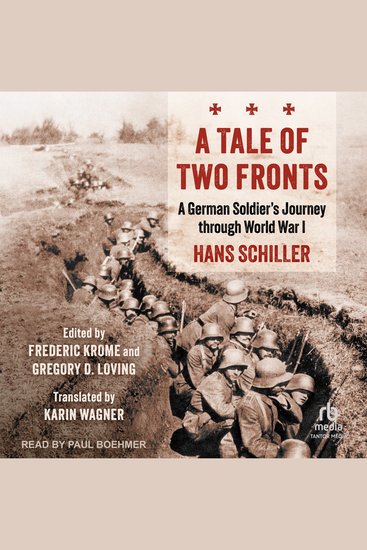
    Hans Schiller was a seventeen-year-old student in Bromberg, Prussia, when World War I broke out in August 1914. He enlisted in the German army and was assigned to an artillery unit on the Eastern Front. From 1915 to 1917, Schiller saw action in what is now Latvia, Lithuania, and Poland. After the Bolshevik Revolution in October 1917 and Russia's withdrawal from the war, Schiller was transferred to the Western Front. He arrived in time for Germany's last great offensive in the west, where the attempt to break the Allied lines included what is believed to be the single greatest artillery bombardment in human history up to that point. After the German retreat and Armistice, Schiller reentered military service in the Freikorps, German mercenary groups fighting in former German territory in Eastern Europe, where the conflict dragged on even after the Treaty of Versailles. Schiller left military service in May 1920. 


    Hans Schiller's Kriegserinnerungen (literally, "memories of war") was written in 1928 and based on diaries, since lost, that Schiller kept during the war. A Tale of Two Fronts, an edition of the memoir with historical context and explanatory notes, provides a vivid first-person account of German army life during World War I. It is a valuable resource for anyone interested in the experiences of common soldiers in World War I.
    Zum Buch
  • Julius Caesar - The Famous Roman Emperor Who Transformed the Republic - cover

    Julius Caesar - The Famous Roman...

    Kelly Mass

    • 0
    • 0
    • 0
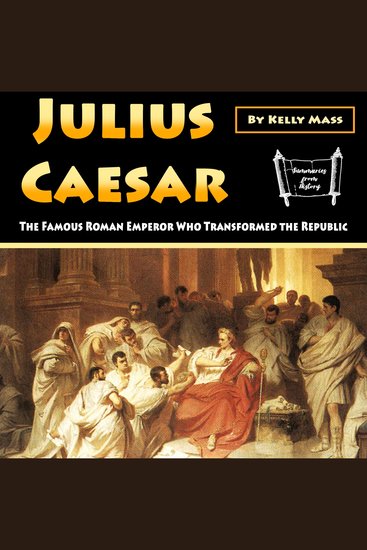
    Gaius Julius Caesar remains one of the most influential and recognizable figures in history. A brilliant military commander and astute statesman, Caesar played a decisive role in the events that led to the collapse of the Roman Republic and the rise of the Roman Empire. His life and career were marked by political ambition, military conquests, and transformative reforms that forever changed the Roman world.  
    Born into a patrician family, Caesar rose to prominence in Roman politics through strategic alliances and persuasive rhetoric. In 60 BC, he formed the First Triumvirate with Marcus Licinius Crassus and Gnaeus Pompeius Magnus, known as Pompey. This informal political alliance dominated Roman politics for several years, enabling Caesar to secure the consulship in 59 BC. The Triumvirate sought to advance the interests of the Populares, a political faction advocating for the rights of the common people, in opposition to the Optimates, the conservative faction of the Roman Senate. Powerful senators such as Cato the Younger and orator Cicero resisted Caesar’s growing influence, leading to increased political tensions.  
    To solidify his power, Caesar launched a series of military campaigns known as the Gallic Wars from 58 BC to 51 BC. These campaigns significantly expanded Roman territory, bringing Gaul (modern-day France and Belgium) under Roman control. Caesar's military success earned him wealth, popularity, and the unwavering loyalty of his legions. His invasion of Britain and the daring construction of a bridge over the Rhine River showcased his strategic prowess and ambition. These victories, however, unsettled Pompey, who grew increasingly aligned with the Senate following Crassus’ death in 53 BC. Fearing Caesar’s rising power, the Senate ordered him to disband his army and return to Rome as a private citizen. 
    Zum Buch
  • Abraham Lincoln - His Life Death Morals Civil War and Assassination - cover

    Abraham Lincoln - His Life Death...

    Kelly Mass

    • 0
    • 0
    • 0
    From 1861 till his assassination in 1865, Abraham Lincoln was an American legal representative and statesman who functioned as the 16th president of the United States. Lincoln led the nation through the American Civil War, preserving the Union, eliminating slavery, enhancing the federal government, and helping the economy of the United States. 
    Lincoln grew up on the frontier, mainly in Indiana, and was born into poverty in a log cabin. He was self-taught and went on to end up being a legal representative, Whig Party leader, Illinois state lawmaker, and member of the U.S.A. Congress for Illinois. 
    In 1849, he resumed his law business, but was bothered by the Kansas-- Nebraska Act, which permitted farther terrain to be opened to slavery. In 1854, he went back to politics as a leader of the freshly formed Republican politician Party, and in 1858, he disputed Stephen Douglas in front of a nationwide audience. 
    Let’s learn more about this distinct, important, prominent figure in the United States’ history.
    Zum Buch